
2026

Uncategorized

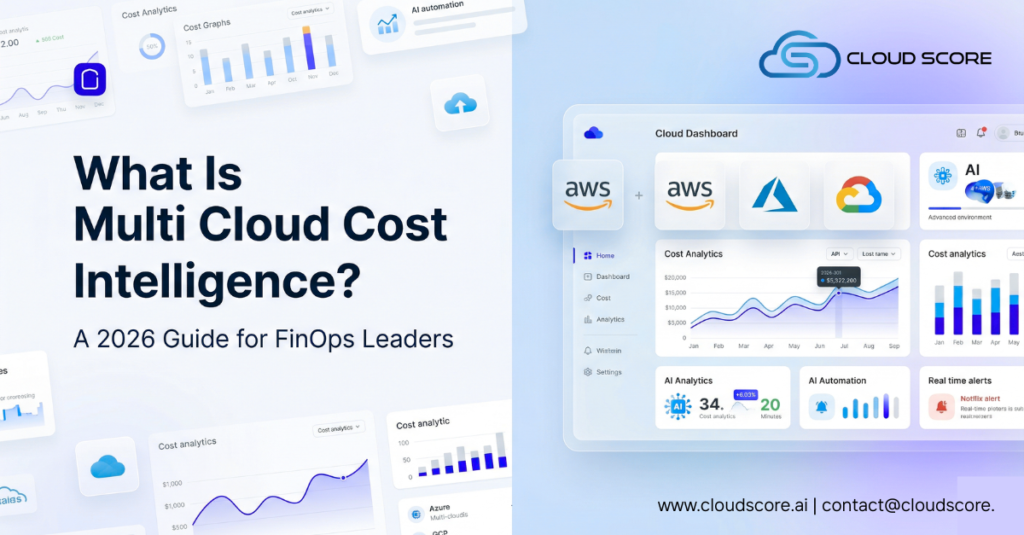
What Is Multi Cloud Cost Intelligence? A 2026 Guide for FinOps Leaders

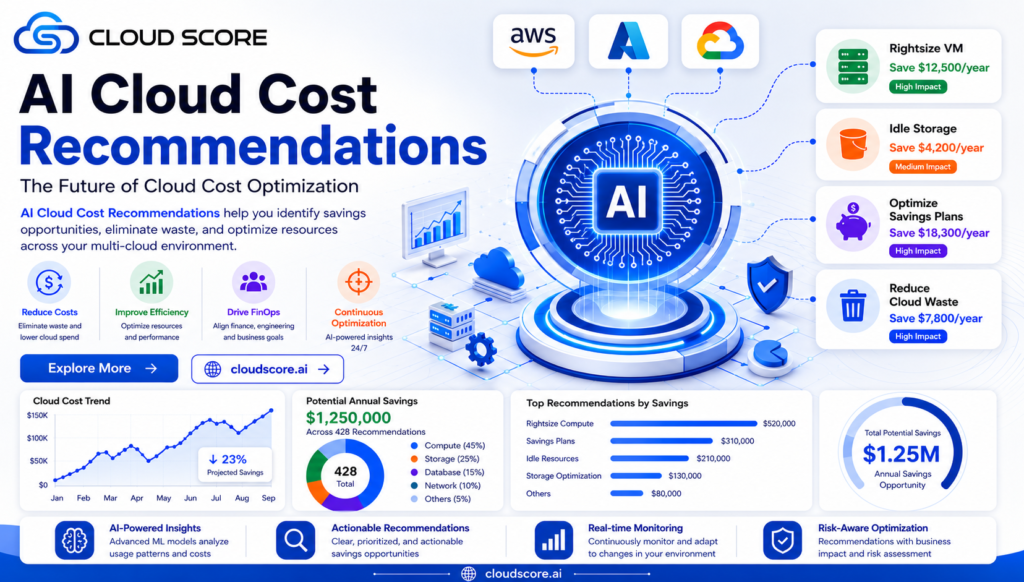
Multi Cloud Cost Intelligence is rapidly becoming the backbone of modern FinOps as organizations scale across AWS, Azure, and GCP. Traditional cost tracking tools are no longer enough – teams need real-time insights, predictive analytics, and automated optimization to control cloud spend effectively. In 2026, the shift is clear: companies that rely only on cost visibility are falling behind, while those adopting Multi Cloud Cost Intelligence are gaining a competitive edge through proactive cost control, governance, and smarter decision-making. What Is Multi Cloud Cost Intelligence? Multi Cloud Cost Intelligence goes beyond simple cost monitoring. It is a data-driven, AI-powered approach to understanding, optimizing, and governing cloud spend across multiple cloud providers. It combines: Real-time cost visibility Usage analytics Predictive forecasting Automated optimization Governance and policy enforcement In simple terms:Visibility tells you what you spent. Intelligence tells you what to do next. Why FinOps Teams Need Cost Intelligence in 2026 Cloud environments are becoming: More distributed More dynamic More expensive Without intelligence, FinOps teams face: Fragmented billing across clouds Lack of accountability by teams Delayed insights (after overspending happens) Inefficient resource utilization Multi Cloud Cost Intelligence solves this by shifting FinOps from reactive → proactive. Key Components of CloudScore Multi Cloud Cost Intelligence 1. Unified Multi-Cloud Visibility A single dashboard across AWS, Azure, Alibaba, Oracle and GCP Eliminates data silos Standardizes cost reporting Enables cross-cloud comparisons 2. Real-Time Cost Monitoring Instead of waiting for monthly bills: Detect anomalies instantly Track live usage spikes Set alerts before overspending 3. AI-Powered Cost Optimization Advanced systems analyze: Idle resources Over-provisioned instances Inefficient workloads And recommend or automate: Rightsizing Scheduling Auto-scaling adjustments 4. Cost Allocation & Tagging Intelligence Allocate costs by team, project, or business unit Enforce tagging policies Improve accountability across engineering teams 5. Predictive Forecasting & Budgeting Forecast future cloud spend Simulate cost scenarios Prevent budget overruns 6. Governance & Policy Enforcement Set budget limits Automate compliance checks Align cloud usage with business goals Multi Cloud Cost Intelligence vs Traditional Cost Management Feature Traditional Cost Tools Cost Intelligence Visibility Basic Advanced, real-time Insights Historical Predictive Optimization Manual AI-driven Governance Limited Automated Actionability Low High Bottom line:Traditional tools report problems.Cost Intelligence prevents them. Real-World Use Cases 1. Preventing Cloud Bill Shock Detect abnormal spikes before billing cycles end 2. Optimizing Kubernetes & Data Workloads Understand workload-level cost drivers 3. Improving Team Accountability Assign cost ownership across departments 4. Multi-Cloud Strategy Alignment Balance workloads across providers based on cost efficiency Benefits for FinOps Teams Reduce cloud waste by 20–40% Improve cost visibility across all providers Enable faster, data-driven decisions Align engineering with financial goals Strengthen governance without slowing innovation How to Implement Multi Cloud Cost Intelligence Follow this execution roadmap: Step 1: Centralize Cost Data Integrate AWS, Azure, Alibaba, Oracle and GCP billing into one platform Step 2: Establish Cost Allocation Define tagging standards and ownership Step 3: Enable Real-Time Monitoring Set alerts for anomalies and thresholds Step 4: Leverage AI & Automation Automate optimization recommendations Step 5: Build Governance Policies Enforce budgets, compliance, and usage rules Common Mistakes to Avoid Relying only on billing dashboards Ignoring real-time monitoring Lack of tagging discipline No automation in optimization Treating FinOps as a reporting function The Future of Multi Cloud Cost Intelligence In 2026 and beyond, expect: AI-driven autonomous optimization Integration with DevOps & SRE workflows Cost intelligence embedded into CI/CD pipelines Real-time decision-making at the engineering level The evolution is clear:From cost tracking → cost intelligence → autonomous FinOps Outcome Multi Cloud Cost Intelligence is no longer optional – it’s a necessity for organizations operating in complex, multi-cloud environments. FinOps teams that adopt intelligence-driven strategies can move from reactive cost management to proactive optimization and governance. The question is no longer “How much are we spending?”It’s “How intelligently are we managing it?”Stop reacting to cloud costs – start controlling them with Multi Cloud Cost Intelligence.  Request a Demo | Start Your Free Trial | Contact Our Experts  See More Blogs: Multi Cloud Cost Visibility | Cloud Cost Optimization Platform | CloudOps Cost Optimization | Cloud Security Posture Management | Cloud Intelligence Platform | DevOps Environment Sprawl | FinOps Cloud Cost Ownership | FinOps and SecOps Convergence | DevOps Cloud Cost Visibility | Code Scan | Power Schedules | Multi Cloud Cost Optimization | Untagged Cloud Resources | Best Cloud Governance Solutions | SecOps & FinOps Cloud Governance | AI-Driven FinOps | AI Cloud Cost Optimization | Smart Cost Management | Simplify Cloud Costs | Automated FinOps Platform | Multi-Cloud Spend | Cost Efficiency | Cloud Security | Dynamic Optimization | Seasonality Insights | Cloud Governance | Sustainability Reporting | Cloud Infrastructure | Predictive Analytics | Integrating FinOps | Forecasting | Automated Cost Management | Cloud Cost Optimization
Multi Cloud Cost Visibility
Uncategorized

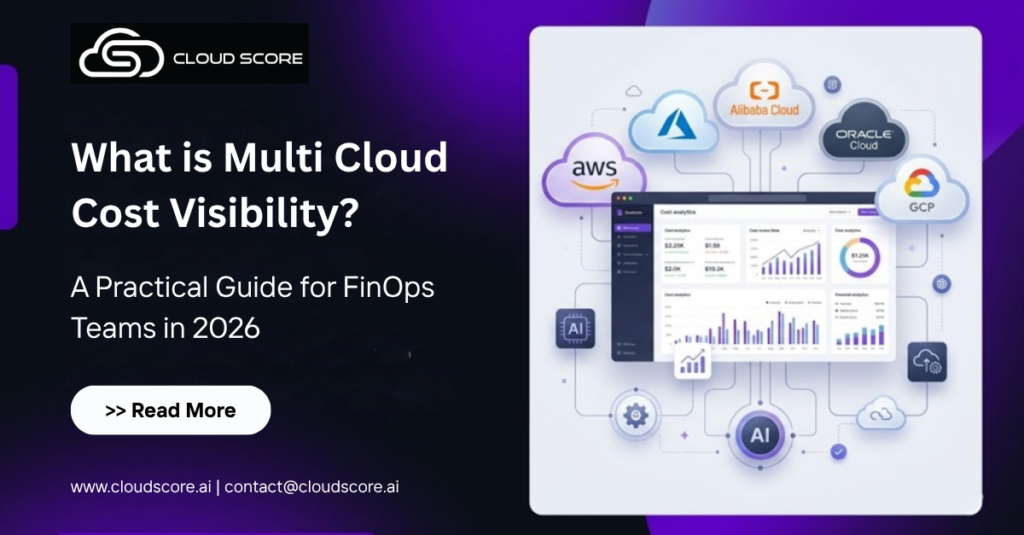
What is Multi Cloud Cost Visibility? A Practical Guide for FinOps Teams in 2026

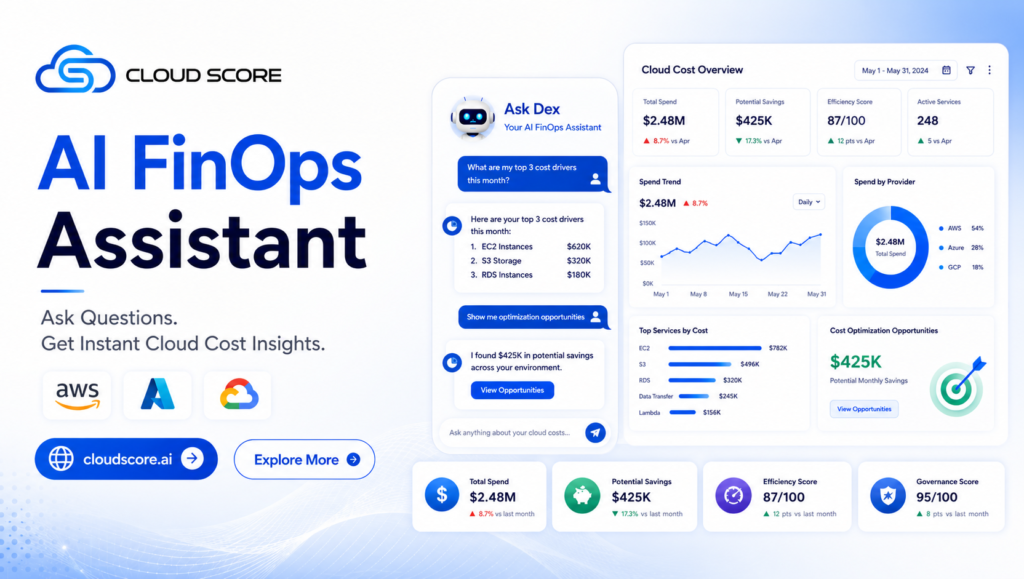
Multi Cloud Cost Visibility is becoming a critical priority for FinOps teams as organizations scale across AWS, Azure, and GCP. Without a unified view of cloud spending, businesses face rising costs, poor accountability, and limited control over their infrastructure. In 2026, managing cloud costs is no longer just about tracking bills – it’s about gaining real-time visibility, enforcing governance, and driving continuous optimization. This guide will help FinOps teams understand how to implement multi cloud cost visibility and turn cloud spending into a strategic advantage. What is Multi Cloud Cost Visibility? Multi Cloud Cost Visibility refers to the ability to track, analyze, and understand cloud spending across multiple cloud providers in a single unified view. Instead of managing separate dashboards, FinOps teams can: Monitor costs across AWS, Azure, and GCP Allocate spending to teams, projects, or environments Identify inefficiencies and cost anomalies Make data-driven financial decisions 👉 The goal is simple:Gain complete transparency to enable better cost control and optimization. Why FinOps Teams Struggle Without Visibility 1. Fragmented Billing Systems Each cloud provider uses different pricing models and reporting formats. 2. Lack of Cost Allocation Without tagging and structure: Costs cannot be mapped accurately Accountability is lost 3. Limited Native Tools Default cloud tools: Work in silos Lack cross-cloud insights 4. Rapid Infrastructure Growth As cloud usage scales: Costs increase unpredictably Waste goes unnoticed 👉 Result: Finance loses control, engineering lacks clarity How to Achieve Multi Cloud Cost Visibility with CloudScore 1. Centralized Cost Dashboard Use a unified platform to: Combine AWS, Azure, and GCP billing data View all costs in one place 2. Implement a Tagging Strategy Tag resources based on: Teams Projects Environments (Dev, Test, Prod) 👉 This ensures accurate cost allocation 3. Enable Real-Time Monitoring Set up: Live dashboards Cost anomaly alerts 👉 Detect unusual spending instantly 4. Cost Allocation & Reporting Break down costs by: Business units Applications Customers 👉 This is essential for FinOps maturity How to Control Cloud Spend Budgeting & Alerts Define spending thresholds and get notified when limits are exceeded. Rightsizing Resources Match resources to actual usage and eliminate over-provisioning. Remove Idle Resources Identify and shut down unused instances and storage. Optimize Commitments Use reserved instances and savings plans for predictable workloads. 👉 These steps can reduce costs by 20–30% How to Optimize Cloud Costs in 2026 AI-Driven Insights Modern platforms provide: Cost anomaly detection Predictive cost forecasting Intelligent recommendations Automation Automation helps: Continuously optimize resources Reduce manual effort Improve efficiency Continuous Optimization Optimization is not one-time. 👉 It must be: Ongoing Data-driven Automated Tools for Multi Cloud Cost Visibility FinOps teams typically use: Native cloud dashboards Third-party cost management tools However, most tools: Lack unified visibility Provide limited automation Focus only on cost, not governance 👉 Modern platforms combine FinOps + governance + intelligence to deliver better outcomes. The Future: Unified FinOps + Governance The next evolution is clear: 👉 Unified platforms that combine cost visibility, optimization, and governance These platforms enable: Real-time cost tracking AI-driven optimization Compliance and security insights Cross-team accountability Key Benefits of Multi Cloud Cost Visibility Complete transparency across cloud environments Reduced cloud waste Better forecasting and budgeting Improved operational efficiency Strong governance and compliance Multi-cloud environments bring flexibility, but without visibility, they create financial complexity. FinOps teams that succeed in 2026 will: Track costs in real time Control spending proactively Optimize continuously with AI 👉 Multi Cloud Cost Visibility is no longer optional – it’s a competitive advantage. Start controlling your cloud costs with CloudScore gain full multi-cloud visibility today.  Request a Demo | Start Your Free Trial | Contact Our Experts  See More Blogs: Cloud Cost Optimization Platform | CloudOps Cost Optimization | Cloud Security Posture Management | Cloud Intelligence Platform | DevOps Environment Sprawl | FinOps Cloud Cost Ownership | FinOps and SecOps Convergence | DevOps Cloud Cost Visibility | Code Scan | Power Schedules | Multi Cloud Cost Optimization | Untagged Cloud Resources | Best Cloud Governance Solutions | SecOps & FinOps Cloud Governance | AI-Driven FinOps | AI Cloud Cost Optimization | Smart Cost Management | Simplify Cloud Costs | Automated FinOps Platform | Multi-Cloud Spend | Cost Efficiency | Cloud Security | Dynamic Optimization | Seasonality Insights | Cloud Governance | Sustainability Reporting | Cloud Infrastructure | Predictive Analytics | Integrating FinOps | Forecasting | Automated Cost Management | Cloud Cost Optimization
Cloud Cost Optimization Platform
Uncategorized

Cloud Cost Optimization Platform: From Cost Visibility to Real Control

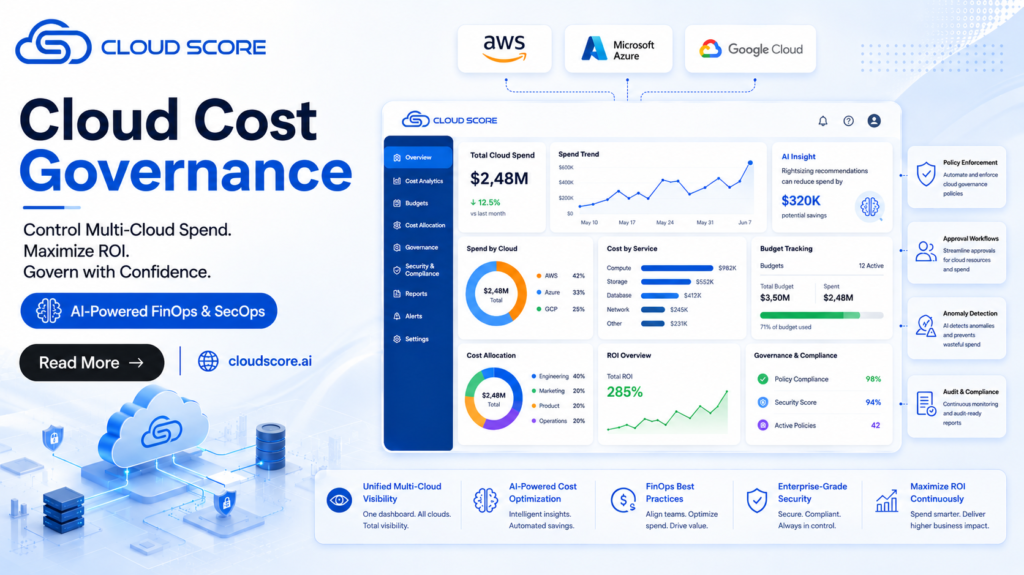
Over the last few years, organizations have invested heavily in cloud infrastructure – expecting scalability, flexibility, and efficiency. What they got instead was complexity and rising costs. Most teams today already have dashboards. They can see: Monthly cloud bills Service-wise spending Usage reports Yet despite all this visibility, one problem persists: 👉 Cloud costs continue to rise. Visibility shows you what happened.But it doesn’t give you the ability to control what happens next. The Real Problem Behind Rising Cloud Costs Cloud spending is not driven by finance teams – it’s driven by engineering decisions. Every deployment, scaling action, or architectural choice impacts cost. However, in most organizations: Engineering lacks cost context Finance lacks technical depth Leadership lacks real-time control This creates a gap where: Costs grow silently Inefficiencies go unnoticed Optimization happens too late By the time reports highlight an issue, the spend has already occurred. What a Cloud Cost Optimization Platform Should Actually Deliver A modern Cloud Cost Optimization Platform is not just a reporting tool. It is a system designed to bridge the gap between visibility and action. Real-Time Cost Visibility Across Infrastructure To control costs, you first need complete clarity. This includes: Multi-cloud environments (AWS, Azure, GCP) Kubernetes and container workloads Data pipelines and storage layers Team, service, and environment-level allocation Without this level of granularity, optimization is guesswork. From Insights to Immediate Action Most tools stop at insights.Modern platforms go further. They enable: Rightsizing recommendations based on real usage Detection of idle or underutilized resources Immediate actions to eliminate waste This reduces the delay between problem identification and resolution. Engineering-Led Cost Ownership True optimization happens when engineering teams take ownership of costs. A Cloud Cost Optimization Platform should: Map costs to teams and services Provide actionable insights within engineering workflows Align infrastructure decisions with financial impact This transforms cost management from a finance function into a shared responsibility. Intelligent Automation Forecasting Manual tracking cannot keep up with dynamic cloud environments. Modern platforms introduce: Real-time anomaly detection Budget alerts before overspending Predictive cost forecasting This ensures organizations move from reactive monitoring to proactive control. Why Most Organizations Still Struggle to Optimize Cloud Costs Despite adopting multiple tools, many teams fail to reduce cloud spend effectively. The core reason: 👉 They have visibility without execution. Dashboards highlight problems.Reports explain trends. But without a system that enables action, organizations are left with: Delayed decisions Fragmented workflows Missed optimization opportunities CloudScore: Turning Visibility Into Real Control CloudScore is designed to solve this exact problem. It is a unified Cloud Cost Optimization Platform built for modern, engineering-driven environments. Engineering-First Approach CloudScore is built for the teams that actually influence cloud spend: DevOps Platform Engineering Infrastructure teams This ensures cost optimization happens at the source not after the fact. Unified FinOps + SecOps Platform CloudScore combines: Cost optimization Security insights Compliance visibility All within a single platform. This eliminates the need for multiple disconnected tools and provides complete operational clarity. Deep Cloud Intelligence Modern architectures require deeper insights. CloudScore delivers visibility into: Kubernetes workloads Data and storage usage MLOps environments This enables precise and meaningful optimization. Real-Time Optimization and Automation With CloudScore: Cost anomalies are detected instantly Recommendations are actionable Integrations with Slack and Jira accelerate response This reduces waste before it impacts budgets. Secure, Read-Only Access CloudScore operates with a non-intrusive model: No changes to your infrastructure No operational risk Full visibility and insights You gain control without disruption. The Business Impact of Moving to Real Cost Control Organizations that adopt a true Cloud Cost Optimization Platform experience: Reduced unnecessary cloud spend Improved cost predictability Faster decision-making Better alignment between engineering and finance Cloud becomes not just scalable but financially efficient. The Shift from Visibility to Control Cloud cost management is evolving. The question is no longer:👉 “Can you see your cloud costs?” The real question is:👉 “Can you control them in real time?” A modern Cloud Cost Optimization Platform enables organizations to: Act instantly Optimize continuously Scale efficiently Because in today’s cloud environment, success is not defined by how much you spend— But by how effectively you control it. If your organization is still relying on reports and dashboards, you are only solving half the problem. It’s time to move beyond visibility. Start controlling your cloud costs with CloudScore.    Request a Demo | Start Your Free Trial | Contact Our Experts  See More Blogs: CloudOps Cost Optimization | Cloud Security Posture Management | Cloud Intelligence Platform | DevOps Environment Sprawl | FinOps Cloud Cost Ownership | FinOps and SecOps Convergence | DevOps Cloud Cost Visibility | Code Scan | Power Schedules | Multi Cloud Cost Optimization | Untagged Cloud Resources | Best Cloud Governance Solutions | SecOps & FinOps Cloud Governance | AI-Driven FinOps | AI Cloud Cost Optimization | Smart Cost Management | Simplify Cloud Costs | Automated FinOps Platform | Multi-Cloud Spend | Cost Efficiency | Cloud Security | Dynamic Optimization | Seasonality Insights | Cloud Governance | Sustainability Reporting | Cloud Infrastructure | Predictive Analytics | Integrating FinOps | Forecasting | Automated Cost Management | Cloud Cost Optimization
CloudOps Cost Optimization
Uncategorized

CloudOps Cost Optimization: Optimize AWS, Azure & GCP with CloudScore

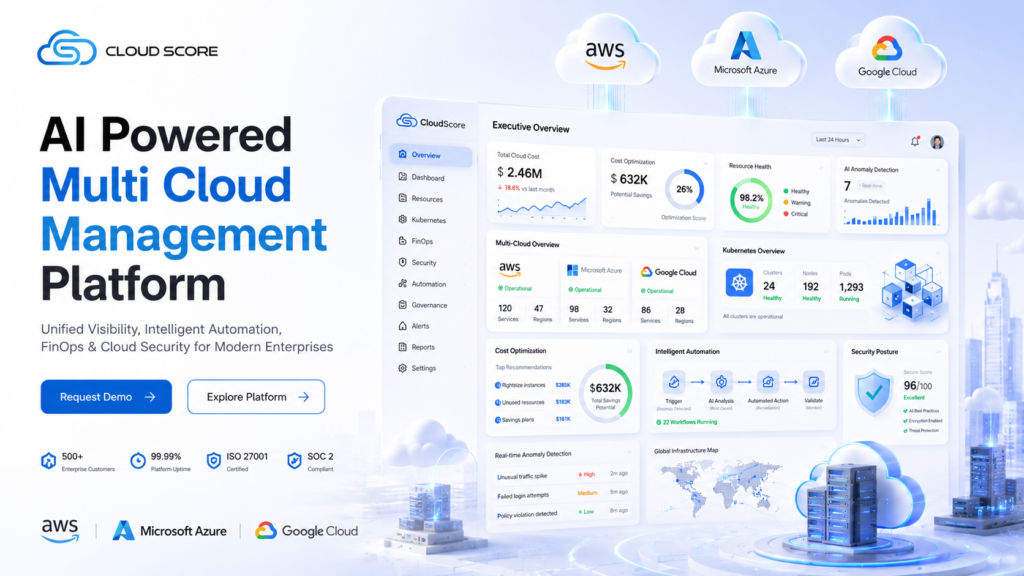
What is CloudOps Cost Optimization? CloudOps cost optimization is the process of continuously managing, monitoring, and optimizing cloud infrastructure costs across multi-cloud environments – without slowing down development. It includes: Real-time cost visibility Resource utilization tracking Automated cost controls Engineering-driven decision workflows Unlike traditional FinOps, CloudOps integrates directly into engineering systems – making optimization proactive, not reactive. Why CloudOps Fails in Multi-Cloud Environments 1. Fragmented Visibility Each cloud provider (AWS, Azure, GCP) has its own dashboards, billing logic, and tagging systems. Result: No unified cost intelligence Blind spots in spending 2. Reactive Cost Management Most teams analyze costs after the bill arrives. Result: Delayed decisions Uncontrolled cloud sprawl 3. Lack of Engineering Context Finance tools don’t map costs to: Services Teams Kubernetes workloads Result: Engineers don’t own costs Optimization never scales How CloudScore Transforms CloudOps Cost Optimization CloudScore is built as an engineering-first CloudOps platform, combining FinOps + Cloud Intelligence. Unified Multi-Cloud Cost Visibility CloudScore aggregates cost data across: AWS Azure GCP Outcome: One dashboard for all cloud spend No more siloed reporting ML-Driven Cost Optimization Instead of static reports, CloudScore uses machine learning to: Detect anomalies Recommend optimizations Predict future spend Outcome: Faster decisions Reduced manual analysis Kubernetes & Workload-Level Insights CloudScore connects costs directly to: Kubernetes clusters Containers Microservices Outcome: True cost accountability for engineering teams Granular optimization opportunities Automated Governance & Budget Controls Set rules for: Budget thresholds Cost anomalies Resource usage Outcome: Proactive cost control Reduced overspending Workflow Integration (Slack, Jira) CloudScore integrates directly into your workflow: Alerts in Slack Actions via Jira Outcome: Faster resolution No context switching Key Benefits of CloudOps Cost Optimization with CloudScore 1. Reduce Cloud Spend Without Slowing Innovation Optimize costs while maintaining deployment speed. 2. Engineering-Led Cost Ownership Give developers visibility and accountability. 3. Real-Time Decision Making Move from monthly reports → real-time insights. 4. Unified FinOps + SecOps Approach CloudScore doesn’t just optimize cost—it aligns: Cost Security Compliance CloudOps vs FinOps: What’s the Difference? Aspect FinOps CloudOps Cost Optimization Ownership Finance + Ops Engineering-led Timing Reactive Real-time Focus Cost tracking Cost + performance Tools Billing dashboards Intelligent platforms like CloudScore Who Needs CloudOps Cost Optimization? DevOps teams managing multi-cloud Platform engineering teams CTOs scaling infrastructure FinOps teams lacking engineering visibility Cloud complexity isn’t the problem anymore – lack of control is. When cost visibility is fragmented across AWS, Azure, and GCP, every delayed decision quietly increases waste, risk, and operational drag. CloudOps cost optimization is no longer optional – it’s the foundation of scalable, engineering-led cloud growth.    Request a Demo | Start Your Free Trial | Contact Our Experts  See More Blogs: Cloud Security Posture Management | Cloud Intelligence Platform | DevOps Environment Sprawl | FinOps Cloud Cost Ownership | FinOps and SecOps Convergence | DevOps Cloud Cost Visibility | Code Scan | Power Schedules | Multi Cloud Cost Optimization | Untagged Cloud Resources | Best Cloud Governance Solutions | SecOps & FinOps Cloud Governance | AI-Driven FinOps | AI Cloud Cost Optimization | Smart Cost Management | Simplify Cloud Costs | Automated FinOps Platform | Multi-Cloud Spend | Cost Efficiency | Cloud Security | Dynamic Optimization | Seasonality Insights | Cloud Governance | Sustainability Reporting | Cloud Infrastructure | Predictive Analytics | Integrating FinOps | Forecasting | Automated Cost Management | Cloud Cost Optimization
Cloud Security Posture Management
Uncategorized

How Cloud Security Posture Management Strengthens Modern SecOps

The SecOps Challenge in Cloud-Native Environments  SecOps teams today face an impossible balance:  Secure multi-cloud environments  Enforce compliance  Reduce risk exposure  Avoid slowing DevOps teams  Traditional security models rely on:  Heavy agents  Blocking controls  Manual audits  Siloed tools  In cloud-native environments, this approach creates friction and often gets bypassed.  Why Visibility Matters More Than Control  In modern cloud security, visibility beats enforcement.  Most risks come from:  Misconfigured services  Over-permissioned IAM roles  Forgotten resources  Insecure Kubernetes configurations  Compliance drift over time  Without continuous visibility, SecOps teams only see problems after incidents occur.  How CloudScore Delivers Unified SecOps Visibility  CloudScore SecOps provides continuous security intelligence across:  AWS, Azure, GCP  Microsoft 365  Kubernetes clusters  Identities, roles, and access paths  All with read-only access and zero production risk.  Cortex AI – Your Cloud Security Analyst  CloudScore’s Cortex AI allows security teams to:  Ask security questions in plain English  Automatically prioritize high-risk findings  Correlate IAM risk with assets and workloads  Receive step-by-step remediation guidance  This reduces noise and focuses teams on what actually matters.  Compliance Without the Audit Panic  CloudScore automates compliance for:  SOC 2  ISO 27001 / 27017 / 27018  PCI DSS  HIPAA  CIS Benchmarks  GDPR  Evidence is collected continuously. Reports are audit-ready. Compliance becomes ongoing, not a last-minute scramble.  Security That Respects DevOps Velocity  CloudScore enforces governance through:  Temporary access workflows  Automatic access revocation  Full audit logs  No agents  No infrastructure changes  Security improves – without blocking engineering.  Start securing your cloud environment with CloudScore’s intelligent Cloud Security Posture Management.    Request a Demo | Start Your Free Trial | Contact Our Experts  See More Blogs: Cloud Intelligence Platform | DevOps Environment Sprawl | FinOps Cloud Cost Ownership | FinOps and SecOps Convergence | DevOps Cloud Cost Visibility | Code Scan | Power Schedules | Multi Cloud Cost Optimization | Untagged Cloud Resources | Best Cloud Governance Solutions | SecOps & FinOps Cloud Governance | AI-Driven FinOps | AI Cloud Cost Optimization | Smart Cost Management | Simplify Cloud Costs | Automated FinOps Platform | Multi-Cloud Spend | Cost Efficiency | Cloud Security | Dynamic Optimization | Seasonality Insights | Cloud Governance | Sustainability Reporting | Cloud Infrastructure | Predictive Analytics | Integrating FinOps | Forecasting | Automated Cost Management | Cloud Cost Optimization
Cloud Intelligence Platform
Uncategorized

Why Cloud Intelligence Platforms Are Replacing Point Tools

The End of the Point Tool Era  Cloud operations didn’t become complex overnight but tools failed to evolve with them.  Most organizations still manage cloud using:  One tool for cost  One tool for security  One tool for compliance  One tool for monitoring  Spreadsheets for everything else  Each tool sees only part of the system. None connect the dots.  Why Siloed Tools Create Blind Spots  Point tools fail because they:  Don’t share context  Operate on delayed data  Ignore ownership  Treat cost, risk, and usage separately  Increase operational overhead  The cloud doesn’t operate in silos. Tools shouldn’t either.  What a Cloud Intelligence Platform Actually Means  A true cloud intelligence platform:  Unifies cost, usage, ownership, security, and compliance  Operates in real time  Correlates signals across teams  Supports engineering workflows  Reduces tool sprawl  This is the model CloudScore was built for.  How CloudScore Delivers Unified Cloud Intelligence  CloudScore combines:  DevOps Intelligence Visibility across CI/CD-driven environments, Kubernetes workloads, and infrastructure lifecycle.  FinOps Intelligence Real-time cost visibility, ML-powered optimization, budgets, forecasts, and anomaly detection.  SecOps Intelligence CSPM, IAM risk detection, compliance automation, and AI-driven security analysis.  Engineering-First Design Read-only access. No agents. Slack, Jira, and API-native workflows.  From Tools to Systems  CloudScore doesn’t replace tools—it replaces fragmentation.  When cost, security, and governance operate as one system, cloud complexity becomes manageable.  Explore how a Cloud Intelligence Platform simplifies cloud operations.  Request a Demo | Start Your Free Trial | Contact Our Experts  See More Blogs: DevOps Environment Sprawl | FinOps Cloud Cost Ownership | FinOps and SecOps Convergence | DevOps Cloud Cost Visibility | Code Scan | Power Schedules | Multi Cloud Cost Optimization | Untagged Cloud Resources | Best Cloud Governance Solutions | SecOps & FinOps Cloud Governance | AI-Driven FinOps | AI Cloud Cost Optimization | Smart Cost Management | Simplify Cloud Costs | Automated FinOps Platform | Multi-Cloud Spend | Cost Efficiency | Cloud Security | Dynamic Optimization | Seasonality Insights | Cloud Governance | Sustainability Reporting | Cloud Infrastructure | Predictive Analytics | Integrating FinOps | Forecasting | Automated Cost Management | Cloud Cost Optimization
DevOps Environment Sprawl
Uncategorized

DevOps Environment Sprawl: The Hidden Cost of Rapid Cloud Development

Automation Solved Speed and Created a New Problem Modern DevOps practices transformed how software is built and delivered.Engineering teams can now provision infrastructure in minutes, deploy continuously, and test new ideas at massive scale. Automation has made experimentation faster and development cycles shorter. But speed introduces a new challenge many teams overlook: DevOps environment sprawl. Every development workflow generates multiple environments such as: Temporary development environments Test and preview environments Feature-based infrastructure setups Demo and staging systems Many of these environments serve a short-term purpose.Yet once the task is complete, they often remain running long after they are needed. Over time, these unused environments accumulate across cloud accounts and clusters. What started as a productivity advantage gradually turns into hidden infrastructure growth. Why DevOps Environment Sprawl Is So Hard to See DevOps environment sprawl rarely appears as an obvious problem. Most teams don’t notice it because the environments are created automatically as part of normal development activity. Several factors make the issue difficult to detect: Resources are provisioned programmatically Ownership is unclear across teams Environments are distributed across multiple cloud accounts and clusters Tags are missing, outdated, or inconsistent Costs are shared across nodes, containers, and services By the time cloud spending reports surface unusual costs, the environments responsible may already be inactive or difficult to trace. The result is infrastructure that quietly consumes resources without anyone actively managing it. The Real Cost of Uncontrolled DevOps Environments When DevOps environment sprawl grows unchecked, the impact spreads beyond cloud costs. Organizations often encounter issues such as: Idle compute instances running for weeks Orphaned storage volumes and snapshots Underutilized Kubernetes clusters Security exposure from forgotten services Budget overruns with no clear ownership These problems are rarely caused by poor engineering practices. Instead, they emerge when fast-moving development environments lack visibility and lifecycle management. Without clear insight into what environments exist and who owns them, teams struggle to maintain control. How CloudScore Brings Order to DevOps Environments CloudScore is designed for engineering teams managing complex cloud infrastructure. Instead of slowing development workflows, it provides visibility and automation to control DevOps environment sprawl. Unified Environment Visibility CloudScore automatically discovers development, testing, staging, demo, and production environments across multiple clouds and Kubernetes clusters. Environment-to-Cost Mapping Every environment is mapped to teams, services, and owners, allowing organizations to understand the real cost impact of each workload. TTL & Power Management Rules Temporary environments can follow automatic shutdown policies, ensuring they do not remain active longer than necessary. Usage & Lifecycle Tracking Teams can see when environments were created, how long they have been running, and whether they are still actively used. Slack & Jira Workflows Environment planning, monitoring, and actions integrate directly into collaboration tools already used by DevOps teams. Automation Needs Control – Not More Process Automation accelerated development and innovation. However, without visibility, it also enabled DevOps environment sprawl to grow unnoticed. When environment lifecycle and ownership become visible, teams can maintain development speed while keeping infrastructure under control. Automation works best when it is paired with governance and intelligent cost visibility. Take Control of DevOps Environment Sprawl If your teams are deploying faster than ever but cloud costs keep rising, DevOps environment sprawl may be the missing piece. CloudScore helps engineering teams: 1. Discover hidden environments across multi-cloud and Kubernetes2. Track environment ownership and lifecycle3. Automatically control temporary environments4. Reduce unnecessary infrastructure costs5. Maintain visibility without slowing development Start seeing where your cloud environments are growing and where they should stop.  Request a Demo | Start Your Free Trial | Contact Our Experts  See More Blogs: FinOps Cloud Cost Ownership | FinOps and SecOps Convergence | DevOps Cloud Cost Visibility | Code Scan | Power Schedules | Multi Cloud Cost Optimization | Untagged Cloud Resources | Best Cloud Governance Solutions | SecOps & FinOps Cloud Governance | AI-Driven FinOps | AI Cloud Cost Optimization | Smart Cost Management | Simplify Cloud Costs | Automated FinOps Platform | Multi-Cloud Spend | Cost Efficiency | Cloud Security | Dynamic Optimization | Seasonality Insights | Cloud Governance | Sustainability Reporting | Cloud Infrastructure | Predictive Analytics | Integrating FinOps | Forecasting | Automated Cost Management | Cloud Cost Optimization
Why FinOps Cloud Cost Ownership Fails in Real Time
Uncategorized

Why FinOps Cloud Cost Ownership Fails in Real Time

FinOps Has Data — But Still Loses Control  Most organizations today have some form of FinOps tooling. They track cloud spend, generate reports, and review budgets. Yet cloud costs continue to rise quarter after quarter.  The issue isn’t lack of data. The issue is lack of ownership.  Cloud infrastructure is no longer static. Resources are created automatically through CI/CD pipelines, Terraform modules, Kubernetes controllers, and ephemeral environments. Manual tagging policies and spreadsheets simply cannot keep up with this pace.  When no one clearly owns a resource, no one feels responsible for its cost.  Why Traditional FinOps Models Break at Scale  Legacy FinOps assumes:  Static resources  Human-created infrastructure  Finance-owned controls  Monthly or quarterly reviews  Modern cloud environments break all of these assumptions.  In reality:  Engineers create infrastructure automatically  Kubernetes workloads share costs across teams  Environments appear and disappear daily  Budgets are exceeded before alerts fire  By the time finance notices an overrun, the context behind it is gone.  Ownership Is the Missing Layer in FinOps  Without real-time cost ownership:  Engineers don’t see the financial impact of decisions  Finance sees numbers without context  Leadership reacts instead of planning  Cost governance becomes reactive instead of preventative.  How CloudScore Enforces FinOps Ownership by Design  CloudScore was built to make ownership unavoidable.  How CloudScore Enables Engineering-First FinOps:  Automatic Resource Assignment CloudScore assigns resources to teams, projects, services, and environments using intelligent rules—without relying only on tags.  Cost Explorer with Business Context Costs are broken down by team, BU, application, service, environment, and user, with daily, monthly, and yearly views.  Budgets, Forecasts & Anomaly Detection Teams receive real-time alerts for spend spikes, forecast overruns, and unusual behavior—before budgets are exceeded.  Shared Accountability Workflows FinOps becomes a shared responsibility across engineering, finance, and leadership, not a finance-only process.  Slack & Jira Integration Ownership and action happen where teams already work—not in isolated dashboards.  FinOps That Actually Scales  FinOps doesn’t fail because teams don’t care. It fails because systems don’t enforce accountability.     Request a Demo | Start Your Free Trial | Contact Our Experts  See More Blogs: FinOps and SecOps Convergence | DevOps Cloud Cost Visibility | Code Scan | Power Schedules | Multi Cloud Cost Optimization | Untagged Cloud Resources | Best Cloud Governance Solutions | SecOps & FinOps Cloud Governance | AI-Driven FinOps | AI Cloud Cost Optimization | Smart Cost Management | Simplify Cloud Costs | Automated FinOps Platform | Multi-Cloud Spend | Cost Efficiency | Cloud Security | Dynamic Optimization | Seasonality Insights | Cloud Governance | Sustainability Reporting | Cloud Infrastructure | Predictive Analytics | Integrating FinOps | Forecasting  | Automated Cost Management | Cloud Cost Optimization
FinOps and SecOps Convergence
Uncategorized

Why FinOps and SecOps Are Converging in Modern Cloud Platforms

Cloud Complexity Is Forcing a New Model  Cloud environments are no longer simple infrastructure layers. They are:  Multi-cloud  Kubernetes-driven  API-heavy  Data-platform intensive  Security- and compliance-sensitive  Yet most organizations still manage cost and security in silos.  FinOps teams focus on spend. SecOps teams focus on risk. DevOps teams focus on delivery.  The cloud doesn’t operate in silos and neither should the tools.  Cost and Security Are More Connected Than Teams Realize  Many of the biggest cloud risks are also cost risks:  Idle resources increase attack surface and spend  Over-permissioned identities increase breach impact and financial exposure  Misconfigured services create compliance and cost failures  Orphaned assets quietly drain budgets  Without shared visibility, teams solve symptoms—not causes.  Why Tool Sprawl Is No Longer Sustainable  Organizations now operate:  A cost management tool  A CSPM tool  An IAM security tool  A compliance platform  Multiple dashboards  Each tool sees only part of the picture. None correlate cost, usage, ownership, and risk together.  This fragmentation slows response, increases noise, and hides systemic issues.  How CloudScore Unifies FinOps and SecOps  CloudScore was designed as a unified cloud intelligence platform.  What CloudScore does:  Unified Visibility Single-pane visibility across cloud resources, workloads, identities, costs, and risks.  Engineering-First FinOps Real-time cost intelligence, ML-driven optimization, Kubernetes cost management, budgets, forecasts, and anomaly detection.  Built-In SecOps Multi-cloud CSPM, IAM risk detection, misconfiguration monitoring, Kubernetes security, and compliance automation.  Cortex AI Security Analyst Ask security questions in plain English and receive prioritized, context-aware remediation guidance.  Correlation by Design Security findings are correlated with cost, usage, ownership, and lifecycle—not isolated alerts.  Governance Without Slowing Engineering  CloudScore enforces governance through:  Read-only access  Temporary access workflows  Automated ownership rules  Full audit logs  No agents. No production changes. No velocity loss.  The Platform Shift Is Already Happening  FinOps and SecOps are no longer separate concerns. They are two lenses on the same cloud reality.   Request a Demo | Start Your Free Trial | Contact Our Experts  See More Blogs: DevOps Cloud Cost Visibility | Code Scan | Power schedules | Multi Cloud cost optimization | Untagged Cloud Resources | Best Cloud Governance Solutions | SecOps & FinOps Cloud Governance | AI-Driven FinOps | AI Cloud Cost Optimization | Smart Cost Management | Simplify Cloud Costs | Automated FinOps Platform | Multi-Cloud Spend | Cost Efficiency | Cloud Security | Dynamic Optimization | Seasonality Insights | Cloud Governance | Sustainability Reporting | Cloud Infrastructure | Predictive Analytics | Integrating FinOps | Forecasting  | Automated Cost Management | Cloud Cost Optimization
Uncategorized

Why Cloud Costs Spiral Out of Control in Modern DevOps Environments

Speed Changed Everything – Visibility Didn’t  DevOps teams today deploy faster than ever. CI/CD pipelines push code multiple times a day. Infrastructure is created automatically using Terraform and GitOps workflows. Kubernetes schedules workloads dynamically across clusters and regions.  Yet while speed evolved, cost visibility did not.  Engineers can instantly detect:  Failed deployments  Latency spikes  Pod crashes  But they cannot see cloud cost impact in real time.  By the time cloud bills arrive, environments have already changed. Pods are gone. Clusters have scaled. Context is lost.  This is how cloud costs spiral without anyone doing something “wrong”.   Why Kubernetes Makes Cost Even Harder to Track  Kubernetes breaks traditional cost models:  Costs are shared across namespaces  Pods are ephemeral  Nodes serve multiple teams  Tags don’t align with workloads  CI/CD pipelines create infra dynamically  Finance tools expect static resources. DevOps runs dynamic systems.  That mismatch creates cost chaos.  When Cost Is Invisible, Ownership Disappears  Without real-time cost visibility:  Engineers optimize performance, not spend  Finance sees overruns without context  Leadership reacts instead of planning  Cost becomes a surprise — not a signal.  How CloudScore Restores DevOps Cost Control  CloudScore is built for engineering-first FinOps, not finance-only reporting.  How it works in practice:  Unified Multi-Cloud Visibility CloudScore provides a single-pane view across AWS, Azure, GCP, Kubernetes, and data platforms, automatically discovering resources, services, workloads, and environments.  Automatic Cost Allocation Beyond Tags Costs are mapped to teams, services, environments, clusters, namespaces, and workloads, even when tags are missing.  Kubernetes-Native Cost Intelligence Engineers see cost by:  Cluster  Namespace  Deployment  Pod Including over-provisioned CPU/memory and idle nodes.  Real-Time Cost Signals Cost becomes an operational metric—visible while decisions are being made, not weeks later.  No Friction by Design Read-only access. No agents. No pipeline changes. Setup in minutes.  The Shift That Changes Everything  When cost moves at the same speed as DevOps, teams don’t slow down – they get smarter.   Request a Demo | Start Your Free Trial | Contact Our Experts  See More Blogs: Code Scan | Power schedules | Multi Cloud cost optimization | Untagged Cloud Resources | Best Cloud Governance Solutions | SecOps & FinOps Cloud Governance | AI-Driven FinOps | AI Cloud Cost Optimization | Smart Cost Management | Simplify Cloud Costs | Automated FinOps Platform | Multi-Cloud Spend | Cost Efficiency | Cloud Security | Dynamic Optimization | Seasonality Insights | Cloud Governance | Sustainability Reporting | Cloud Infrastructure | Predictive Analytics | Integrating FinOps | Forecasting  | Automated Cost Management | Cloud Cost Optimization

Scroll to Top