
Uncategorized

Achieving Cost Efficiency through Serverless Architectures with CloudScore
Uncategorized

Achieving Cost Efficiency through Serverless Architectures with CloudScore

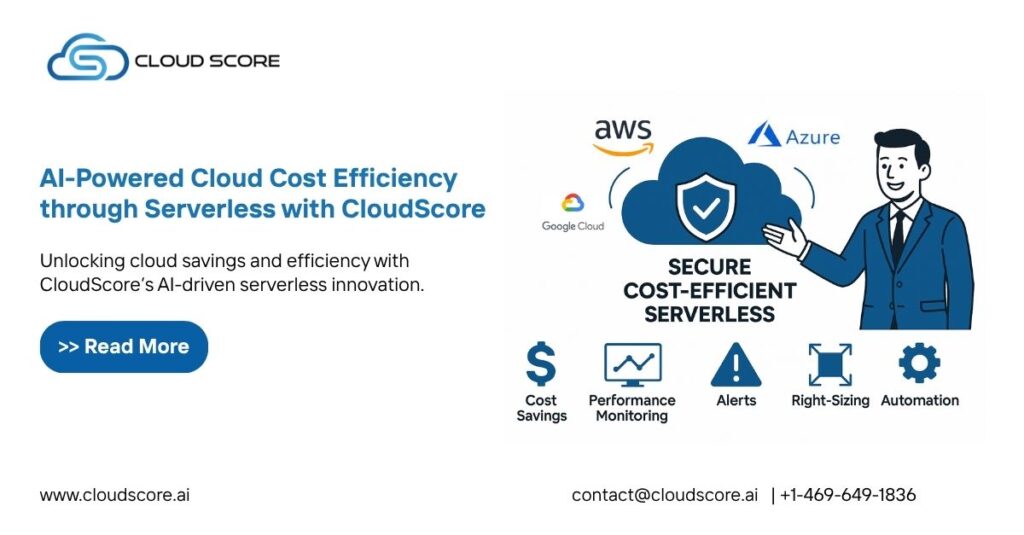
In the evolving landscape of cloud computing, serverless architectures are gaining popularity for their potential to enhance cost efficiency and simplify operations. By abstracting server management and automatically scaling resources, serverless computing allows organizations to focus on writing and deploying code without worrying about infrastructure. However, managing and optimizing costs in a serverless environment can still be challenging. CloudScore, a leading cloud cost optimization platform, provides the tools necessary to maximize cost savings in serverless architectures. In this article, we’ll explore how CloudScore can help you achieve cost efficiency and operational excellence with serverless computing.  The Benefits and Challenges of Serverless Architectures  Serverless computing offers several benefits:  Cost Savings: You pay only for the compute time you use, which can significantly reduce costs compared to traditional server-based architectures. Scalability: Serverless architectures automatically scale to handle varying loads, ensuring optimal performance during peak times without manual intervention. Reduced Operational Overhead: Serverless abstracts server management, allowing developers to focus on application logic and business value.  However, serverless architectures also present challenges:  Cost Management: Despite the pay-as-you-go model, costs can escalate if not monitored and managed effectively. Performance Optimization: Ensuring that serverless functions perform efficiently without over-provisioning can be complex. Complexity in Monitoring: Tracking and analyzing the performance and cost of numerous small functions across various services requires robust monitoring tools.  How CloudScore Enhances Serverless Cost Efficiency  CloudScore offers a comprehensive suite of tools designed to optimize costs and improve performance in serverless environments. Here’s how CloudScore facilitates cost efficiency in serverless architectures:  Detailed Cost Analysis CloudScore provides detailed insights into the cost of each serverless function, helping you understand where your spending is concentrated and identify opportunities for optimization.  Granular Cost Breakdown: CloudScore breaks down costs by individual serverless functions, showing exactly how much each function is costing you.  Cost Trends: The platform tracks cost trends over time, allowing you to identify spikes in usage and understand their causes.  Performance Monitoring and Optimization CloudScore continuously monitors the performance of your serverless functions, providing actionable insights to ensure they run efficiently.  Real-Time Monitoring: CloudScore provides real-time monitoring of function execution times, memory usage, and invocation counts.  Performance Alerts: The platform generates alerts for functions that exceed predefined thresholds, enabling proactive management.  Optimization Recommendations: CloudScore offers recommendations for optimizing function performance, such as adjusting memory allocation or reconfiguring code to reduce execution time.  Cost Management Tools CloudScore helps you manage and control costs effectively, ensuring that your serverless architecture remains cost-efficient.  Budget Tracking: Set budgets for your serverless projects and track spending in real-time to ensure you stay within financial limits.  Automated Cost Alerts: Receive automated alerts when spending approaches or exceeds budget thresholds, allowing for timely interventions.  Resource Utilization Reports: Detailed reports on resource utilization help you identify underutilized functions and opportunities for cost savings.  Strategic Use of Serverless Resources CloudScore provides insights and strategies for leveraging serverless resources in the most cost-effective manner.  Right-Sizing Functions: Recommendations for right-sizing serverless functions based on usage patterns, ensuring you only pay for the resources you need.  Optimizing Invocation Patterns: Analyze invocation patterns to identify opportunities for batching or scheduling functions to reduce costs.  Leveraging Spot Instances: For non-critical workloads, CloudScore suggests using spot instances to further reduce costs.  Real-World Example: A Case Study  Consider a financial technology company that uses serverless computing to run its transaction processing and analytics workloads. The company faced challenges in managing and optimizing the costs associated with its serverless architecture. By leveraging CloudScore’s capabilities, the company aimed to enhance cost efficiency and maintain optimal performance.  Step 1: Detailed Cost Analysis  CloudScore analyzed the company’s serverless environment, providing a granular breakdown of costs associated with each function. This analysis revealed that a few high-traffic functions were responsible for the majority of the costs.  Step 2: Performance Monitoring and Optimization  Using CloudScore’s real-time monitoring tools, the company tracked the performance of its serverless functions. CloudScore identified several functions that were over-allocated in terms of memory, leading to unnecessary costs. The platform provided recommendations to right-size these functions.  Step 3: Cost Management and Budget Tracking  The company set budgets for its serverless projects within CloudScore and received automated alerts when spending approached the set thresholds. This proactive approach allowed the company to take timely actions to control costs.  Step 4: Strategic Resource Utilization  CloudScore provided insights into invocation patterns, suggesting that the company batch certain functions to reduce the frequency of invocations. The platform also recommended leveraging spot instances for non-critical workloads, further enhancing cost efficiency.  Outcome  Within three months, the company achieved a 30% reduction in serverless computing costs while maintaining optimal performance. CloudScore’s detailed insights and recommendations enabled the company to manage its serverless environment effectively, ensuring cost efficiency and operational excellence.  Serverless architectures offer significant advantages in terms of cost savings and operational efficiency, but managing and optimizing these environments can be challenging. CloudScore’s advanced tools and capabilities make it easier to achieve cost efficiency and performance optimization in serverless architectures. By leveraging CloudScore, organizations can maximize the benefits of serverless computing, ensuring that their cloud infrastructure supports their strategic goals while remaining cost-effective.  Optimize your serverless costs today and explore smarter savings with CloudScore. Start your free trial now.  Request a Demo | Start Your Free Trial | Contact Our Experts See More Blogs: Cloud Security | Dynamic Optimization | Seasonality Insights | Cloud Governance | Sustainability Reporting | Cloud Infrastructure | Predictive Analytics | Integrating FinOps | Forecasting  | Automated Cost Management | Cloud Cost Optimization
Enhancing Multi-Cloud Security and Compliance with CloudScore
Uncategorized

Enhancing Multi-Cloud Security and Compliance with CloudScore

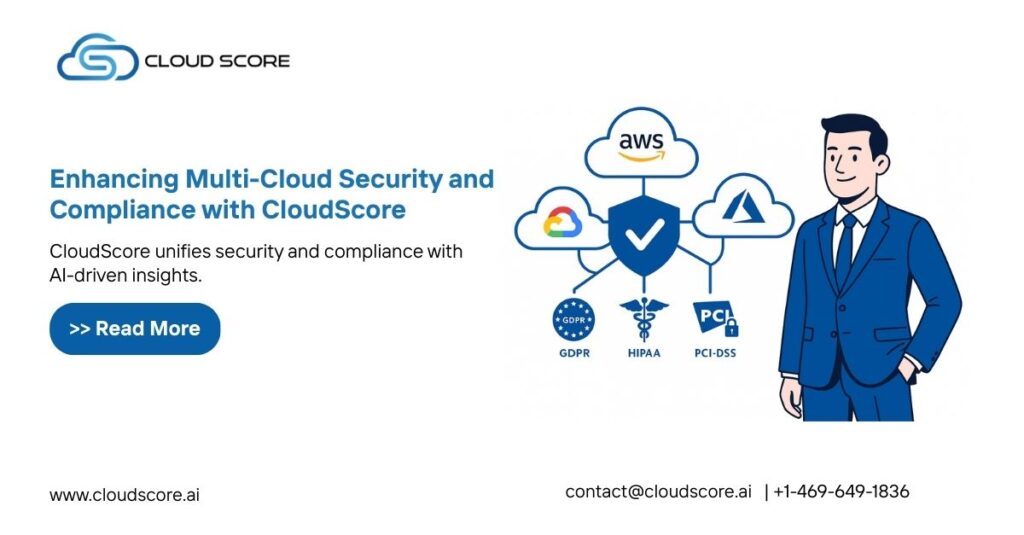
In the modern digital landscape, many organizations adopt a multi-cloud strategy to leverage the best features of different cloud service providers (CSPs). While this approach offers flexibility and resilience, it also introduces significant challenges in managing security and compliance across diverse platforms. CloudScore, a leading cloud cost optimization platform, provides robust tools to help organizations navigate these challenges, ensuring secure and compliant multi-cloud operations. In this article, we’ll explore how CloudScore can streamline multi-cloud security and compliance, providing peace of mind and operational efficiency.  The Complexity of Multi-Cloud Security and Compliance  Managing security and compliance in a multi-cloud environment involves several complexities:  Diverse Security Protocols: Each cloud provider has its own set of security protocols and configurations, making it difficult to maintain consistent security standards. Compliance Requirements: Organizations must adhere to various regulatory requirements, which can vary depending on the region and industry. Data Silos: Security and compliance data from different providers often reside in silos, hindering a comprehensive view of the overall security posture. Dynamic Environments: The dynamic nature of cloud environments, with frequent changes and updates, requires continuous monitoring and adjustment of security measures.  How CloudScore Enhances Multi-Cloud Security and Compliance  CloudScore offers a comprehensive suite of tools designed to simplify and enhance security and compliance management across multiple cloud providers. Here’s how CloudScore facilitates this process:  Unified Security Visibility CloudScore integrates with all major cloud providers, consolidating security data into a single, unified dashboard. This centralized view provides organizations with a comprehensive understanding of their security posture across all cloud environments.  Centralized Monitoring: CloudScore continuously monitors security configurations and events across all connected cloud environments, providing real-time insights into potential vulnerabilities and threats.  Security Dashboards: The platform offers intuitive dashboards that display security metrics and alerts, allowing organizations to quickly identify and address security issues.  Automated Compliance Monitoring Maintaining compliance with regulatory requirements is critical for avoiding legal penalties and protecting organizational reputation. CloudScore automates compliance monitoring, ensuring that organizations meet regulatory standards consistently.  Compliance Frameworks: CloudScore supports multiple compliance frameworks, including GDPR, HIPAA, and PCI-DSS. The platform continuously checks cloud environments against these standards, identifying any deviations.  Automated Audits: The platform performs automated audits, generating compliance reports that detail the current state of compliance and highlight areas that require attention.  Policy Enforcement and Automation CloudScore enables organizations to define and enforce security and compliance policies across their multi-cloud environments. Automated policy enforcement ensures that security standards are consistently applied.  Policy Definition: Organizations can define custom security and compliance policies based on their specific requirements. These policies can include rules for access control, encryption, and data retention.  Automated Enforcement: Once defined, CloudScore automatically enforces these policies, ensuring that any non-compliant configurations are corrected promptly.  Incident Response and Remediation In the event of a security incident, rapid response and remediation are crucial for minimizing impact. CloudScore provides tools for effective incident management.  Incident Detection: The platform detects security incidents in real-time, generating alerts and providing detailed information about the nature and severity of the threat.  Automated Remediation: CloudScore can automatically execute remediation actions based on predefined policies, such as isolating compromised resources or revoking unauthorized access.  Continuous Improvement Security and compliance are ongoing processes that require continuous improvement. CloudScore provides insights and recommendations to help organizations enhance their security posture over time.  Security Assessments: CloudScore conducts regular security assessments, identifying potential vulnerabilities and providing recommendations for improvement.  Compliance Optimization: The platform offers suggestions for optimizing compliance processes, ensuring that organizations stay ahead of regulatory changes and industry best practices.  Real-World Example: A Case Study  Consider a healthcare organization that uses multiple cloud providers to manage patient data, run clinical applications, and support research initiatives. The organization faced challenges in ensuring consistent security and compliance across its multi-cloud environment. By leveraging CloudScore’s capabilities, the organization aimed to enhance its security posture and maintain compliance with healthcare regulations.  Step 1: Unified Security Visibility  CloudScore integrated with the organization’s cloud environments, consolidating security data from AWS, Azure, and Google Cloud into a single dashboard. This provided the security team with a comprehensive view of the organization’s security posture.   Step 2: Automated Compliance Monitoring  The platform continuously monitored the organization’s cloud environments against healthcare-specific compliance frameworks, such as HIPAA. CloudScore identified any non-compliant configurations and provided detailed reports.  Step 3: Policy Enforcement  The organization defined custom security policies for data access, encryption, and logging. CloudScore automatically enforced these policies, ensuring consistent security standards across all cloud environments.  Step 4: Incident Response and Remediation  When a security incident occurred involving unauthorized access to patient data, CloudScore detected the threat in real-time and automatically revoked the unauthorized access. The platform provided detailed incident reports, enabling the organization to understand the root cause and prevent future occurrences.  Step 5: Continuous Improvement  CloudScore conducted regular security assessments, identifying areas for improvement and providing actionable recommendations. The organization implemented these suggestions, continuously enhancing its security posture.  Outcome  Within six months, the healthcare organization achieved significant improvements in security and compliance. The unified visibility and automated monitoring provided by CloudScore enabled the organization to proactively manage security risks and maintain compliance with healthcare regulations, protecting patient data and ensuring operational efficiency.  Managing security and compliance in a multi-cloud environment is complex but essential for protecting sensitive data and maintaining regulatory adherence. CloudScore’s advanced tools and capabilities make it easier to achieve unified security visibility, automate compliance monitoring, enforce policies, and respond to incidents. By leveraging CloudScore, organizations can enhance their security posture, ensure compliance, and focus on their core business objectives with confidence.  Secure your multi-cloud environment with real-time visibility and automated compliance. Start your free Cloudscore trial today and stay ahead of risks effortlessly.  Request a Demo | Start Your Free Trial | Contact Our Experts See more Blogs: Dynamic Optimization | Seasonality Insights | Cloud Governance | Sustainability Reporting | Cloud Infrastructure | Predictive Analytics | Integrating FinOps | Forecasting  | Automated Cost Management | Cloud Cost Optimization
Dynamic Resource Allocation with CloudScore: Optimizing Cloud Efficiency in Real-Time
Uncategorized

Dynamic Resource Allocation with CloudScore: Optimizing Cloud Efficiency in Real-Time

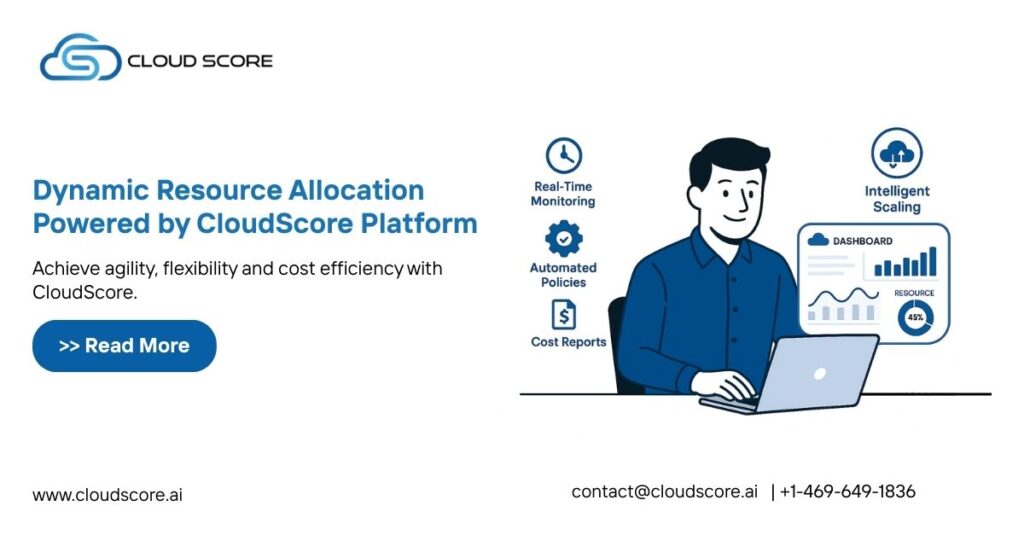
In the fast-paced world of cloud computing, dynamic resource allocation is essential for maintaining cost efficiency and ensuring optimal performance. As organizations increasingly rely on cloud infrastructure to support their operations, the ability to adjust resource allocations in real-time becomes crucial. CloudScore, a leading cloud cost optimization platform, offers advanced tools and capabilities to dynamically manage cloud resources, ensuring that organizations only pay for what they need while maintaining high levels of performance.  The Importance of Dynamic Resource Allocation  Dynamic resource allocation refers to the ability to adjust computing resources in response to real-time demand. This approach contrasts with static resource allocation, where resources are provisioned based on estimated peak loads and remain fixed regardless of actual usage. While static allocation can lead to significant waste and higher costs, dynamic allocation allows for better utilization of resources and cost savings.  Key benefits of dynamic resource allocation include:  Cost Efficiency: Automatically scaling resources up or down based on demand ensures that organizations do not pay for unused capacity.  Performance Optimization: By matching resources to current workload demands, organizations can maintain optimal performance without over-provisioning.  Flexibility: Dynamic allocation allows for rapid response to changing business needs, providing the agility required in today’s competitive landscape.  How CloudScore Enhances Dynamic Resource Allocation  CloudScore provides a suite of tools and features designed to optimize resource allocation dynamically, enabling organizations to achieve significant cost savings and performance improvements. Here’s how CloudScore facilitates dynamic resource allocation:  Real-Time Monitoring and Analytics CloudScore continuously monitors resource usage across your cloud environments, collecting data on CPU and memory utilization, network traffic, and other key metrics. This real-time monitoring provides a comprehensive view of resource consumption, allowing for timely and informed decisions.  Intelligent Scaling Algorithms Utilizing advanced machine learning algorithms, CloudScore analyzes historical and real-time data to predict future resource needs. These predictions enable the platform to automatically scale resources up or down, ensuring that capacity aligns with demand. This intelligent scaling minimizes waste and ensures that applications have the necessary resources to perform optimally.  Automated Policies and Alerts CloudScore allows organizations to define automated policies for resource management. These policies can include rules for scaling, threshold settings for utilization, and automated responses to changing conditions. Additionally, CloudScore provides real-time alerts to notify stakeholders of significant changes or potential issues, enabling proactive management.  Cost and Performance Optimization Reports To support ongoing optimization efforts, CloudScore generates detailed reports on resource usage, cost savings, and performance metrics. These reports provide valuable insights into how resources are being utilized and highlight opportunities for further optimization. By reviewing these reports, organizations can make data-driven decisions to enhance their cloud strategies.  Real-World Example: A Case Study  Consider a digital marketing agency that manages multiple client campaigns, each with varying traffic patterns and resource requirements. The agency faced challenges with static resource allocation, leading to over-provisioning during off-peak times and under-provisioning during high-traffic periods. By adopting CloudScore’s dynamic resource allocation capabilities, the agency aimed to optimize resource usage and reduce costs.  Step 1: Real-Time Monitoring Implementation  CloudScore was integrated with the agency’s cloud infrastructure, enabling continuous monitoring of resource usage across all client campaigns. This integration provided the agency with real-time visibility into their cloud environments.  Step 2: Policy Definition and Automation  The agency defined automated policies within CloudScore, setting rules for scaling resources based on CPU and memory utilization thresholds. These policies ensured that resources were scaled up during peak traffic periods and scaled down during off-peak times.  Step 3: Intelligent Scaling in Action  CloudScore’s intelligent scaling algorithms analyzed historical and real-time data, automatically adjusting resources as needed. During a major campaign launch for a high-profile client, the platform scaled resources up to handle the increased traffic. Conversely, during quieter periods, resources were scaled down to minimize costs.  Step 4: Ongoing Optimization and Reporting  CloudScore provided the agency with detailed reports on resource usage and cost savings. These reports highlighted the effectiveness of the dynamic allocation strategies and identified additional opportunities for optimization. By reviewing these reports, the agency continuously refined their resource management policies.  Outcome  Within six months of implementing CloudScore, the agency achieved a 35% reduction in cloud costs while maintaining optimal performance for all client campaigns. The ability to dynamically allocate resources in real-time allowed the agency to respond quickly to changing demands and provide superior service to their clients.  Dynamic resource allocation is a critical component of effective cloud management, enabling organizations to achieve cost efficiency and maintain high performance. CloudScore’s advanced tools and capabilities make it possible to dynamically manage cloud resources in real-time, providing the flexibility and agility needed in today’s fast-paced business environment. By leveraging CloudScore, organizations can optimize resource usage, reduce costs, and ensure that their cloud infrastructure supports their strategic goals.  Optimize cloud resources in real-time without overspending. Start your free CloudScore trial and achieve peak performance at lower costs.  Request a Demo | Start Your Free Trial | Contact Our Experts See more Blogs:  Seasonality Insights | Cloud Governance | Sustainability Reporting | Cloud Infrastructure | Predictive Analytics | Integrating FinOps | Forecasting  | Automated Cost Management | Cloud Cost Optimization
Seasonality-Aware Anomaly Detection in Multi-Cloud with Cloudscore
Uncategorized

Seasonality-Aware Anomaly Detection in Multi-Cloud Environments with Data Analytics Platforms

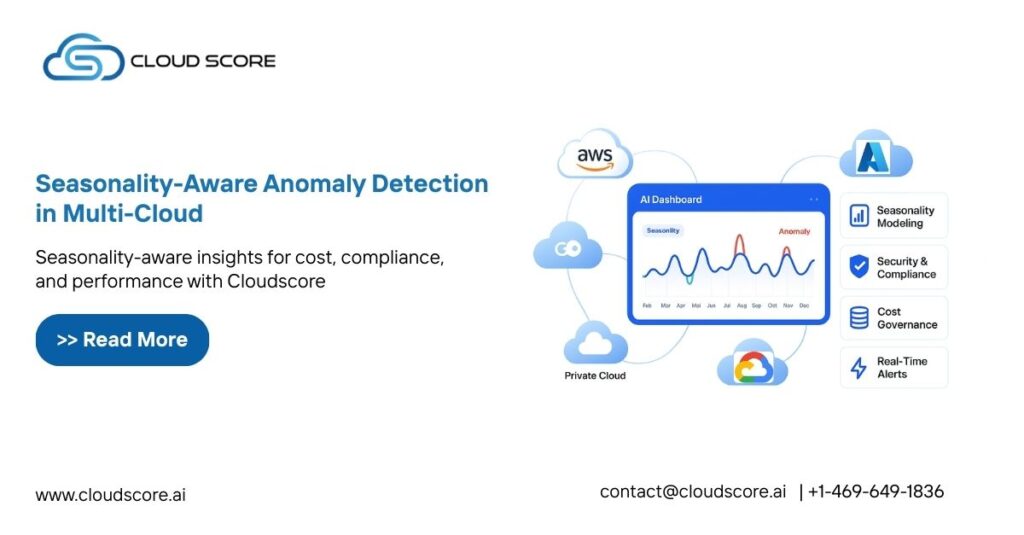
In today’s era of cloud sprawl, where workloads span AWS, Azure, GCP and private clouds, delivering reliable performance and cost control requires intelligence that understands usage rhythms not just raw data. That’s where a data analytics platform with seasonality‑aware anomaly detection becomes indispensable. The challenge is that cloud systems exhibit predictable cyclical behaviors daily peaks in API calls, weekly batch jobs, and monthly end‑of‑month scaling that traditional anomaly detectors mistake for failures. A data analytics platform that recognizes and adapts to seasonality helps reduce false alerts and better surface real issues occurring across multiple clouds. Why Seasonality-Aware Detection Matters Organizations running workloads across multiple clouds face several obstacles: Existing anomaly algorithms often fail in seasonal contexts, wrongly flagging normal cyclical spikes as anomalies or missing genuine deviations tucked within seasons. Multi‑cloud setups introduce high data dimensionality, confusing basic detection methods, and diluting performance signals. Rapid detection remains vital, so techniques must be efficient rather than computationally expensive. A peer‑reviewed study published in IEEE Transactions on Knowledge and Data Engineering in 2022 introduces an unsupervised, prediction‑driven anomaly detection method that incorporates time‑series decomposition and a novel metric called Local Trend Inconsistency (LTI). That method achieved consistently higher Area Under the Curve (AUC) performance compared to baseline approaches, all while preserving real‑time detection efficiency in multi‑seasonal data environments. Meanwhile, a survey by Virtana reports that 82 percent of enterprises have adopted multi‑cloud strategies, and over 78 percent deploy workloads across at least three public clouds, significantly increasing the complexity of detection across layered seasonal patterns. How CloudScore Enables Smart Detection with a Unified Framework CloudScore combines AI, FinOps, SecOps, and automation into one cohesive data analytics platform designed for multi‑cloud observability and anomaly detection. Here’s how it addresses the needs above: Seasonality‑aware modeling: CloudScore employs advanced decomposition and statistical‑learning techniques similar to multi‑SARIMA and MAD‑based methods to differentiate between expected cyclical usage and true anomalies. Unified telemetry across clouds: It aggregates metrics from each provider into a single view, easing the burden of cross‑cloud data fragmentation. Dynamic baselining using AI: Automated learning profiles usage patterns over time, so the data analytics platform anticipates regular peaks such as weekend traffic surges or monthly billing cycles while swiftly detecting deviations. Real‑time alerts with context: CloudScore avoids alert storms by filtering out seasonality noise and focusing on meaningful variance that could indicate security issues, cost spikes, or performance degradation. Real-World Example: Detecting Seasonal Anomalies in a Media Streaming App Consider a streaming service that experiences consistent surges in viewing during weekend evenings. Earlier, generic anomaly tools flooded operations teams with false positives every Saturday night. By switching to CloudScore: The system learned normal weekend spikes across all clouds. When one region exhibited an unexpected drop in streaming quality during this same window, CloudScore raised a genuine, timely alert. Automated remediation workflows then throttled traffic routing and isolated the affected node before user experience degraded significantly. This saved hours of manual investigation and prevented potential churn all driven by models that grasp cyclical trends through the data analytics platform. Putting Seasonality-Aware Insights into Broader Cloud Strategy To drive financial accuracy and future‑proof your operational model, it’s helpful to pair anomaly insights with budgeting and forecasting. Explorations like enhanced forecasting and budgeting with CloudScore show how organizations refine predictions and align capacity with demand. Seasonality‑aware detection isn’t just about spotting outliers it’s about: Reducing alert fatigue by minimizing false positives during predictable cycles. Improving cost governance, as unexpected overconsumption during peak cycles is highlighted promptly. Boosting resilience, with operations teams empowered by a data analytics platform that understands usage ebb and flow across clouds. Why You Should Care Practices from automated cost management policies with CloudScore illustrate how automated actions can follow anomaly detection, triggering policy‑driven throttling or resource suspension when thresholds are breached. A few compelling benefits of CloudScore include: Organizations using such intelligent detection systems report stronger reliability and fewer false alarms. According to research on multi‑SARIMA modeling, integrating multiple seasonal components improved detection accuracy over traditional SARIMA models even though processing costs were slightly higher. By operating over multiple clouds with context, CloudScore helps your team move from reactive firefighting to proactive optimization, reducing time spent troubleshooting and increasing strategic impact. By understanding rhythmic patterns and linking detection to automation and FinOps practices, CloudScore helps organizations optimize operations and make smarter decisions across their cloud estates. Integrating Seasonality-Aware Detection with Business Outcomes While anomaly detection is often viewed as a purely technical function, its business impact is equally profound. For finance teams, a top data analytics platform that understands seasonal variations can reveal when cost fluctuations are predictable versus when they signal overspending. This distinction prevents unnecessary escalations while ensuring genuine anomalies, such as runaway compute jobs or unauthorized resource provisioning, are caught in time. For operations teams, seasonality-aware detection improves service reliability. By contextualizing patterns like end-of-quarter reporting surges or holiday retail spikes, CloudScore ensures teams aren’t distracted by predictable alerts. Instead, they can focus on safeguarding uptime and aligning capacity with customer demand. Security leaders also benefit. Seasonal baselines help differentiate legitimate activity patterns such as increased log-ins during global product launches from suspicious anomalies that may indicate cyber threats. In this way, detection becomes part of SecOps frontline defense. Ultimately, embedding seasonality-aware anomaly detection within CloudScore strengthens the feedback loop between IT, finance, and security stakeholders. With accurate insights from a data analytics platform, organizations can confidently optimize costs, bolster resilience, and support long-term business objectives without compromising on performance or governance. CloudScore helps you cut false alerts, control costs and stay resilient with seasonality-aware anomaly detection.  Request a Demo | Start Free Trial | Contact Experts See more Blogs: Cloud Governance | Sustainability Reporting | Cloud Infrastructure | Predictive Analytics | Integrating FinOps | Forecasting  | Automated Cost Management | Cloud Cost Optimization
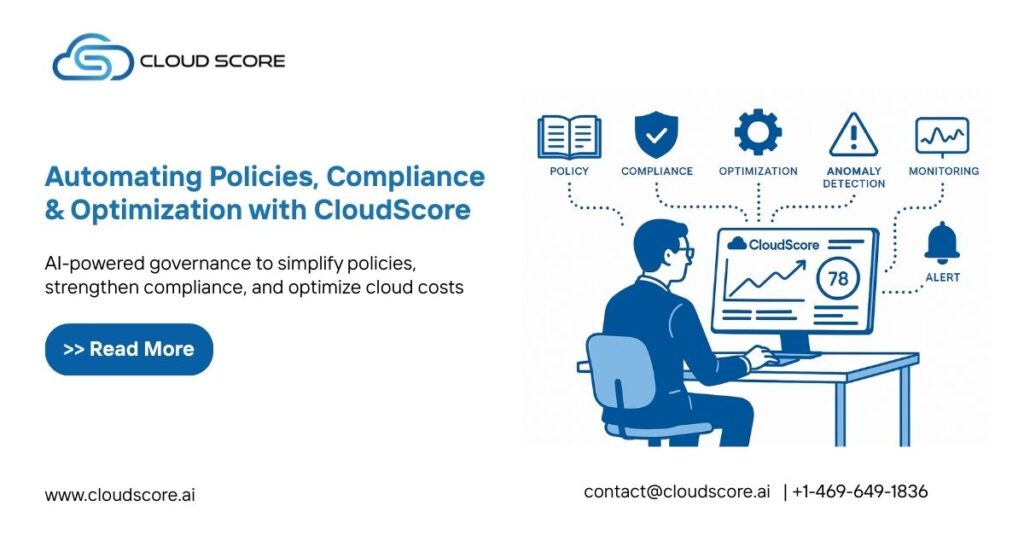
Automating Cloud Governance with CloudScore: Policies, Compliance, and Optimization
Uncategorized

Automating Cloud Governance with CloudScore: Policies, Compliance, and Optimization

Hari K. In the rapidly evolving world of cloud computing, maintaining effective governance is crucial for ensuring security, compliance, and cost efficiency. Automating cloud governance helps organizations enforce policies consistently, monitor compliance continuously, and optimize resource usage efficiently. CloudScore, a leading cloud cost optimization platform, offers robust tools to automate cloud governance, making it easier for organizations to manage their cloud environments effectively. In this article, we’ll explore how CloudScore can help automate cloud governance, ensuring that your cloud infrastructure remains secure, compliant, and cost-effective.  The Importance of Cloud Governance  Cloud governance involves establishing and enforcing policies, procedures, and controls to manage cloud resources. Effective cloud governance is essential for:  Security: Protecting sensitive data and preventing unauthorized access. Compliance: Adhering to regulatory requirements and industry standards. Cost Management: Optimizing resource usage to control costs and prevent overspending. Operational Efficiency: Streamlining operations and ensuring that cloud resources are used effectively.  How CloudScore Enhances Cloud Governance  CloudScore provides a comprehensive suite of tools designed to automate and enhance cloud governance. Here’s how CloudScore facilitates effective cloud governance:  Policy Definition and Enforcement CloudScore allows organizations to define custom policies for managing cloud resources and ensures these policies are enforced consistently across all cloud environments.  Custom Policy Creation: Organizations can create policies tailored to their specific needs, such as access controls, resource tagging, and cost limits.  Automated Policy Enforcement: CloudScore automatically enforces these policies, ensuring compliance with organizational standards and preventing unauthorized changes.  Real-Time Monitoring: The platform continuously monitors cloud environments for policy violations, providing real-time alerts and automated remediation actions.  Compliance Monitoring and Reporting Maintaining compliance with regulatory requirements is critical for avoiding legal penalties and protecting organizational reputation. CloudScore automates compliance monitoring and generates detailed reports.  Regulatory Frameworks: CloudScore supports multiple regulatory frameworks, including GDPR, HIPAA, and PCI-DSS, ensuring that cloud environments meet required standards.  Automated Audits: The platform performs automated audits, generating compliance reports that highlight areas of non-compliance and recommend corrective actions.  Continuous Compliance Tracking: CloudScore continuously tracks compliance status, providing real-time insights and alerts for any deviations from compliance requirements.  Cost Optimization and Management Optimizing costs is a key component of cloud governance. CloudScore provides tools to manage and optimize cloud spending effectively.  Budget Setting and Tracking: Organizations can set budgets for different teams and projects, tracking spending in real-time to ensure adherence.  Cost Optimization Recommendations: CloudScore offers actionable recommendations for optimizing resource usage, such as rightsizing instances and eliminating waste.  Spending Alerts: The platform generates alerts when spending approaches or exceeds budget thresholds, enabling timely interventions to control costs.  Security and Access Control Ensuring the security of cloud resources is a fundamental aspect of cloud governance. CloudScore provides robust tools for managing security and access control.  Access Policies: Organizations can define access policies to control who can access and modify cloud resources, ensuring that only authorized users have the necessary permissions.  Security Monitoring: CloudScore continuously monitors cloud environments for security threats and vulnerabilities, providing real-time alerts and automated remediation actions.  Encryption and Data Protection: The platform supports encryption and other data protection measures to safeguard sensitive information and ensure compliance with data privacy regulations.  Continuous Improvement and Optimization CloudScore helps organizations continuously improve their cloud governance practices by providing insights and recommendations based on real-time data and trends.  Governance Dashboards: Intuitive dashboards provide a centralized view of governance metrics, making it easy to monitor compliance, security, and cost efficiency.  Performance Metrics: The platform tracks performance metrics, helping organizations identify and address areas for improvement.  Best Practices Recommendations: CloudScore offers recommendations for adopting best practices in cloud governance, ensuring that organizations stay ahead of evolving standards and requirements.  Real-World Example: A Case Study  Consider a financial services company that uses multiple cloud providers to manage its data, applications, and services. The company faced challenges in maintaining consistent governance across its multi-cloud environment, ensuring compliance with financial regulations, and optimizing costs. By leveraging CloudScore’s automation capabilities, the company aimed to enhance its cloud governance practices.   Step 1: Defining and Enforcing Policies  The company defined custom policies for access control, resource tagging, and cost limits using CloudScore. The platform automatically enforced these policies, ensuring compliance with organizational standards and preventing unauthorized changes.  Step 2: Automating Compliance Monitoring  CloudScore continuously monitored the company’s cloud environments for compliance with financial regulations, such as GDPR and PCI-DSS. Automated audits and compliance reports highlighted areas of non-compliance, enabling the company to take corrective actions promptly.  Step 3: Optimizing Costs  The company set budgets for different teams and projects within CloudScore and received real-time alerts when spending approached budget thresholds. CloudScore’s cost optimization recommendations helped the company eliminate waste and optimize resource usage, resulting in significant cost savings.  Step 4: Enhancing Security  CloudScore provided tools for managing access control and monitoring security threats. The platform detected and remediated security vulnerabilities in real-time, ensuring the security of the company’s cloud resources.  Step 5: Continuous Improvement  Using CloudScore’s governance dashboards and performance metrics, the company continuously monitored its cloud governance practices and identified areas for improvement. The platform’s best practices recommendations helped the company stay ahead of evolving standards and requirements.  Outcome  Within six months, the financial services company achieved significant improvements in cloud governance, compliance, cost efficiency, and security. CloudScore’s automation capabilities enabled the company to manage its multi-cloud environment effectively, ensuring that its cloud resources were used securely, compliantly, and cost-effectively.  Automating cloud governance is essential for maintaining security, compliance, and cost efficiency in today’s complex cloud environments. CloudScore’s advanced tools and capabilities make it easier to define and enforce policies, monitor compliance, optimize costs, and enhance security. By leveraging CloudScore, organizations can ensure that their cloud infrastructure remains secure, compliant, and cost-effective, allowing them to focus on driving their core business objectives.   Automate cloud governance with AI enforce policies, ensure compliance, and cut costs effortlessly with CloudScore.  Request a Demo | Start Free Trial | Contact Experts See more Blogs: Sustainability Reporting | Cloud Infrastructure | Predictive Analytics | Integrating FinOps | Forecasting  | Automated Cost Management | Cloud Cost Optimization
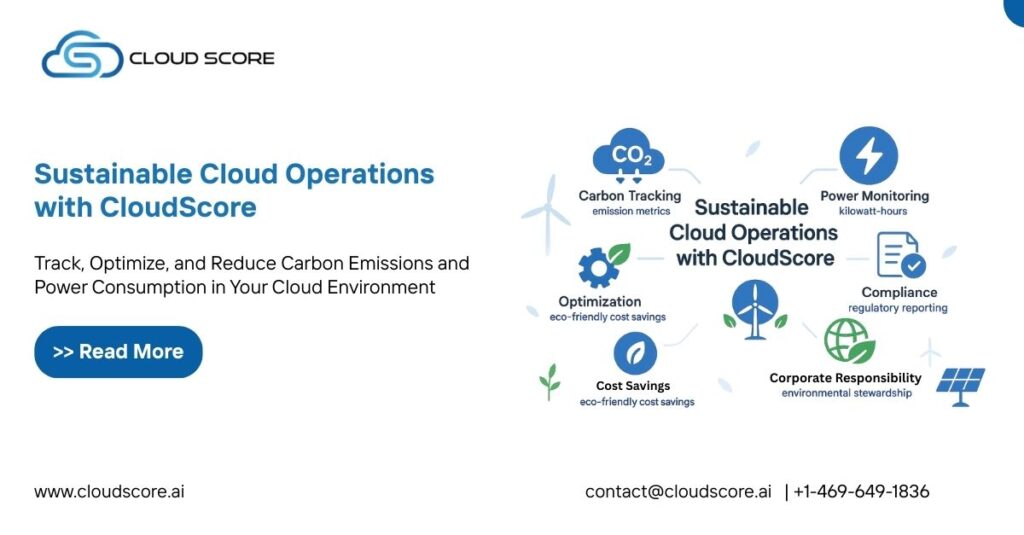
Sustainability Reporting with CloudScore: Tracking and Reducing Cloud Carbon Footprint
Uncategorized

Sustainability Reporting with CloudScore: Tracking and Reducing Cloud Carbon Footprint

As businesses increasingly adopt cloud technologies, the environmental impact of their operations becomes a critical consideration. Organizations are now prioritizing sustainability, aiming to minimize their carbon footprint and adhere to emerging regulatory requirements. CloudScore, a leading cloud cost optimization platform, offers comprehensive tools for tracking and managing cloud sustainability metrics. In this article, we’ll explore how CloudScore can help your organization achieve its sustainability goals by providing insights into carbon emissions and power consumption, and offering strategies for reduction.  The Importance of Sustainability in Cloud Operations  Sustainability in cloud operations is crucial for several reasons:  Environmental Responsibility: Reducing carbon emissions and power consumption is essential for mitigating the environmental impact of cloud services.  Regulatory Compliance: Many regions are introducing regulations that require businesses to report and reduce their carbon footprint.  Cost Savings: Efficient resource utilization not only reduces carbon emissions but also lowers operational costs.  Corporate Image: Demonstrating a commitment to sustainability can enhance a company’s reputation and appeal to environmentally conscious customers and stakeholders.  How CloudScore Facilitates Sustainability Reporting  CloudScore provides a robust suite of tools designed to help organizations track, manage, and reduce their cloud carbon footprint. Here’s how CloudScore supports sustainability efforts:  Tracking Carbon Emissions CloudScore tracks carbon emissions by monitoring resource utilization across cloud environments. This includes measuring the energy consumption of various services and converting it into carbon dioxide equivalent (CO2e) metrics.  Detailed Emission Metrics: CloudScore provides detailed metrics on carbon emissions for popular cloud services, including compute, storage, and data transfer.  Visualization Tools: The platform offers intuitive dashboards that visualize carbon emissions over time, allowing organizations to identify trends and areas for improvement.  Monitoring Power Consumption In addition to carbon emissions, CloudScore tracks power consumption, providing insights into the energy usage of cloud resources.  Power Metrics: CloudScore calculates power consumption in kilowatt-hours (kWh) based on actual resource utilization, offering a clear view of energy usage.  Comparative Analysis: Organizations can compare power consumption across different cloud services and regions, identifying opportunities for optimization.  Integrating Sustainability Goals with Financial Performance CloudScore enables organizations to align their sustainability goals with financial performance, ensuring that efforts to reduce carbon footprint are also cost-effective.  Cost and Carbon Correlation: The platform correlates cost data with carbon emissions and power consumption, highlighting the financial impact of sustainability initiatives.  Optimization Recommendations: CloudScore provides actionable recommendations for optimizing resource usage to achieve both cost savings and carbon reduction.  Reporting and Compliance To support regulatory compliance and corporate sustainability reporting, CloudScore generates comprehensive reports on carbon emissions and power consumption.  Regulatory Reports: CloudScore’s reports are designed to meet the requirements of various regulatory bodies, simplifying the compliance process.  Customizable Dashboards: Organizations can customize dashboards to display key sustainability metrics relevant to their specific goals and reporting needs.  Real-World Example: A Case Study  Consider a global retail company that operates a vast network of online stores and uses cloud services extensively for its operations. The company aimed to reduce its carbon footprint and comply with new environmental regulations. By leveraging CloudScore’s sustainability reporting capabilities, the company set out to achieve its sustainability goals.  Step 1: Tracking Emissions and Power Consumption  CloudScore integrated with the company’s cloud infrastructure, tracking carbon emissions and power consumption across all cloud services. This provided a comprehensive view of the company’s environmental impact.  Step 2: Identifying Optimization Opportunities  Using CloudScore’s detailed metrics and visualization tools, the company identified areas where resource usage was inefficient. For instance, certain compute instances were running at low utilization, leading to unnecessary energy consumption and emissions.  Step 3: Implementing Optimization Strategies  CloudScore recommended strategies such as rightsizing instances, leveraging renewable energy sources offered by cloud providers, and scheduling non-critical workloads during off-peak hours to reduce energy usage. The company implemented these recommendations, resulting in significant reductions in both carbon emissions and operational costs.  Step 4: Reporting and Compliance  CloudScore generated detailed reports that met the requirements of the environmental regulations applicable to the company. These reports were used to demonstrate compliance and showcase the company’s commitment to sustainability.  Outcome  Within a year, the company achieved a 30% reduction in carbon emissions and a 25% decrease in power consumption. The optimization strategies not only improved environmental sustainability but also resulted in substantial cost savings. The company was able to present its sustainability achievements to stakeholders, enhancing its corporate image and satisfying regulatory requirements.  Achieving sustainability in cloud operations is essential for reducing environmental impact, complying with regulations, and improving corporate reputation. CloudScore’s advanced tools and capabilities make it easy to track carbon emissions, monitor power consumption, and implement optimization strategies. By leveraging CloudScore, organizations can align their sustainability goals with financial performance, ensuring that efforts to reduce carbon footprint are both effective and cost-efficient.  Track and reduce your cloud carbon footprint with AI-powered insights. Start your free CloudScore trial and make sustainability cost-efficient.  Request a Demo | Start Free Trial | Contact Experts See more Blogs: Cloud Infrastructure | Predictive Analytics | Integrating FinOps | Forecasting  | Automated Cost Management | Cloud Cost Optimization
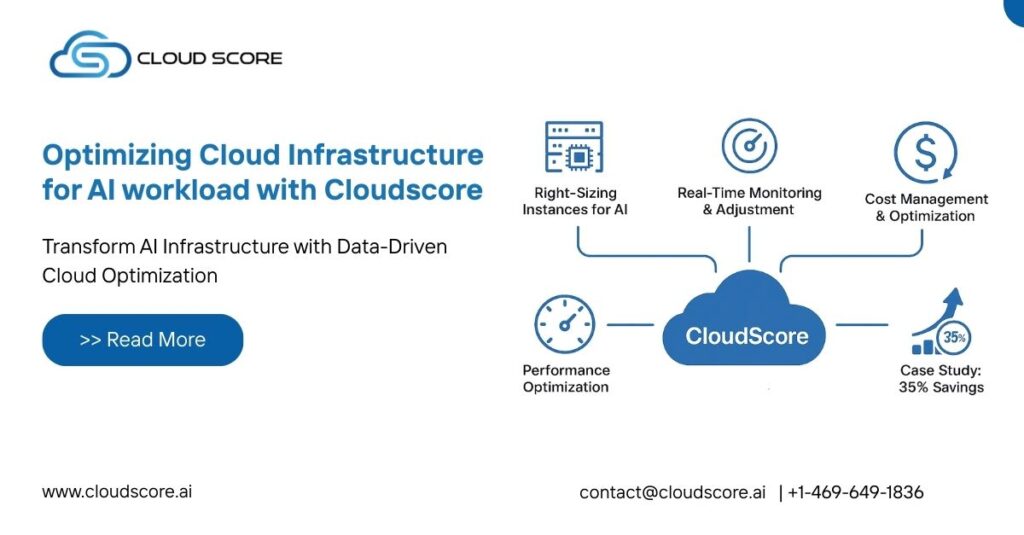
Optimizing Cloud Infrastructure for AI Workloads with CloudScore
Uncategorized

Optimizing Cloud Infrastructure for AI Workloads with CloudScore

As artificial intelligence (AI) continues to revolutionize various industries, the computational demands of AI workloads are also increasing. Organizations need to ensure their cloud infrastructure is optimized to handle these intensive tasks efficiently, both in terms of performance and cost. CloudScore, a leading cloud cost optimization platform, offers advanced tools to manage and optimize resources specifically tailored for AI applications. In this article, we’ll explore how CloudScore can enhance your AI infrastructure, ensuring optimal performance and significant cost savings.  The Challenges of AI Workloads in the Cloud  AI workloads are unique in their requirements, often involving high computational power, large datasets, and intensive processing tasks. These characteristics pose several challenges:  Resource Intensity: AI workloads typically require substantial CPU, GPU, and memory resources, leading to higher costs if not managed properly.  Scalability: The ability to scale resources dynamically to match the varying demands of AI tasks is crucial. Cost Management: Without proper cost control measures, the expenses associated with AI workloads can quickly escalate. Performance Optimization: Ensuring that AI applications run efficiently without over-provisioning resources is essential for maintaining performance while controlling costs.  How CloudScore Optimizes AI Workloads  CloudScore provides a comprehensive suite of tools designed to address these challenges, ensuring that your AI infrastructure is both cost-effective and highly efficient.  Right-Sizing Instances for AI CloudScore begins by analyzing your current resource usage and identifying the optimal instance types for your AI workloads. This involves assessing the specific needs of your AI applications, such as CPU, GPU, and memory requirements, and matching them with the most suitable cloud instances.  Detailed Resource Analysis: CloudScore collects and analyzes detailed metrics on resource utilization, helping you understand the specific needs of your AI tasks.  Instance Recommendations: Based on this analysis, CloudScore recommends the most cost-effective and performance-optimized instances, ensuring you are not overpaying for unnecessary capacity.  Real-Time Monitoring and Adjustment To ensure ongoing efficiency, CloudScore offers real-time monitoring and automatic adjustment of resources. This dynamic approach helps maintain optimal performance while minimizing costs.  Continuous Monitoring: CloudScore continuously monitors resource usage, providing real-time insights into the performance of your AI workloads.  Automatic Scaling: The platform automatically adjusts resource allocations based on real-time demand, scaling up during peak times and scaling down when resources are underutilized.  Cost Management and Optimization Effective cost management is crucial for AI workloads, given their resource-intensive nature. CloudScore provides tools to monitor and control costs proactively.  Budget Tracking: CloudScore allows you to set budgets for your AI projects and tracks spending in real-time, ensuring you stay within your financial limits.  Cost Alerts: The platform sends automated alerts when spending approaches or exceeds budget thresholds, enabling timely interventions.  Optimization Recommendations: CloudScore provides actionable recommendations for cost optimization, such as utilizing spot instances for non-critical tasks or leveraging reserved instances for predictable workloads.  Performance Optimization Ensuring optimal performance for AI workloads without over-provisioning resources is a delicate balance. CloudScore’s performance optimization tools help achieve this balance effectively.  Performance Metrics: CloudScore tracks key performance metrics, such as processing time, throughput, and latency, to ensure your AI applications are running efficiently.  Resource Utilization Reports: The platform generates detailed reports on resource utilization, helping you identify and eliminate inefficiencies.  Fine-Tuning Resources: Based on performance data, CloudScore provides recommendations for fine-tuning resource allocations, ensuring that you get the best performance at the lowest cost.  Real-World Example: A Case Study  Consider a technology company specializing in AI-driven analytics for financial services. The company faced challenges in managing the costs and performance of its AI workloads, which involved processing large datasets and running complex algorithms. By adopting CloudScore’s optimization capabilities, the company aimed to enhance its AI infrastructure.  Step 1: Analyzing Resource Usage  CloudScore analyzed the company’s existing resource usage, identifying that many of the current instances were over-provisioned for the AI tasks they were handling. This analysis highlighted significant opportunities for cost savings by right-sizing instances.  Step 2: Implementing Recommendations  Based on CloudScore’s recommendations, the company switched to more suitable instance types for its AI workloads, including leveraging spot instances for non-critical processing tasks. This change resulted in immediate cost savings.  Step 3: Real-Time Monitoring and Adjustment  With CloudScore’s continuous monitoring and automatic scaling capabilities, the company ensured that resources were allocated dynamically based on real-time demand. This approach minimized waste and maintained optimal performance.  Step 4: Achieving Cost and Performance Goals  Within three months, the company achieved a 35% reduction in cloud costs while improving the performance of its AI applications. The ability to dynamically adjust resources and optimize costs enabled the company to reinvest the savings into further development and innovation.  Outcome  Optimizing cloud infrastructure for AI workloads is essential for maximizing performance and controlling costs. CloudScore’s advanced tools and capabilities make it possible to achieve this optimization, providing detailed resource analysis, real-time monitoring, cost management, and performance optimization. By leveraging CloudScore, organizations can ensure their AI applications run efficiently and cost-effectively, driving innovation and growth while maintaining financial stability.  Optimize AI workloads without overspending on cloud resources. Start your free CloudScore trial and achieve peak performance at lower costs.  Request a Demo | Start Your Free Trial | Contact Our Experts See more Blogs Predictive Analytics | Integrating FinOps | Forecasting  | Automated Cost Management | Cloud Cost Optimization
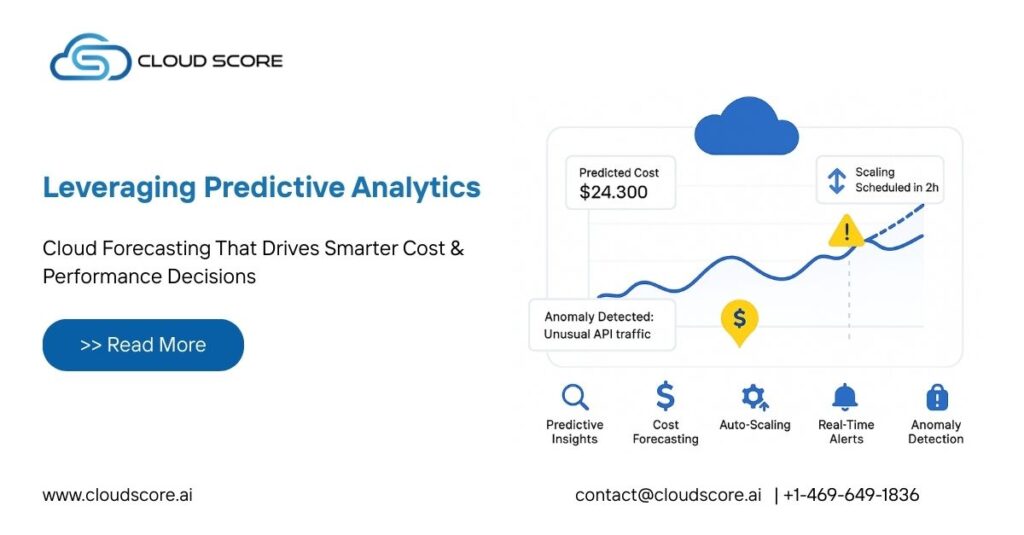
Leveraging Predictive Analytics in CloudScore for Proactive Cloud Management
Uncategorized

Leveraging Predictive Analytics in CloudScore for Proactive Cloud Management

Hari K. In today’s fast-paced digital environment, proactive cloud management is essential for maintaining efficiency, cost-effectiveness, and performance. Predictive analytics, which uses historical data and advanced algorithms to forecast future trends, can play a crucial role in this process. CloudScore, a leading cloud cost optimization platform, integrates predictive analytics to provide actionable insights that help organizations anticipate and address potential issues before they arise. In this article, we’ll explore how CloudScore leverages predictive analytics to enhance proactive cloud management, ensuring that your cloud infrastructure operates smoothly and efficiently.  The Role of Predictive Analytics in Cloud Management  Predictive analytics involves using data, statistical algorithms, and machine learning techniques to identify the likelihood of future outcomes based on historical data. In the context of cloud management, predictive analytics can help in:  Resource Optimization: Anticipating resource needs and adjusting allocations to prevent over-provisioning and under-utilization.  Cost Forecasting: Predicting future cloud costs based on usage patterns and trends, enabling better budget planning.  Performance Management: Identifying potential performance bottlenecks and addressing them before they impact operations.  Anomaly Detection: Detecting unusual patterns that may indicate security threats or operational issues.  How CloudScore Enhances Proactive Cloud Management with Predictive Analytics  CloudScore integrates predictive analytics into its platform to provide comprehensive tools for proactive cloud management. Here’s how CloudScore leverages predictive analytics to enhance cloud operations:  Resource Optimization CloudScore’s predictive analytics capabilities help organizations optimize their resource usage by forecasting future demand and adjusting allocations accordingly.  Usage Patterns Analysis: CloudScore analyzes historical usage data to identify trends and patterns, predicting future resource needs with high accuracy.  Dynamic Scaling Recommendations: Based on the forecasts, CloudScore provides recommendations for dynamically scaling resources up or down, ensuring optimal utilization and cost-efficiency.  Capacity Planning: The platform assists in capacity planning by predicting future workloads and helping organizations prepare for peak usage periods without over-provisioning.  Cost Forecasting and Budgeting Accurate cost forecasting is essential for effective financial management. CloudScore’s predictive analytics tools enable organizations to forecast future cloud costs and set realistic budgets.  Cost Prediction Models: CloudScore uses advanced algorithms to predict future costs based on historical spending and usage trends.  Budget Planning: The platform helps organizations set budgets by providing detailed cost forecasts, ensuring that financial planning is based on accurate and up-to-date information.  Spending Alerts: CloudScore generates alerts when predicted spending is likely to exceed budget thresholds, allowing organizations to take corrective action proactively.  Performance Management Maintaining optimal performance is crucial for delivering a seamless user experience. CloudScore’s predictive analytics capabilities help organizations identify and address potential performance issues before they impact operations.  Performance Trend Analysis: CloudScore analyzes performance metrics over time, identifying trends that may indicate future bottlenecks or degradation.  Proactive Recommendations: The platform provides proactive recommendations for addressing potential performance issues, such as optimizing configurations or scaling resources.  Continuous Monitoring: CloudScore continuously monitors performance metrics, using predictive analytics to detect early warning signs and prevent issues before they escalate.  Anomaly Detection and Security Predictive analytics can enhance security by identifying unusual patterns that may indicate potential threats or operational issues. CloudScore leverages this capability to improve anomaly detection and security management.  Behavioral Analysis: CloudScore uses machine learning to analyze user and system behavior, identifying deviations from normal patterns that may indicate security threats or operational anomalies.  Real-Time Alerts: The platform generates real-time alerts for detected anomalies, enabling organizations to respond quickly and mitigate potential risks.  Security Recommendations: CloudScore provides recommendations for enhancing security based on predictive insights, helping organizations stay ahead of potential threats.  Real-World Example: A Case Study  Consider an e-commerce company that relies on cloud infrastructure to support its online store, customer data management, and analytics. The company faced challenges in managing costs, optimizing resources, and maintaining performance during peak shopping seasons. By leveraging CloudScore’s predictive analytics capabilities, the company aimed to enhance its proactive cloud management.  Step 1: Resource Optimization  CloudScore analyzed the company’s historical usage data, identifying trends and predicting future resource needs. The platform recommended dynamically scaling resources based on anticipated demand, ensuring optimal utilization and cost-efficiency.  Step 2: Cost Forecasting and Budgeting  Using CloudScore’s cost prediction models, the company forecasted its cloud costs for the upcoming year. Detailed cost forecasts enabled the company to set realistic budgets and plan for peak shopping periods without exceeding financial limits.  Step 3: Performance Management  CloudScore continuously monitored the company’s performance metrics, identifying potential bottlenecks during high-traffic periods. The platform provided proactive recommendations for optimizing configurations and scaling resources to maintain optimal performance.  Step 4: Anomaly Detection and Security  CloudScore’s predictive analytics detected unusual patterns in user behavior, indicating potential security threats. Real-time alerts enabled the company to respond quickly, enhancing its security posture and preventing operational disruptions.  Outcome  Within six months, the company achieved significant improvements in resource utilization, cost management, and performance. CloudScore’s predictive analytics capabilities enabled the company to anticipate and address potential issues proactively, ensuring a seamless shopping experience for customers and maintaining financial efficiency.  Predictive analytics plays a vital role in proactive cloud management, enabling organizations to anticipate future trends, optimize resources, manage costs, and enhance security. CloudScore’s advanced tools and capabilities make it easier to leverage predictive analytics for these purposes, ensuring that cloud infrastructure operates smoothly and efficiently. By integrating CloudScore into their cloud management strategy, organizations can achieve greater financial and operational success, staying ahead of potential issues and maximizing the benefits of their cloud investments.  Stay ahead of cloud challenges with predictive insights.Book your free CloudScore demo today and discover how proactive cloud management saves costs and boosts performance.  Request a Demo | Start Free Trial | Contact Experts See more Blogs Integrating FinOps | Forecasting  | Automated Cost Management | Cloud Cost Optimization
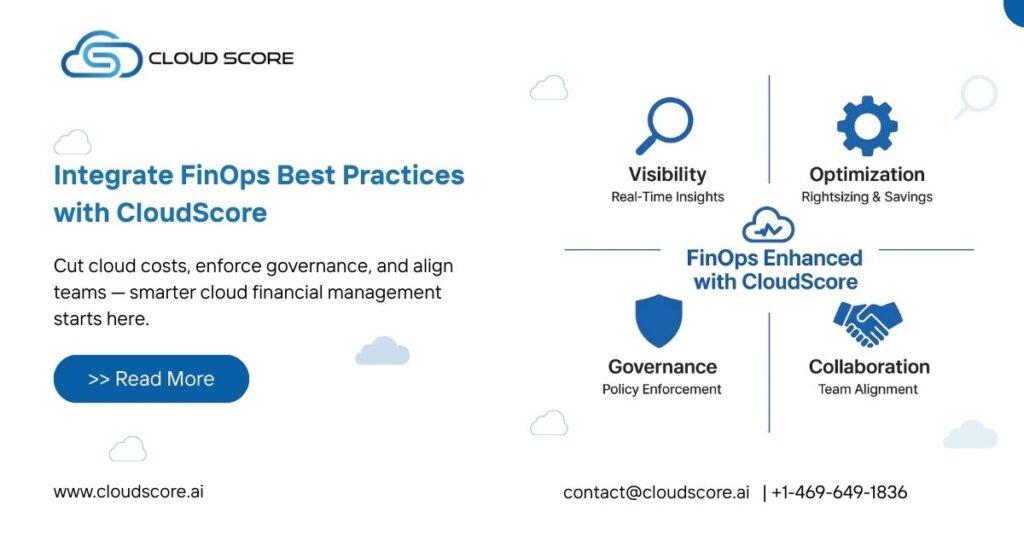
Integrating FinOps Best Practices with CloudScore for Enhanced Financial Management
Uncategorized

Integrating FinOps Best Practices with CloudScore for Enhanced Financial Management

As organizations increasingly rely on cloud computing, managing cloud finances effectively becomes a critical priority. FinOps, or Financial Operations, is a framework designed to bring financial accountability to the cloud, enabling teams to manage and optimize cloud costs while maintaining high performance. CloudScore, a leading cloud cost optimization platform, integrates FinOps best practices to help organizations streamline their cloud financial management. In this article, we’ll explore how CloudScore can enhance your FinOps strategy, ensuring efficient and cost-effective cloud operations. Understanding FinOps FinOps is a discipline that combines financial management principles with cloud operations to ensure that cloud spending aligns with business goals. It involves collaboration between finance, operations, and engineering teams to optimize cloud usage and costs. Key components of FinOps include: Visibility: Providing detailed insights into cloud spending and usage across the organization. Optimization: Identifying opportunities to reduce costs without compromising performance. Governance: Implementing policies and controls to ensure responsible cloud usage. Collaboration: Facilitating communication and collaboration between different teams to achieve financial and operational goals. How CloudScore Enhances FinOps Practices CloudScore offers a comprehensive suite of tools designed to integrate and enhance FinOps practices, providing organizations with the insights and controls needed to manage cloud finances effectively. Here’s how CloudScore supports each component of FinOps: 1. Visibility CloudScore provides detailed visibility into cloud spending, helping organizations understand where their money is going and identify potential savings. Comprehensive Dashboards: CloudScore’s intuitive dashboards offer a centralized view of cloud costs, breaking down expenses by service, department, and project. Real-Time Monitoring: The platform continuously monitors cloud usage and spending, providing real-time insights and alerts for unexpected changes. Detailed Reporting: CloudScore generates detailed reports on cloud costs, usage patterns, and trends, enabling organizations to make informed financial decisions. 2. Optimization Optimizing cloud usage and costs is a core objective of FinOps. CloudScore provides actionable recommendations and automated tools to achieve this. Cost Optimization Recommendations: Based on usage data, CloudScore offers suggestions for rightsizing instances, leveraging reserved instances, and utilizing spot instances. Automated Scaling: The platform automatically adjusts resource allocations based on real-time demand, ensuring optimal performance and cost efficiency. Waste Identification: CloudScore identifies unused or underutilized resources, recommending actions to eliminate waste and reduce costs. 3. Governance Implementing policies and controls is essential for ensuring responsible cloud usage. CloudScore provides tools to enforce governance and compliance. Policy Management: Organizations can define and enforce policies for cloud usage, such as budget limits, resource tagging, and access controls. Compliance Monitoring: CloudScore continuously monitors cloud environments for compliance with internal policies and external regulations, generating alerts for any deviations. Budget Tracking: The platform allows organizations to set budgets for different teams and projects, tracking spending in real-time to ensure adherence. 4. Collaboration Effective FinOps requires collaboration between finance, operations, and engineering teams. CloudScore facilitates this collaboration through shared insights and tools. Cross-Functional Dashboards: CloudScore’s dashboards are designed to be accessible and understandable by different teams, fostering collaboration and alignment. Shared Reports: The platform enables teams to share reports and insights, ensuring that everyone has access to the same information. Communication Tools: CloudScore integrates with collaboration tools, such as Slack and Microsoft Teams, to facilitate communication and coordination. Real-World Example: A Case Study Consider a software development company that experienced rapid growth, leading to increased cloud usage and costs. The company faced challenges in managing its cloud finances effectively and sought to implement FinOps practices. By leveraging CloudScore’s capabilities, the company aimed to enhance its financial management and optimize cloud spending. Step 1: Enhancing Visibility CloudScore provided the company with comprehensive dashboards that offered a centralized view of cloud spending across all projects and departments. Real-time monitoring and detailed reports enabled the company to understand its cloud costs better and identify areas for improvement. Step 2: Implementing Optimization Using CloudScore’s optimization recommendations, the company rightsized its instances, leveraged reserved instances for predictable workloads, and utilized spot instances for non-critical tasks. Automated scaling ensured that resources were adjusted dynamically based on demand. Step 3: Enforcing Governance The company defined policies for cloud usage, including budget limits and resource tagging, which were enforced through CloudScore’s policy management tools. Compliance monitoring ensured adherence to internal and external requirements, with alerts generated for any deviations. Step 4: Facilitating Collaboration CloudScore’s cross-functional dashboards and shared reports enabled the finance, operations, and engineering teams to collaborate effectively. Communication tools integrated with CloudScore facilitated coordination and alignment on cloud financial goals. Outcome Within six months, the company achieved a 25% reduction in cloud costs while maintaining high performance and compliance. The integration of FinOps practices with CloudScore’s advanced tools provided the company with the visibility, optimization, governance, and collaboration needed to manage its cloud finances effectively. Integrating FinOps best practices with CloudScore enables organizations to achieve efficient and cost-effective cloud financial management. CloudScore’s comprehensive suite of tools provides the visibility, optimization, governance, and collaboration needed to align cloud spending with business goals. By leveraging CloudScore, organizations can enhance their FinOps strategy, ensuring that their cloud operations support their financial and operational objectives. Ready to bring FinOps discipline into your cloud strategy? Take control of your cloud budgets with CloudScore’s automated cost optimization platform.  Request a Demo | Start Your Free Trial | Contact Our Experts See more Blogs Forecasting  | Automated Cost Management | Cloud Cost Optimization
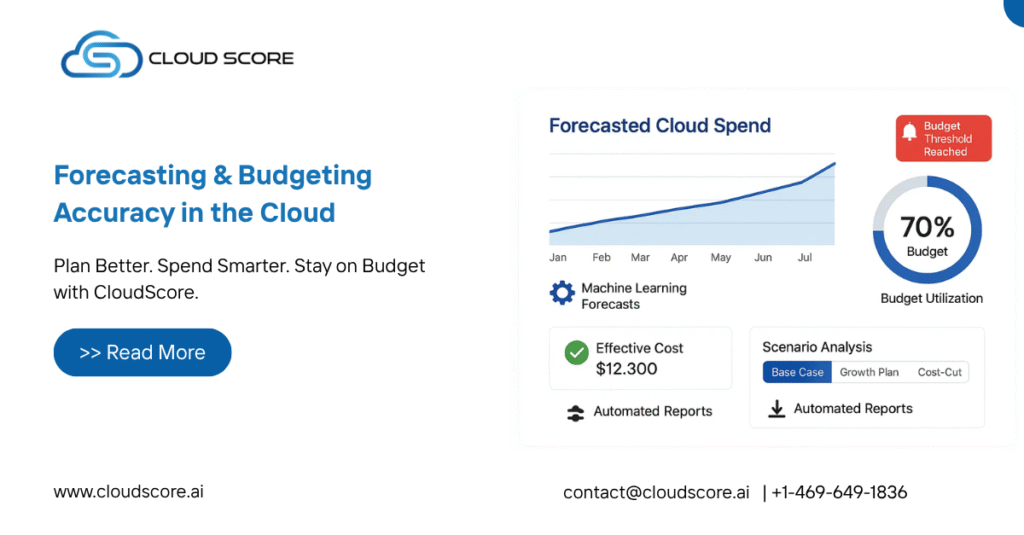
Enhanced Forecasting and Budgeting with CloudScore Achieving Financial Accuracy in Cloud Management
Uncategorized

Enhanced Forecasting and Budgeting with CloudScore Achieving Financial Accuracy in Cloud Management

Effective cloud cost management requires not only monitoring and optimizing current expenses but also accurately forecasting future costs and setting realistic budgets. Enhanced forecasting and budgeting capabilities enable organizations to anticipate financial needs, avoid unexpected expenses, and ensure financial predictability. CloudScore, a leading cloud cost optimization platform, offers advanced tools to improve cost forecasting and budgeting accuracy, helping organizations achieve their financial goals. In this article, we’ll explore how CloudScore can enhance forecasting and budgeting for cloud management. The Importance of Accurate Forecasting and Budgeting Accurate forecasting and budgeting are essential for several reasons: Financial Planning: Precise forecasts allow organizations to plan their finances better, ensuring that they allocate resources effectively. Cost Control: By predicting future costs, organizations can implement strategies to control expenses and avoid budget overruns. Risk Management: Accurate forecasting helps identify potential financial risks and take proactive measures to mitigate them. Stakeholder Confidence: Reliable budgets and forecasts enhance confidence among stakeholders, including investors, management, and employees. How CloudScore Enhances Forecasting and Budgeting CloudScore provides a comprehensive suite of tools designed to improve the accuracy of cloud cost forecasting and budgeting. Here’s how CloudScore facilitates this process: 1. Advanced Forecasting Models CloudScore uses advanced forecasting models that incorporate historical usage data, current consumption patterns, and industry trends. These models leverage machine learning algorithms to predict future costs with high accuracy. By analyzing various factors that influence cloud spending, CloudScore generates precise forecasts that organizations can rely on for financial planning. 2. Customizable Forecasting Parameters Organizations have unique needs and priorities, and CloudScore allows for customization of forecasting parameters to align with these specific requirements. Users can adjust variables such as growth rates, seasonal variations, and planned changes in infrastructure to create tailored forecasts. This customization ensures that forecasts are relevant and accurate for each organization’s context. 3. Effective Cost Measures CloudScore introduces the option to choose between seeing “Cost” and “Effective Cost” as forecast measures. Effective cost includes cloud usage costs, amortized costs, and excludes prepaid purchases, providing a more accurate estimate of what true costs will look like over the forecast period. This distinction helps organizations understand their financial commitments more clearly and plan accordingly. 4. Budget Setting and Tracking CloudScore enables organizations to set realistic budgets based on accurate forecasts. Once budgets are set, the platform continuously tracks actual spending against these budgets, providing real-time insights into financial performance. This tracking helps organizations stay on top of their expenses and make adjustments as needed to avoid budget overruns. 5. Scenario Analysis To support strategic decision-making, CloudScore offers scenario analysis capabilities. Organizations can create multiple scenarios based on different assumptions and compare their financial outcomes. This analysis helps in understanding the potential impact of various strategies and choosing the most cost-effective approach. 6. Automated Alerts and Reports CloudScore provides automated alerts to notify stakeholders when spending approaches or exceeds budget thresholds. Additionally, the platform generates detailed reports on forecasting accuracy, budget adherence, and cost trends. These reports offer valuable insights into financial performance and highlight areas for improvement. Real-World Example: A Case Study Consider a healthcare organization that relies on cloud infrastructure for its patient management systems, data analytics, and telehealth services. The organization faced challenges with unpredictable cloud costs, leading to budget overruns and financial uncertainty. By adopting CloudScore’s enhanced forecasting and budgeting capabilities, the organization aimed to achieve financial accuracy and stability. Step 1: Data Collection and Analysis CloudScore collected and analyzed the organization’s historical usage data, current consumption patterns, and growth trends. This comprehensive data analysis provided a solid foundation for accurate forecasting. Step 2: Customized Forecasting Using CloudScore’s customizable forecasting parameters, the organization adjusted variables to account for planned expansions in telehealth services and seasonal variations in patient data processing. The advanced forecasting models generated precise cost predictions for the upcoming year. Step 3: Budget Setting Based on the accurate forecasts, the organization set realistic budgets for its cloud infrastructure. These budgets were aligned with the organization’s financial goals and growth plans. Step 4: Real-Time Tracking and Alerts CloudScore continuously tracked actual spending against the set budgets, providing real-time insights and automated alerts when spending approached budget thresholds. This proactive tracking helped the organization stay within its budget limits. Step 5: Scenario Analysis The organization used CloudScore’s scenario analysis capabilities to evaluate different strategies for managing its cloud infrastructure. By comparing the financial outcomes of various scenarios, the organization identified the most cost-effective approach to support its growth. Outcome Within a year, the organization achieved significant improvements in financial accuracy and stability. The enhanced forecasting and budgeting capabilities provided by CloudScore enabled the organization to avoid budget overruns, manage costs effectively, and allocate resources strategically. Accurate forecasting and budgeting are critical components of effective cloud cost management. CloudScore’s advanced tools and capabilities make it possible to enhance these processes, providing organizations with reliable forecasts, realistic budgets, and real-time financial insights. By leveraging CloudScore, organizations can achieve financial accuracy, control costs, and ensure that their cloud infrastructure supports their strategic goals. Start optimizing your cloud budgets with precision—book your free CloudScore demo today and take control of your cloud costs. Request a Demo | Start Your Free Trial | Contact Our Experts See more Blogs  Automated Cost Management | Cloud Cost Optimization

Scroll to Top