
Uncategorized

DevOps Environment Sprawl
Uncategorized

DevOps Environment Sprawl: The Hidden Cost of Rapid Cloud Development

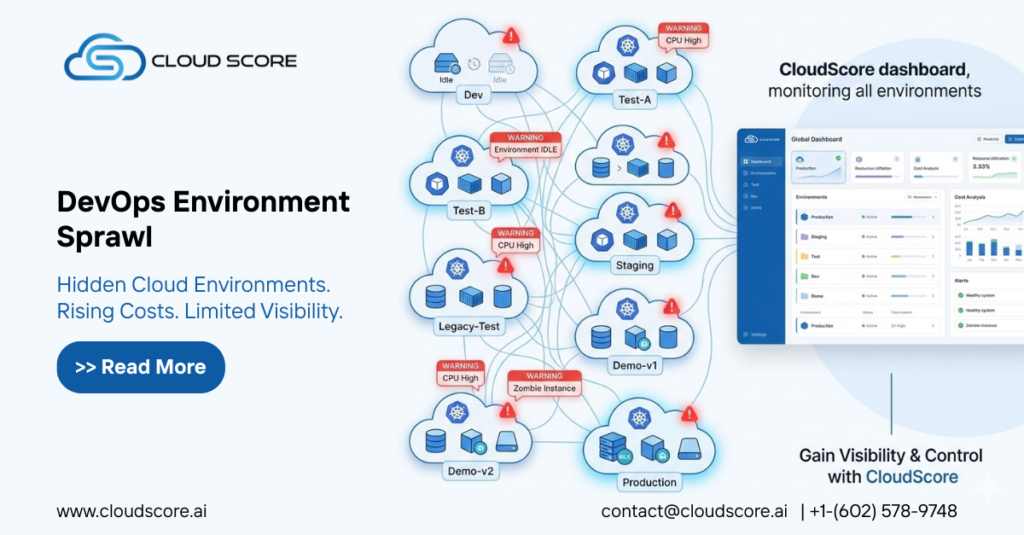
Automation Solved Speed and Created a New Problem Modern DevOps practices transformed how software is built and delivered.Engineering teams can now provision infrastructure in minutes, deploy continuously, and test new ideas at massive scale. Automation has made experimentation faster and development cycles shorter. But speed introduces a new challenge many teams overlook: DevOps environment sprawl. Every development workflow generates multiple environments such as: Temporary development environments Test and preview environments Feature-based infrastructure setups Demo and staging systems Many of these environments serve a short-term purpose.Yet once the task is complete, they often remain running long after they are needed. Over time, these unused environments accumulate across cloud accounts and clusters. What started as a productivity advantage gradually turns into hidden infrastructure growth. Why DevOps Environment Sprawl Is So Hard to See DevOps environment sprawl rarely appears as an obvious problem. Most teams don’t notice it because the environments are created automatically as part of normal development activity. Several factors make the issue difficult to detect: Resources are provisioned programmatically Ownership is unclear across teams Environments are distributed across multiple cloud accounts and clusters Tags are missing, outdated, or inconsistent Costs are shared across nodes, containers, and services By the time cloud spending reports surface unusual costs, the environments responsible may already be inactive or difficult to trace. The result is infrastructure that quietly consumes resources without anyone actively managing it. The Real Cost of Uncontrolled DevOps Environments When DevOps environment sprawl grows unchecked, the impact spreads beyond cloud costs. Organizations often encounter issues such as: Idle compute instances running for weeks Orphaned storage volumes and snapshots Underutilized Kubernetes clusters Security exposure from forgotten services Budget overruns with no clear ownership These problems are rarely caused by poor engineering practices. Instead, they emerge when fast-moving development environments lack visibility and lifecycle management. Without clear insight into what environments exist and who owns them, teams struggle to maintain control. How CloudScore Brings Order to DevOps Environments CloudScore is designed for engineering teams managing complex cloud infrastructure. Instead of slowing development workflows, it provides visibility and automation to control DevOps environment sprawl. Unified Environment Visibility CloudScore automatically discovers development, testing, staging, demo, and production environments across multiple clouds and Kubernetes clusters. Environment-to-Cost Mapping Every environment is mapped to teams, services, and owners, allowing organizations to understand the real cost impact of each workload. TTL & Power Management Rules Temporary environments can follow automatic shutdown policies, ensuring they do not remain active longer than necessary. Usage & Lifecycle Tracking Teams can see when environments were created, how long they have been running, and whether they are still actively used. Slack & Jira Workflows Environment planning, monitoring, and actions integrate directly into collaboration tools already used by DevOps teams. Automation Needs Control – Not More Process Automation accelerated development and innovation. However, without visibility, it also enabled DevOps environment sprawl to grow unnoticed. When environment lifecycle and ownership become visible, teams can maintain development speed while keeping infrastructure under control. Automation works best when it is paired with governance and intelligent cost visibility. Take Control of DevOps Environment Sprawl If your teams are deploying faster than ever but cloud costs keep rising, DevOps environment sprawl may be the missing piece. CloudScore helps engineering teams: 1. Discover hidden environments across multi-cloud and Kubernetes2. Track environment ownership and lifecycle3. Automatically control temporary environments4. Reduce unnecessary infrastructure costs5. Maintain visibility without slowing development Start seeing where your cloud environments are growing and where they should stop.  Request a Demo | Start Your Free Trial | Contact Our Experts  See More Blogs: FinOps Cloud Cost Ownership | FinOps and SecOps Convergence | DevOps Cloud Cost Visibility | Code Scan | Power Schedules | Multi Cloud Cost Optimization | Untagged Cloud Resources | Best Cloud Governance Solutions | SecOps & FinOps Cloud Governance | AI-Driven FinOps | AI Cloud Cost Optimization | Smart Cost Management | Simplify Cloud Costs | Automated FinOps Platform | Multi-Cloud Spend | Cost Efficiency | Cloud Security | Dynamic Optimization | Seasonality Insights | Cloud Governance | Sustainability Reporting | Cloud Infrastructure | Predictive Analytics | Integrating FinOps | Forecasting | Automated Cost Management | Cloud Cost Optimization
Why FinOps Cloud Cost Ownership Fails in Real Time
Uncategorized

Why FinOps Cloud Cost Ownership Fails in Real Time

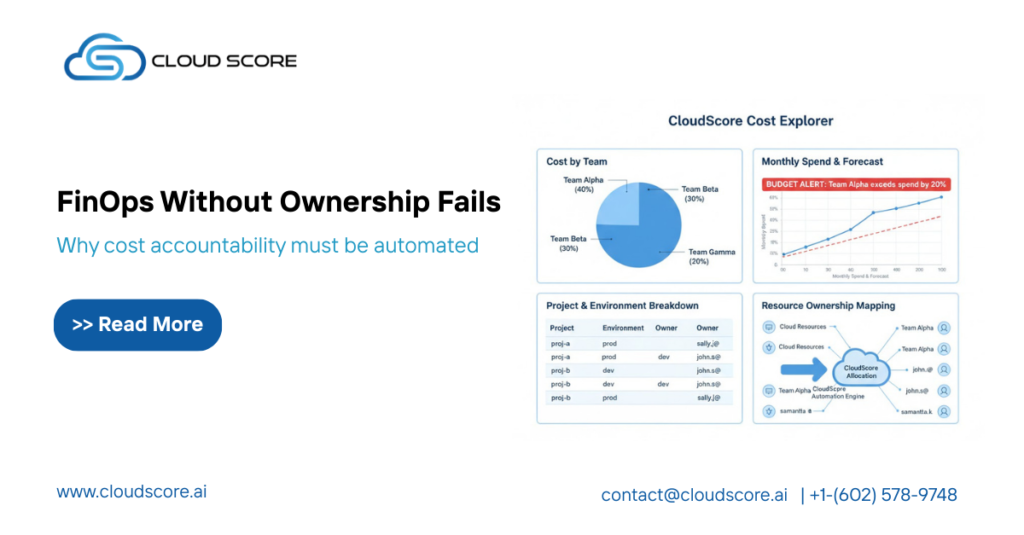
FinOps Has Data — But Still Loses Control  Most organizations today have some form of FinOps tooling. They track cloud spend, generate reports, and review budgets. Yet cloud costs continue to rise quarter after quarter.  The issue isn’t lack of data. The issue is lack of ownership.  Cloud infrastructure is no longer static. Resources are created automatically through CI/CD pipelines, Terraform modules, Kubernetes controllers, and ephemeral environments. Manual tagging policies and spreadsheets simply cannot keep up with this pace.  When no one clearly owns a resource, no one feels responsible for its cost.  Why Traditional FinOps Models Break at Scale  Legacy FinOps assumes:  Static resources  Human-created infrastructure  Finance-owned controls  Monthly or quarterly reviews  Modern cloud environments break all of these assumptions.  In reality:  Engineers create infrastructure automatically  Kubernetes workloads share costs across teams  Environments appear and disappear daily  Budgets are exceeded before alerts fire  By the time finance notices an overrun, the context behind it is gone.  Ownership Is the Missing Layer in FinOps  Without real-time cost ownership:  Engineers don’t see the financial impact of decisions  Finance sees numbers without context  Leadership reacts instead of planning  Cost governance becomes reactive instead of preventative.  How CloudScore Enforces FinOps Ownership by Design  CloudScore was built to make ownership unavoidable.  How CloudScore Enables Engineering-First FinOps:  Automatic Resource Assignment CloudScore assigns resources to teams, projects, services, and environments using intelligent rules—without relying only on tags.  Cost Explorer with Business Context Costs are broken down by team, BU, application, service, environment, and user, with daily, monthly, and yearly views.  Budgets, Forecasts & Anomaly Detection Teams receive real-time alerts for spend spikes, forecast overruns, and unusual behavior—before budgets are exceeded.  Shared Accountability Workflows FinOps becomes a shared responsibility across engineering, finance, and leadership, not a finance-only process.  Slack & Jira Integration Ownership and action happen where teams already work—not in isolated dashboards.  FinOps That Actually Scales  FinOps doesn’t fail because teams don’t care. It fails because systems don’t enforce accountability.     Request a Demo | Start Your Free Trial | Contact Our Experts  See More Blogs: FinOps and SecOps Convergence | DevOps Cloud Cost Visibility | Code Scan | Power Schedules | Multi Cloud Cost Optimization | Untagged Cloud Resources | Best Cloud Governance Solutions | SecOps & FinOps Cloud Governance | AI-Driven FinOps | AI Cloud Cost Optimization | Smart Cost Management | Simplify Cloud Costs | Automated FinOps Platform | Multi-Cloud Spend | Cost Efficiency | Cloud Security | Dynamic Optimization | Seasonality Insights | Cloud Governance | Sustainability Reporting | Cloud Infrastructure | Predictive Analytics | Integrating FinOps | Forecasting  | Automated Cost Management | Cloud Cost Optimization
FinOps and SecOps Convergence
Uncategorized

Why FinOps and SecOps Are Converging in Modern Cloud Platforms

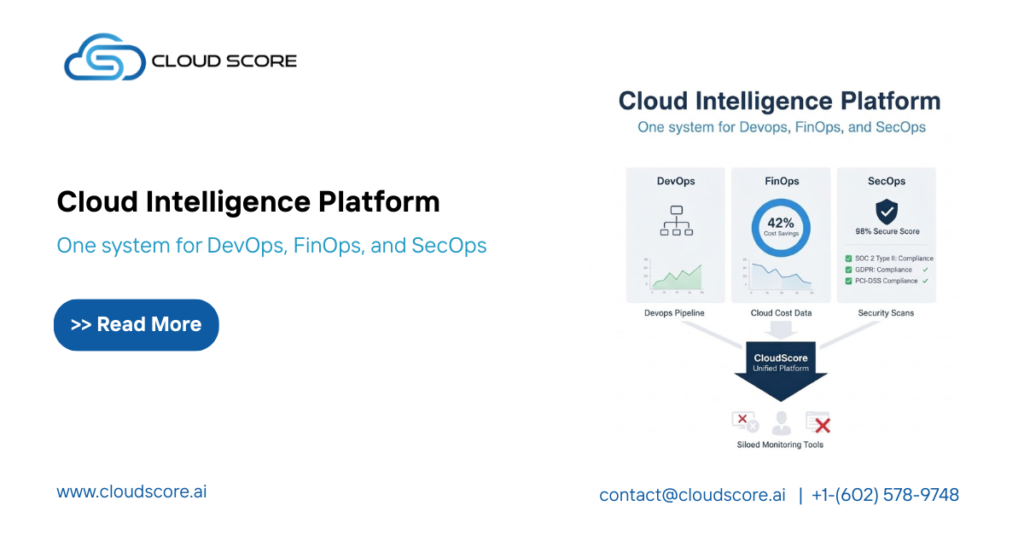
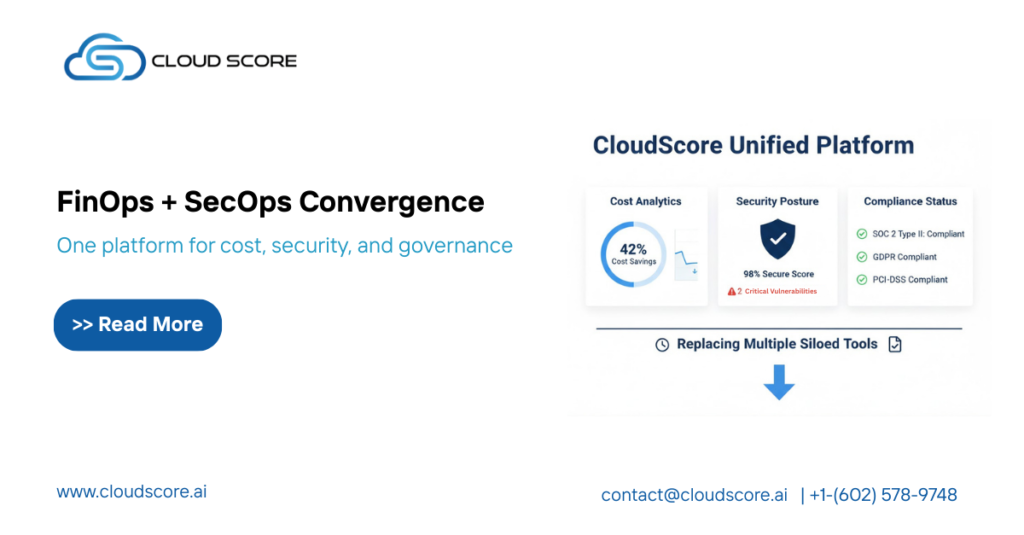
Cloud Complexity Is Forcing a New Model  Cloud environments are no longer simple infrastructure layers. They are:  Multi-cloud  Kubernetes-driven  API-heavy  Data-platform intensive  Security- and compliance-sensitive  Yet most organizations still manage cost and security in silos.  FinOps teams focus on spend. SecOps teams focus on risk. DevOps teams focus on delivery.  The cloud doesn’t operate in silos and neither should the tools.  Cost and Security Are More Connected Than Teams Realize  Many of the biggest cloud risks are also cost risks:  Idle resources increase attack surface and spend  Over-permissioned identities increase breach impact and financial exposure  Misconfigured services create compliance and cost failures  Orphaned assets quietly drain budgets  Without shared visibility, teams solve symptoms—not causes.  Why Tool Sprawl Is No Longer Sustainable  Organizations now operate:  A cost management tool  A CSPM tool  An IAM security tool  A compliance platform  Multiple dashboards  Each tool sees only part of the picture. None correlate cost, usage, ownership, and risk together.  This fragmentation slows response, increases noise, and hides systemic issues.  How CloudScore Unifies FinOps and SecOps  CloudScore was designed as a unified cloud intelligence platform.  What CloudScore does:  Unified Visibility Single-pane visibility across cloud resources, workloads, identities, costs, and risks.  Engineering-First FinOps Real-time cost intelligence, ML-driven optimization, Kubernetes cost management, budgets, forecasts, and anomaly detection.  Built-In SecOps Multi-cloud CSPM, IAM risk detection, misconfiguration monitoring, Kubernetes security, and compliance automation.  Cortex AI Security Analyst Ask security questions in plain English and receive prioritized, context-aware remediation guidance.  Correlation by Design Security findings are correlated with cost, usage, ownership, and lifecycle—not isolated alerts.  Governance Without Slowing Engineering  CloudScore enforces governance through:  Read-only access  Temporary access workflows  Automated ownership rules  Full audit logs  No agents. No production changes. No velocity loss.  The Platform Shift Is Already Happening  FinOps and SecOps are no longer separate concerns. They are two lenses on the same cloud reality.   Request a Demo | Start Your Free Trial | Contact Our Experts  See More Blogs: DevOps Cloud Cost Visibility | Code Scan | Power schedules | Multi Cloud cost optimization | Untagged Cloud Resources | Best Cloud Governance Solutions | SecOps & FinOps Cloud Governance | AI-Driven FinOps | AI Cloud Cost Optimization | Smart Cost Management | Simplify Cloud Costs | Automated FinOps Platform | Multi-Cloud Spend | Cost Efficiency | Cloud Security | Dynamic Optimization | Seasonality Insights | Cloud Governance | Sustainability Reporting | Cloud Infrastructure | Predictive Analytics | Integrating FinOps | Forecasting  | Automated Cost Management | Cloud Cost Optimization
Uncategorized

Why Cloud Costs Spiral Out of Control in Modern DevOps Environments

Speed Changed Everything – Visibility Didn’t  DevOps teams today deploy faster than ever. CI/CD pipelines push code multiple times a day. Infrastructure is created automatically using Terraform and GitOps workflows. Kubernetes schedules workloads dynamically across clusters and regions.  Yet while speed evolved, cost visibility did not.  Engineers can instantly detect:  Failed deployments  Latency spikes  Pod crashes  But they cannot see cloud cost impact in real time.  By the time cloud bills arrive, environments have already changed. Pods are gone. Clusters have scaled. Context is lost.  This is how cloud costs spiral without anyone doing something “wrong”.   Why Kubernetes Makes Cost Even Harder to Track  Kubernetes breaks traditional cost models:  Costs are shared across namespaces  Pods are ephemeral  Nodes serve multiple teams  Tags don’t align with workloads  CI/CD pipelines create infra dynamically  Finance tools expect static resources. DevOps runs dynamic systems.  That mismatch creates cost chaos.  When Cost Is Invisible, Ownership Disappears  Without real-time cost visibility:  Engineers optimize performance, not spend  Finance sees overruns without context  Leadership reacts instead of planning  Cost becomes a surprise — not a signal.  How CloudScore Restores DevOps Cost Control  CloudScore is built for engineering-first FinOps, not finance-only reporting.  How it works in practice:  Unified Multi-Cloud Visibility CloudScore provides a single-pane view across AWS, Azure, GCP, Kubernetes, and data platforms, automatically discovering resources, services, workloads, and environments.  Automatic Cost Allocation Beyond Tags Costs are mapped to teams, services, environments, clusters, namespaces, and workloads, even when tags are missing.  Kubernetes-Native Cost Intelligence Engineers see cost by:  Cluster  Namespace  Deployment  Pod Including over-provisioned CPU/memory and idle nodes.  Real-Time Cost Signals Cost becomes an operational metric—visible while decisions are being made, not weeks later.  No Friction by Design Read-only access. No agents. No pipeline changes. Setup in minutes.  The Shift That Changes Everything  When cost moves at the same speed as DevOps, teams don’t slow down – they get smarter.   Request a Demo | Start Your Free Trial | Contact Our Experts  See More Blogs: Code Scan | Power schedules | Multi Cloud cost optimization | Untagged Cloud Resources | Best Cloud Governance Solutions | SecOps & FinOps Cloud Governance | AI-Driven FinOps | AI Cloud Cost Optimization | Smart Cost Management | Simplify Cloud Costs | Automated FinOps Platform | Multi-Cloud Spend | Cost Efficiency | Cloud Security | Dynamic Optimization | Seasonality Insights | Cloud Governance | Sustainability Reporting | Cloud Infrastructure | Predictive Analytics | Integrating FinOps | Forecasting  | Automated Cost Management | Cloud Cost Optimization
code scan
Uncategorized

CloudScore Code Scan: Find Security Issues Before They Go Live

Security issues usually start in code — not in production.But most teams discover them after deployment, when fixes are costly and risky. CloudScore Code Scan helps teams detect security issues early by scanning code directly inside repositories, before anything goes live. What Is CloudScore Code Scan? CloudScore Code Scan is a security code scanning feature that analyzes your source code and highlights vulnerabilities with clear context. It shows: Where the security issue exists in the code How serious the issue is The exact file and line number What needs to be fixed first No noise. No long reports. Just clear results. Why Code Scan Matters Many teams either: Don’t run code scans often Or get scan reports that are hard to understand CloudScore solves this by: Prioritizing Critical and High-risk issues Showing results in a simple dashboard Making fixes easy for developers to act on This turns code scanning into a daily habit — not a once-a-month task. How CloudScore Code Scan Works The process is simple: Connect your GitHub repository (read-only access) Run a code scan on any branch CloudScore scans your code for security issues Results appear instantly in the dashboard No agents. No pipeline slowdown. What You See After a Code Scan For every detected issue, CloudScore displays: Issue name File path and exact line number Severity level (Critical, High, Medium, Low) Repository and branch name Scan date and time Developers know exactly what to fix and where. Built for Real Engineering Teams CloudScore Code Scan supports: Multiple repositories Repeated scans after fixes Tracking issues over time Exporting reports when needed It works smoothly with CI/CD and modern release workflows. Why CloudScore Code Scan Is Different Most tools only scan code. CloudScore connects code scan results with cloud security, giving teams a single view of risk across code and infrastructure. No agents No complex setup No performance impact Just fast, reliable code scanning. Finding security issues late is expensive.Finding them early is smart. CloudScore Code Scan helps teams scan code early, fix issues faster, and ship software with confidence.  Request a Demo | Start Your Free Trial | Contact Our Experts  See More Blogs: Powerschedules | Multi Cloud cost optimization | Untagged Cloud Resources | Best Cloud Governance Solutions | SecOps & FinOps Cloud Governance | AI-Driven FinOps| AI Cloud Cost Optimization | Smart Cost Management | Simplify Cloud Costs | Automated FinOps Platform | Multi-Cloud Spend | Cost Efficiency | Cloud Security | Dynamic Optimization | Seasonality Insights | Cloud Governance | Sustainability Reporting | Cloud Infrastructure | Predictive Analytics | Integrating FinOps | Forecasting  | Automated Cost Management | Cloud Cost Optimization
Power-Schedules-That-Control-Cloud-Spend-Automatically
Uncategorized

Power Schedules Explained: The Easiest Way to Cut Cloud Spend

Cloud waste usually isn’t caused by bad architecture.It’s caused by cloud resources running when no one is using them. That’s exactly what Power Schedules fix. What Are Power Schedules? (Simple Definition) Power Schedules automatically start and stop cloud resources based on time or policy. In short:👉 Run cloud resources only when the business actually needs them. This makes Power Schedules one of the fastest and safest cloud cost optimization techniques. Why Power Schedules Matter in 2025 Today’s cloud environments are: Always-on Multi-team Multicloud Manual shutdowns don’t scale. Without Power Schedules: Dev & test servers run 24/7 Demo and sandbox environments are forgotten Costs increase silently Power Schedules turn cost control into automation, not human effort. How Power Schedules Work Define business hours (example: Mon–Fri, 9 AM–7 PM) Group resources by environment, team, or project Automatically stop resources outside that window Restart them when work resumes This works across platforms like Amazon Web Services and Microsoft Azure, where non-production sprawl is common. How CloudScore Handles Power Schedules CloudScore implements Power Schedules as a FinOps governance control, not just automation. Policy-based scheduling (by pool, team, or environment) Safe, read-only architecture (no risky cloud interference) Integrated with budgets and cost limits Designed for Dev, Test, Demo, CI/CD, and sandbox workloads This ensures savings without production risk. What Results Can You Expect? Teams using Power Schedules typically achieve: 20–40% reduction in non-production cloud costs Fewer cost anomalies Better cost forecasting Zero impact on customers Savings start within weeks, not months. Do This First (High-Impact Move) 👉 Apply Power Schedules to Dev and Demo environments first. Why? No customer risk Fast ROI Immediate proof of FinOps value Power Schedules answer one critical question: “Does this cloud resource really need to be running right now?” When the answer is automated, cloud costs stay controlled-without slowing teams down. That’s why Power Schedules remain one of the most effective cloud cost optimization strategies for modern FinOps teams.  Request a Demo | Start Your Free Trial | Contact Our Experts  See More Blogs:  Multi Cloud cost optimization | Untagged Cloud Resources | Best Cloud Governance Solutions | SecOps & FinOps Cloud Governance | AI-Driven FinOps| AI Cloud Cost Optimization | Smart Cost Management | Simplify Cloud Costs | Automated FinOps Platform | Multi-Cloud Spend | Cost Efficiency | Cloud Security | Dynamic Optimization | Seasonality Insights | Cloud Governance | Sustainability Reporting | Cloud Infrastructure | Predictive Analytics | Integrating FinOps | Forecasting  | Automated Cost Management | Cloud Cost Optimization
Cloud Cost Optimization: How Engineering-First Teams Reduce Waste Without Slowing Innovation
Uncategorized

Cloud Cost Optimization: How Engineering-First Teams Reduce Waste Without Slowing Innovation

Cloud spending is no longer a finance problem.It’s an engineering, governance, and visibility problem. Modern cloud environments grow faster than traditional cost controls can keep up. Multi-cloud adoption, Kubernetes sprawl, ephemeral workloads, and decentralized teams make cloud cost optimization far more complex than simply “cutting unused resources.” This is exactly where most organizations fail and where CloudScore takes a fundamentally different approach. What Is Cloud Cost Optimization (And Why Most Teams Get It Wrong) Cloud cost optimization is the continuous practice of reducing waste, improving efficiency, and aligning cloud spend with real business value without disrupting engineering velocity. Most companies approach it incorrectly by: Reacting to bills after the damage is done Running one-time cleanup exercises Treating optimization as a finance-only task Using intrusive tools that slow down teams The result?Temporary savings, growing resentment from engineers, and costs that creep back within weeks. Real cloud cost optimization must be: Proactive, not reactive Engineering-first, not finance-only Continuous, not episodic Non-intrusive, not disruptive The Real Causes of Cloud Cost Waste Before optimization, you need clarity. The biggest cost drivers we consistently see across AWS, Azure, GCP, and Alibaba Cloud are: 1. Idle & Orphaned Resources Unused VMs, unattached storage, forgotten snapshots, zombie load balancers. 2. Kubernetes & Container Sprawl Over-provisioned clusters, poor namespace allocation, no workload visibility. 3. Poor Cost Allocation No ownership by team, product, environment, or customer making accountability impossible. 4. Lack of Forecasting & Anomaly Detection Teams find out too late, after budgets are already breached. 5. Security & Compliance Blind Spots Over-permissive IAM, unused services left running “just in case,” and misconfigurations that quietly increase spend. Cloud Cost Optimization Requires FinOps + Governance (Not Just Savings) This is the strategic shift most organizations miss. Cloud cost optimization cannot exist in isolation. It must sit at the intersection of: FinOps → visibility, allocation, optimization, forecasting Cloud Intelligence → workload-level insights, engineering context Governance & Security → policy enforcement without blocking innovation CloudScore was built on this principle from day one. How CloudScore Approaches Cloud Cost Optimization Differently 1. Engineering-First, Read-Only Architecture CloudScore connects in read-only mode, ensuring: Zero risk to production No performance impact No forced changes to workflows Engineers trust it. Finance respects it. Security approves it. 2. Unified Multi-Cloud Visibility Get a single, normalized view across: AWS Azure Google Cloud Alibaba Cloud No more fragmented dashboards or inconsistent reporting. 3. Advanced Cost Allocation That Actually Works Allocate costs by: Team Product Environment Namespace (Kubernetes) Business unit This turns cloud cost optimization into shared accountability, not finger-pointing. 4. ML-Driven Optimization Insights CloudScore continuously analyzes: Usage patterns Historical trends Anomalies Forecast deviations So teams can optimize before waste compounds. 5. Governance Without Friction Policies, budgets, alerts, and controls are enforced without blocking developers, maintaining velocity while protecting margins. The Business Impact of Proper Cloud Cost Optimization Organizations using an engineering-first optimization model typically achieve: 20–40% reduction in unnecessary cloud spend Faster decision-making with real-time cost intelligence Improved collaboration between Finance, Engineering, and Security Predictable budgets and fewer surprise bills Stronger compliance and governance posture This isn’t about spending less it’s about spending smart. Cloud Cost Optimization Is a Continuous Discipline Cloud environments evolve daily.Your optimization strategy must evolve with them. One-time cleanups fail.Manual reviews don’t scale.Intrusive tools create resistance. Continuous, intelligent cloud cost optimization is the only model that works long-term. And that’s exactly what CloudScore delivers. Optimize Without Slowing Down The future of cloud cost optimization belongs to platforms that: Respect engineering workflows Provide deep financial intelligence Enforce governance quietly Scale across multi-cloud environments CloudScore isn’t just a cost tool.It’s cloud intelligence with financial and governance context built for modern engineering teams.  Request a Demo | Start Your Free Trial | Contact Our Experts See More Blogs: Untagged Cloud Resources | Best Cloud Governance Solutions | SecOps & FinOps Cloud Governance | AI-Driven FinOps| AI Cloud Cost Optimization | Smart Cost Management | Simplify Cloud Costs | Automated FinOps Platform | Multi-Cloud Spend | Cost Efficiency | Cloud Security | Dynamic Optimization | Seasonality Insights | Cloud Governance | Sustainability Reporting | Cloud Infrastructure | Predictive Analytics | Integrating FinOps | Forecasting  | Automated Cost Management | Cloud Cost Optimization
How to Tag Untagged Cloud Resources for FinOps & Cost Governance
Uncategorized

How to Tag Untagged Cloud Resources for FinOps & Cost Governance

In modern cloud environments, untagged cloud resources are one of the biggest hidden blockers to effective FinOps and cost governance. When resources lack proper tags, organizations lose visibility into who owns what, why it exists and how much value it delivers. The result? Budget overruns, weak accountability, and governance gaps across multi-cloud environments. This guide explains how to tag untagged cloud resources, why they break FinOps, and how to build a scalable, automated tagging strategy that supports cost optimization, accountability and governance. Why Untagged Cloud Resources Are a FinOps Problem FinOps is built on visibility, ownership, and accountability. Untagged resources undermine all three. When resources are not tagged: Cloud spend cannot be accurately allocated to teams or projects Finance teams struggle with showback and chargeback Engineering teams lose cost accountability Governance and compliance audits become manual and error-prone In FinOps maturity models, resource tagging is a foundational requirement, not an optional best practice. What Are Cloud Resource Tags? Cloud resource tags are key–value metadata labels attached to infrastructure components such as: Virtual machines Storage buckets Databases Kubernetes clusters Serverless services Common tag examples include: Environment: Production Owner: Platform-Team Cost Center: CC-1024 Application: Billing-Service These tags enable cost attribution, policy enforcement, automation, and reporting. The Real Cost of Untagged Resources Untagged resources typically fall into three categories: Orphaned resources – created for testing and never deleted Shadow IT workloads – launched outside governance workflows Legacy assets – older resources created before tagging standards existed Together, they often account for 20-30% of wasted cloud spend in large organizations. Step-by-Step: How to Tag Untagged Cloud Resources 1. Discover Untagged Resources Across Clouds Start by identifying resources missing mandatory tags across: Amazon Web Services Microsoft Azure Google Cloud Alibaba Cloud Use: Native cloud inventory tools Cost and usage reports FinOps platforms with tagging audits Focus on high-cost services first (compute, databases, storage). 2. Define a Standard Tagging Taxonomy A strong tagging strategy balances simplicity and governance. Recommended sample tags for FinOps: Environment Owner Team / Department Cost Center Application / Service Business Unit Avoid over-tagging. More tags ≠ better governance. 3. Apply Tags Without Breaking Production When tagging live workloads: Avoid restarting critical services Prioritize non-disruptive tag updates Validate permissions before bulk actions Most cloud platforms allow in-place tagging without downtime. 4. Automate Tag Remediation Manual tagging does not scale. Use: Tag enforcement policies Infrastructure-as-Code (Terraform, ARM, CloudFormation) Event-driven automation to auto-tag new resources Automation ensures every new resource is tagged at creation, not after the cost shows up. 5. Block Untagged Resource Creation The most effective FinOps control is prevention. Implement policies that: Deny resource creation without mandatory tags Warn developers during deployment Auto-assign default tags when possible This shifts FinOps from reactive cleanup to proactive governance. How Tagging Powers FinOps Outcomes Once tagging is enforced, organizations unlock: Accurate Cost Allocation Team-level and application-level spend visibility Reliable showback and chargeback models Smarter Optimization Identify unused or oversized resources by owner Align optimization actions with accountable teams Stronger Governance & Compliance Audit-ready cloud environments Clear ownership for security and policy enforcement Common Tagging Mistakes to Avoid Allowing free-text tag values Relying only on manual tagging No enforcement policies Inconsistent tag naming across clouds Ignoring legacy resources FinOps success depends on consistency and automation, not best-effort tagging. FinOps Best Practice: From Tags to Intelligence Tagging is not the end goal, it is the foundation. Advanced FinOps teams use tags to power: Automated anomaly detection AI-driven cost optimization Predictive forecasting Governance dashboards Without clean tagging, none of these capabilities work reliably. Outcome Untagged cloud resources silently drain budgets and weaken governance. CloudScore discovers untagged assets, standardizes tags, automates enforcement, and blocks violations turning tagging from an operational chore into a strategic FinOps control. If FinOps is about aligning cloud spend with business value, CloudScore ensures that value is measured. Turn cloud chaos into controlled, accountable spend with CloudScore’s automated FinOps tagging and governance.  Request a Demo | Start Your Free Trial | Contact Our Experts See More Blogs: Best Cloud Governance Solutions | SecOps & FinOps Cloud Governance | AI-Driven FinOps | AI Cloud Cost Optimization | Smart Cost Management | Simplify Cloud Costs | Automated FinOps Platform | Multi-Cloud Spend | Cost Efficiency | Cloud Security | Dynamic Optimization | Seasonality Insights | Cloud Governance | Sustainability Reporting | Cloud Infrastructure | Predictive Analytics | Integrating FinOps | Forecasting  | Automated Cost Management | Cloud Cost Optimization
Which Are the Best Cloud Governance Solutions for Enterprises in 2026?
Uncategorized

Which Are the Best Cloud Governance Solutions for Enterprises in 2026?

Best Cloud governance solutions are no longer optional for enterprises in 2026 they are foundational. As organizations scale across AWS, Azure, Google Cloud, and hybrid environments, cloud operations have become harder to control, more expensive to manage, and riskier to secure. What once worked with basic policies and manual reviews now breaks under the pressure of multi-cloud complexity, AI workloads, and regulatory expectations. Enterprise leaders today aren’t just asking “Are we compliant?” they’re asking “Are we continuously in control?” That shift defines modern cloud governance. Cloud Governance in 2026: What’s Changed? Cloud governance used to be about setting rules and reviewing reports. In 2026, governance is continuous, automated, and intelligence-driven. According to AWS, cloud governance is a framework of rules, processes, and controls that guide organizations to operate securely and efficiently in the cloud. But in practice, enterprises now need far more than guidelines, they need systems that enforce governance in real time, not after problems occur. Modern cloud governance focuses on: Preventing misconfigurations before deployment Controlling cloud costs continuously, not monthly Enforcing compliance automatically Unifying security, finance, and operations This evolution is widely reflected across industry research and cloud provider frameworks. Why Enterprises Are Replacing Traditional Governance Tools Enterprises are moving away from static governance models because cloud environments are no longer static. Key drivers include: Multi-cloud adoption as a default enterprise strategy AI and data workloads that scale unpredictably Increased regulatory scrutiny across industries Cloud spend accountability at the CFO and board level As Cloudscore highlights, poor cloud governance often leads to the same root problems repeatedly – untagged resources, open permissions, security gaps, and unnecessary cloud waste. Traditional monitoring tools only surface these issues; they don’t resolve them. What Defines the Best Cloud Governance Solutions in 2026? Based on industry best practices and enterprise adoption patterns, the best cloud governance solutions in 2026 share a few essential characteristics. Unified Multi-Cloud Visibility Governance must work across AWS, Azure, and GCP from a single control plane without fragmented dashboards or provider lock-in. Automated Policy Enforcement Policies should act as guardrails, not guidelines. Leading platforms enforce rules automatically at deployment and runtime. FinOps, SecOps, and Compliance Together Cost, security, and compliance are deeply connected. The best platforms manage them as one system — not separate tools. AI-Driven Intelligence Static alerts are no longer enough. Enterprises expect anomaly detection, predictive insights, and intelligent recommendations. Continuous Compliance Compliance must be always-on, audit-ready, and automated – not dependent on manual checks. Best Cloud Governance Solutions for Enterprises in 2026 CloudScore CloudScore represents the next generation of cloud governance platforms. It brings FinOps, SecOps, and CloudOps together into a unified, intelligent governance layer designed specifically for enterprise-scale environments. What makes CloudScore stand out: Unified governance across AWS, Azure and Google Cloud AI-driven cost optimization and anomaly detection Automated policy enforcement and guardrails Continuous compliance monitoring Predictive insights that enable proactive decisions CloudScore aligns closely with where cloud governance is heading – autonomous, data-driven, and action-oriented. CloudHealth by VMware CloudHealth is a well-established platform known primarily for cloud cost visibility and reporting. Best suited for: Cost allocation and chargeback models Financial reporting and budgeting Limitations: Limited automation Less real-time enforcement compared to newer platforms AWS Control Tower AWS Control Tower provides governance for organizations operating exclusively on AWS. Strengths: Account setup and baseline controls Native AWS integration Limitations: AWS-only Minimal FinOps and AI-driven governance capabilities (Source: AWS documentation) Azure Policy & Microsoft Defender for Cloud Microsoft’s governance tools offer strong security and compliance controls for Azure-centric enterprises. Strengths: Azure-native policy enforcement Security posture management Limitations: Fragmented experience in multi-cloud environments Less focus on cost intelligence Google Cloud Assured Workloads Designed for compliance-heavy workloads running on Google Cloud. Strengths: Strong regulatory controls Limitations: GCP-only scope Not designed for holistic enterprise governance How Enterprises Should Choose the Right Governance Platform Before selecting a solution, enterprise teams should ask: Does it support true multi-cloud governance? Can it enforce policies automatically, not just report issues? Does it unify cost, security, and compliance? Is it built for AI-scale workloads? Does it reduce cloud waste continuously? As Flexera notes, cloud governance is no longer a visibility problem – it’s an execution problem. Platforms that can’t act in real time will fall behind. The Future of Cloud Governance By 2026, cloud governance has become a strategic advantage rather than a compliance function. Enterprises adopting intelligent governance platforms consistently report: Lower cloud spend Fewer security incidents Faster audits Greater operational agility The shift is clear: governance is moving from manual oversight to autonomous control. Choosing from the best cloud governance solutions for enterprises in 2026 means looking beyond dashboards and reports. The real differentiator is automation, intelligence, and the ability to act before problems impact cost, security, or compliance. Platforms like CloudScore reflect this new reality – where governance isn’t reactive, but built into every cloud decision. Take control of your multi-cloud environment in 2026 – discover how intelligent, automated cloud governance can reduce risk, optimize costs and scale with confidence. Sources & References You can safely cite the following authoritative sources for this article: AWS – Cloud Governance Overviewhttps://aws.amazon.com/cloudops/cloud-governance/ CloudQuery – Cloud Governance Tools Explainedhttps://www.cloudquery.io/learning-center/cloud-governance-tools Flexera – Cloud Governance & Cost Managementhttps://www.flexera.com/solutions/cloud-cost/cloud-governance CloudNuro – Cloud Governance Tools Comparisonhttps://www.cloudnuro.ai/blog/top-10-cloud-governance-tools-for-aws-azure-and-gcp-in-2025 Bacancy Technology – What Is Cloud Governance?https://www.bacancytechnology.com/blog/cloud-governance  Request a Demo | Start Your Free Trial | Contact Our Experts See More Blogs: SecOps & FinOps Cloud Governance | AI-Driven FinOps | AI Cloud Cost Optimization | Smart Cost Management | Simplify Cloud Costs | Automated FinOps Platform | Multi-Cloud Spend | Cost Efficiency | Cloud Security | Dynamic Optimization | Seasonality Insights | Cloud Governance | Sustainability Reporting | Cloud Infrastructure | Predictive Analytics | Integrating FinOps | Forecasting  | Automated Cost Management | Cloud Cost Optimization
Why SecOps & FinOps Must Work Together for Cloud Governance in 2026
Uncategorized

Why SecOps & FinOps Must Work Together for Cloud Governance in 2026

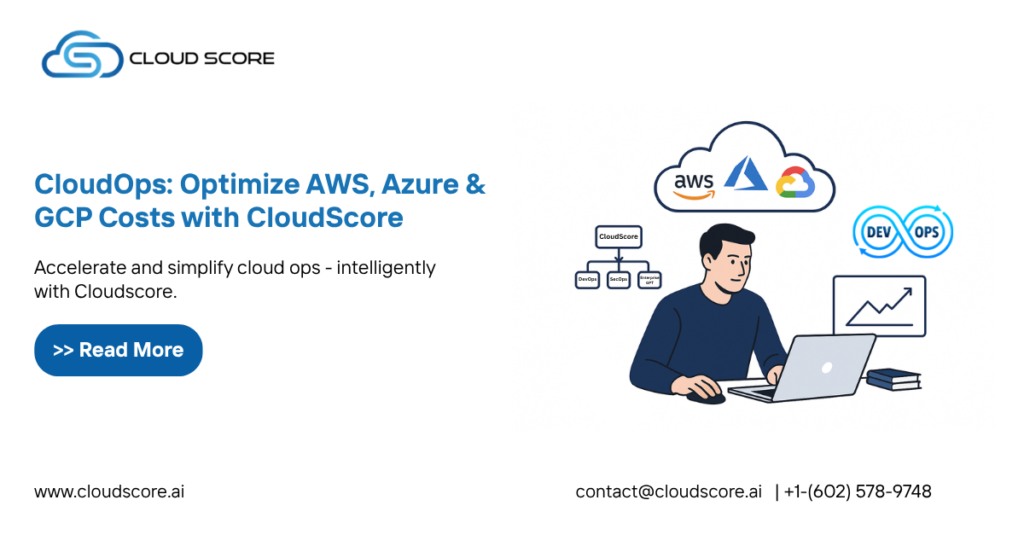
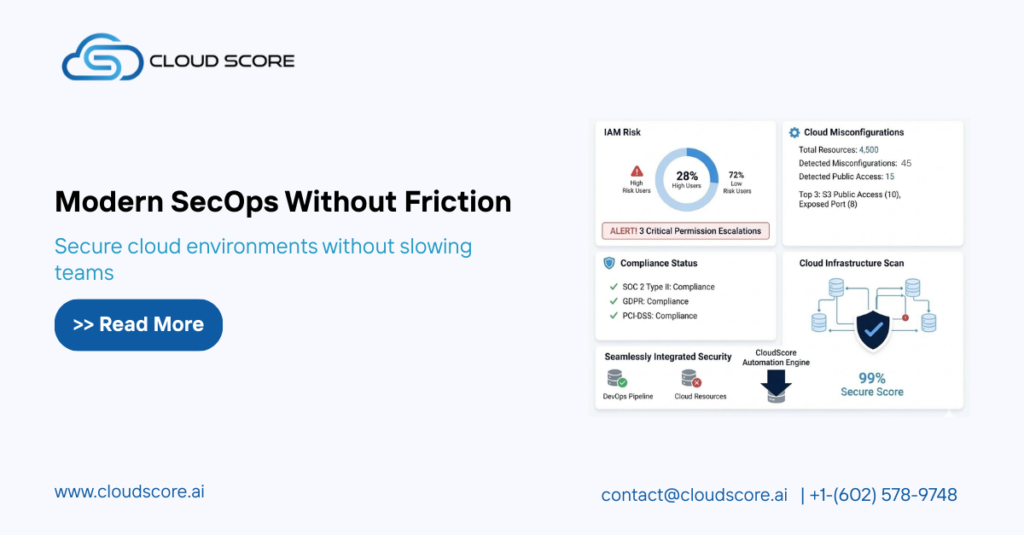
Cloud ecosystems are evolving at a pace that demands smarter, unified management. As organizations adopt multi-cloud, AI-driven workloads and high-speed deployments, SecOps & FinOps Cloud Governance 2026 becomes a critical priority. Security risks and cloud spending are no longer independent challenges they are interconnected. To maintain operational control, SecOps and FinOps must collaborate as a single discipline and platforms like CloudScore make this transformation seamless. CloudScore unifies security posture, cost visibility, compliance automation and real-time cloud intelligence into one system. With automated guardrails, anomaly detection, and AI-driven recommendations, CloudScore helps organizations reduce risk, eliminate waste, and maintain continuous governance across multi-cloud environments. The Cloud Challenges SecOps & FinOps Can’t Solve Alone Modern cloud environments introduce challenges that neither team can tackle independently: 1. Rising Security Misconfigurations Ephemeral workloads, open ports, IAM misuse, and untagged assets lead to security gaps often the same gaps that result in unnecessary spending. CloudScore automatically detects these misconfigurations and maps them to cost impact, helping both teams prioritize what matters most. 2. Unpredictable Cloud Spend AI tasks, data pipelines, auto-scaling clusters, and duplicate deployments can spike costs without warning. CloudScore provides real-time visibility into cost anomalies, linking them to the resources or security risks behind them. 3. Increasing Compliance Burden Manual compliance is impossible when workloads change every minute. CloudScore enables policy-as-code enforcement, ensuring only compliant, secure, and cost-controlled deployments go live. 4. Limited Visibility Across Teams Often, a cost spike is actually a security issue.Or a security issue looks like normal usage. CloudScore connects cost, performance and security signals into one shared system, giving both teams end-to-end clarity. Why SecOps Needs FinOps And How CloudScore Bridges the Gap SecOps teams are responsible for reducing risk but many risk indicators are cost signals. CloudScore helps SecOps by: Detecting suspicious cost spikes that may indicate attacks Associating misconfigurations with potential financial impact Identifying unnecessary resources caused by excessive privileges or drift Highlighting risky deployments tied to increased spend A more secure cloud is almost always a more cost-efficient cloud and CloudScore reveals that connection. Why FinOps Needs SecOps – Powered by CloudScore FinOps teams can’t optimize costs if the environment is insecure or ungoverned. CloudScore supports FinOps by: Enforcing mandatory tagging for accurate cost allocation Blocking high-risk, high-cost resources via policy-as-code Flagging wasteful configurations caused by weak security Helping create budgets linked to risk and compliance tiers CloudScore ensures financial governance is built on top of strong security foundations. What Unified Cloud Governance Looks Like With CloudScore When organizations use CloudScore to align SecOps and FinOps, they gain a governance model that’s automated, intelligent, and fully transparent. Connected Insights CloudScore displays security posture, cost metrics, and compliance status in a single unified dashboard. Policy-as-Code Enforcement Deployments violating security or cost rules are automatically blocked no manual approvals needed. Real-Time Alerts CloudScore sends notifications when cost anomalies or security risks appear. Predictable Budgeting Cost forecasts improve when they’re driven by security context. Stronger Performance at Lower Cost CloudScore fine-tunes resources based on both security requirements and cost-impact data. This is governance built for modern cloud scale. A Real-World Scenario: How CloudScore Enables Unified Governance A global financial technology company operating across AWS and Azure faced several issues: Unexplained cost spikes Zero tagging consistency Over-permissioned IAM roles Frequent compliance failures SecOps and FinOps working in separate reporting tools After adopting CloudScore, here’s how transformation happened: Step 1: CloudScore Analyzed All Resources CloudScore identified over-provisioned workloads, misconfigured networks, and excessive permissions causing both risk and cost leaks. Step 2: CloudScore Enforced Tagging & IAM Policies Resources missing required tags were blocked from deployment.High-risk IAM permissions were automatically flagged and escalated. Step 3: CloudScore Enabled Real-Time Cost & Risk Monitoring Security alerts and cost spikes were correlated, detecting threats early and eliminating idle workloads. Step 4: Results in 90 Days 30% reduction in cloud spend 60% fewer misconfigurations Complete cost attribution across teams Improved compliance pass rates Unified governance became effortless. Cloud Governance Built for 2026 CloudScore proves that the future of cloud operations is unified, not siloed. When SecOps and FinOps work together: Compliance becomes continuous Costs become predictable Security improves across the board Cloud waste disappears Risks are caught earlier Deployments become safer and faster With CloudScore as the central governance engine, organizations gain full visibility, automated controls, and intelligent optimization across all cloud environments. In 2026, cloud excellence is defined by how well SecOps and FinOps collaborate and CloudScore is engineered to make that collaboration seamless.  Request a Demo | Start Your Free Trial | Contact Our Experts See More Blogs: AI-Driven FinOps | AI Cloud Cost Optimization | Smart Cost Management | Simplify Cloud Costs | Automated FinOps Platform | Multi-Cloud Spend | Cost Efficiency | Cloud Security | Dynamic Optimization | Seasonality Insights | Cloud Governance | Sustainability Reporting | Cloud Infrastructure | Predictive Analytics | Integrating FinOps | Forecasting  | Automated Cost Management | Cloud Cost Optimization

Scroll to Top