
November 2025

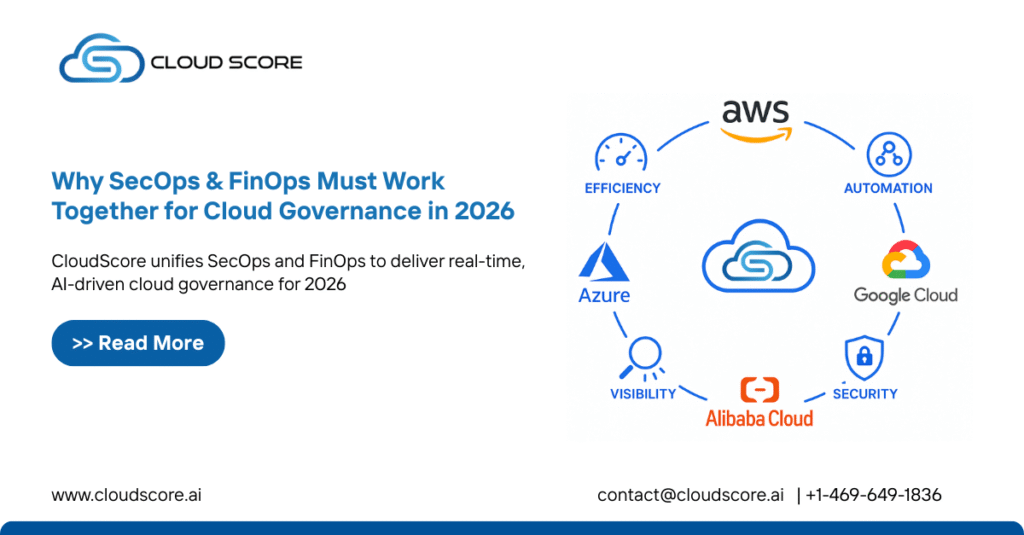
Why SecOps & FinOps Must Work Together for Cloud Governance in 2026
Uncategorized

Why SecOps & FinOps Must Work Together for Cloud Governance in 2026

Cloud ecosystems are evolving at a pace that demands smarter, unified management. As organizations adopt multi-cloud, AI-driven workloads and high-speed deployments, SecOps & FinOps Cloud Governance 2026 becomes a critical priority. Security risks and cloud spending are no longer independent challenges they are interconnected. To maintain operational control, SecOps and FinOps must collaborate as a single discipline and platforms like CloudScore make this transformation seamless. CloudScore unifies security posture, cost visibility, compliance automation and real-time cloud intelligence into one system. With automated guardrails, anomaly detection, and AI-driven recommendations, CloudScore helps organizations reduce risk, eliminate waste, and maintain continuous governance across multi-cloud environments. The Cloud Challenges SecOps & FinOps Can’t Solve Alone Modern cloud environments introduce challenges that neither team can tackle independently: 1. Rising Security Misconfigurations Ephemeral workloads, open ports, IAM misuse, and untagged assets lead to security gaps often the same gaps that result in unnecessary spending. CloudScore automatically detects these misconfigurations and maps them to cost impact, helping both teams prioritize what matters most. 2. Unpredictable Cloud Spend AI tasks, data pipelines, auto-scaling clusters, and duplicate deployments can spike costs without warning. CloudScore provides real-time visibility into cost anomalies, linking them to the resources or security risks behind them. 3. Increasing Compliance Burden Manual compliance is impossible when workloads change every minute. CloudScore enables policy-as-code enforcement, ensuring only compliant, secure, and cost-controlled deployments go live. 4. Limited Visibility Across Teams Often, a cost spike is actually a security issue.Or a security issue looks like normal usage. CloudScore connects cost, performance and security signals into one shared system, giving both teams end-to-end clarity. Why SecOps Needs FinOps And How CloudScore Bridges the Gap SecOps teams are responsible for reducing risk but many risk indicators are cost signals. CloudScore helps SecOps by: Detecting suspicious cost spikes that may indicate attacks Associating misconfigurations with potential financial impact Identifying unnecessary resources caused by excessive privileges or drift Highlighting risky deployments tied to increased spend A more secure cloud is almost always a more cost-efficient cloud and CloudScore reveals that connection. Why FinOps Needs SecOps – Powered by CloudScore FinOps teams can’t optimize costs if the environment is insecure or ungoverned. CloudScore supports FinOps by: Enforcing mandatory tagging for accurate cost allocation Blocking high-risk, high-cost resources via policy-as-code Flagging wasteful configurations caused by weak security Helping create budgets linked to risk and compliance tiers CloudScore ensures financial governance is built on top of strong security foundations. What Unified Cloud Governance Looks Like With CloudScore When organizations use CloudScore to align SecOps and FinOps, they gain a governance model that’s automated, intelligent, and fully transparent. Connected Insights CloudScore displays security posture, cost metrics, and compliance status in a single unified dashboard. Policy-as-Code Enforcement Deployments violating security or cost rules are automatically blocked no manual approvals needed. Real-Time Alerts CloudScore sends notifications when cost anomalies or security risks appear. Predictable Budgeting Cost forecasts improve when they’re driven by security context. Stronger Performance at Lower Cost CloudScore fine-tunes resources based on both security requirements and cost-impact data. This is governance built for modern cloud scale. A Real-World Scenario: How CloudScore Enables Unified Governance A global financial technology company operating across AWS and Azure faced several issues: Unexplained cost spikes Zero tagging consistency Over-permissioned IAM roles Frequent compliance failures SecOps and FinOps working in separate reporting tools After adopting CloudScore, here’s how transformation happened: Step 1: CloudScore Analyzed All Resources CloudScore identified over-provisioned workloads, misconfigured networks, and excessive permissions causing both risk and cost leaks. Step 2: CloudScore Enforced Tagging & IAM Policies Resources missing required tags were blocked from deployment.High-risk IAM permissions were automatically flagged and escalated. Step 3: CloudScore Enabled Real-Time Cost & Risk Monitoring Security alerts and cost spikes were correlated, detecting threats early and eliminating idle workloads. Step 4: Results in 90 Days 30% reduction in cloud spend 60% fewer misconfigurations Complete cost attribution across teams Improved compliance pass rates Unified governance became effortless. Cloud Governance Built for 2026 CloudScore proves that the future of cloud operations is unified, not siloed. When SecOps and FinOps work together: Compliance becomes continuous Costs become predictable Security improves across the board Cloud waste disappears Risks are caught earlier Deployments become safer and faster With CloudScore as the central governance engine, organizations gain full visibility, automated controls, and intelligent optimization across all cloud environments. In 2026, cloud excellence is defined by how well SecOps and FinOps collaborate and CloudScore is engineered to make that collaboration seamless.  Request a Demo | Start Your Free Trial | Contact Our Experts See More Blogs: AI-Driven FinOps | AI Cloud Cost Optimization | Smart Cost Management | Simplify Cloud Costs | Automated FinOps Platform | Multi-Cloud Spend | Cost Efficiency | Cloud Security | Dynamic Optimization | Seasonality Insights | Cloud Governance | Sustainability Reporting | Cloud Infrastructure | Predictive Analytics | Integrating FinOps | Forecasting  | Automated Cost Management | Cloud Cost Optimization
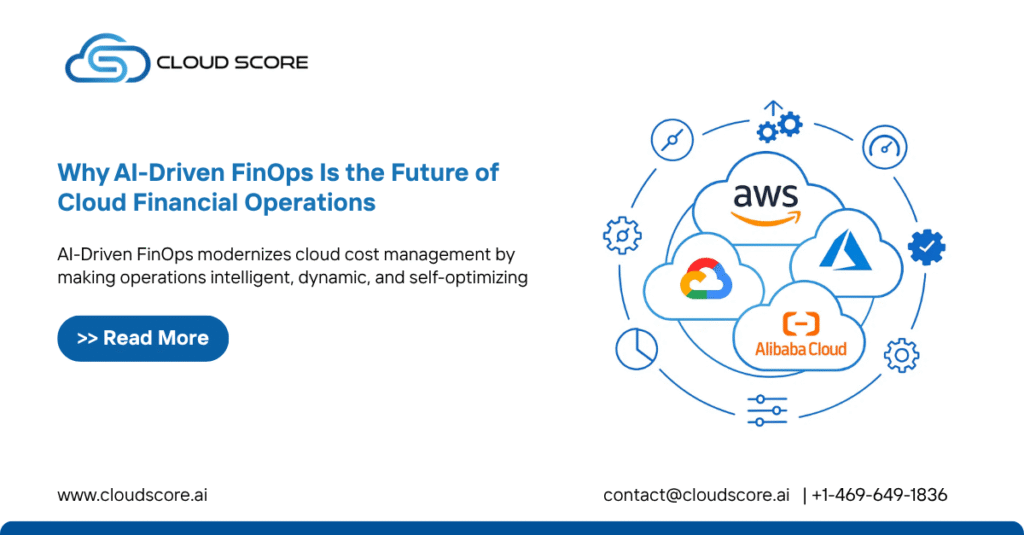
Why AI-Driven FinOps Is the Future of Cloud Financial Operations
Uncategorized

Why AI-Driven FinOps Is the Future of Cloud Financial Operations

In the last decade, cloud adoption has skyrocketed yet cloud financial operations have struggled to keep pace. Most organizations still rely on manual cost tracking, static budgets, and delayed reporting, even while their cloud usage grows dynamically across teams, regions, and workloads. AI-Driven FinOps is changing that. It’s not just an upgrade to traditional FinOps practices it’s a complete reinvention of how companies optimize cloud spending, improve financial accuracy, and scale with confidence. The Shift From Traditional FinOps to AI-Driven FinOps FinOps has always focused on visibility, accountability, and optimization. But traditional methods depend heavily on manual work: Exporting billing reports Reconciling cost anomalies Building forecasts in spreadsheets Setting budgets that quickly go outdated With multicloud environments, Kubernetes clusters, and decentralized engineering workflows, manual FinOps can’t deliver the real-time intelligence modern organizations need. AI automates these complexities, turning FinOps from reactive cost control into proactive, intelligent cloud financial management. How AI Is Transforming Cloud Financial Operations 1. Real-Time Cost Visibility AI connects directly with multi-cloud billing systems and usage logs to give engineering, finance, and DevOps teams instant insights not weekly or monthly snapshots. This enables faster decisions and eliminates days of manual analysis. 2. Predictive Cloud Forecasting AI models can analyze historical usage, current workloads, business seasonality, and deployment patterns to forecast future cloud costs with far higher accuracy than manual projections. This helps teams plan budgets more intelligently and avoid unexpected cost overruns. 3. Automated Optimization Recommendations AI automatically identifies: Idle or underutilized resources Expensive compute options Right-sizing opportunities Savings plan gaps Opportunistic scheduling windows Instead of waiting for audits, teams get continuous optimization suggestions. 4. Intelligent Cloud Governance With AI, organizations can enforce policies automatically like shutting down unused resources or alerting teams before they exceed budget thresholds. This shifts governance from reactive enforcement to preventive automation. Why AI-Driven FinOps Is Becoming Essential Works at Scale As cloud environments grow, AI can monitor millions of data points simultaneously far more than human analysts. Boosts Cross-Team Collaboration Finance teams gain clarity. Engineering teams gain context. Leadership gains predictability. AI enables all three to operate from the same real-time source of truth. Reduces Cloud Waste Significantly Most companies overspend 30–40% on cloud. AI-driven optimization reduces waste, improving operational efficiency and freeing budgets for innovation. Supports Multicloud & Kubernetes Complexity Whether workloads run on AWS, Azure, GCP, or hybrid Kubernetes clusters, AI streamlines management across all environments. The Future of Cloud Financial Operations Is AI-Driven As cloud continues evolving, organizations need systems that can match its speed and complexity. AI-Driven FinOps modernizes cloud cost management by making operations intelligent, dynamic, and self-optimizing. Companies that adopt AI-driven financial operations aren’t just saving money they’re unlocking a competitive advantage in agility, forecasting, and digital transformation. The shift has already started. The future belongs to organizations that modernize their FinOps with AI. Start optimizing your cloud costs with AI-Driven FinOps today try CloudScore now.  Request a Demo | Start Your Free Trial | Contact Our Experts See more Blogs: AI Cloud Cost Optimization | Smart Cost Management | Simplify Cloud Costs | Automated FinOps Platform | Multi-Cloud Spend | Cost Efficiency | Cloud Security | Dynamic Optimization | Seasonality Insights | Cloud Governance | Sustainability Reporting | Cloud Infrastructure | Predictive Analytics | Integrating FinOps | Forecasting  | Automated Cost Management | Cloud Cost Optimization
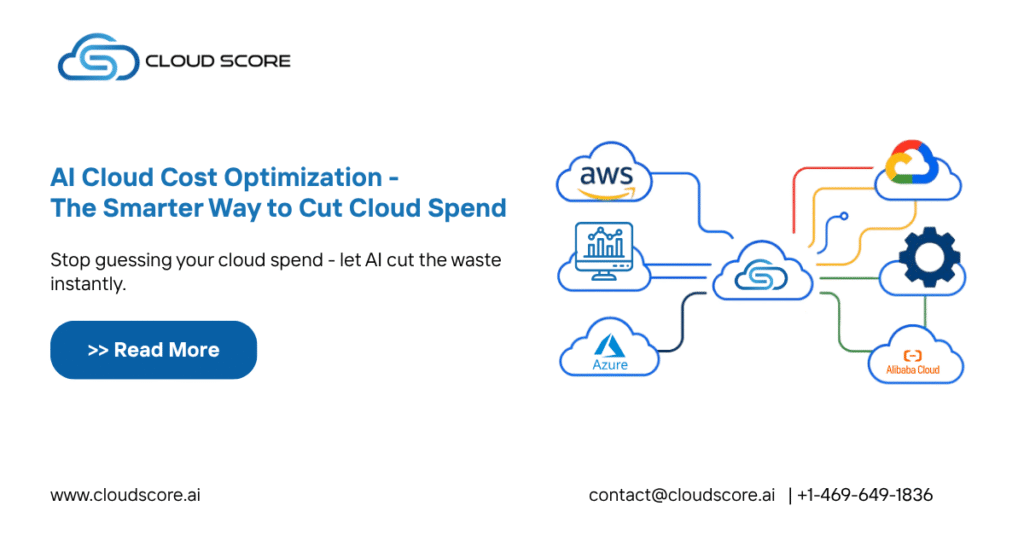
AI Cloud Cost Optimization - How Intelligent Automation is Redefining FinOps
Uncategorized

AI Cloud Cost Optimization – How Intelligent Automation is Redefining FinOps

In today’s multi-cloud world, managing cloud costs has become a high-stakes challenge. From underutilized resources to unpredictable usage spikes, cloud spending can spiral out of control without intelligent monitoring. Enter AI Cloud Cost Optimization a transformative approach that blends automation, predictive analytics, and real-time visibility to help enterprises achieve financial efficiency and operational control. AI is not just automating cloud governance it’s redefining FinOps, giving businesses the intelligence they need to make smarter cloud investment decisions. What is AI Cloud Cost Optimization? AI Cloud Cost Optimization leverages algorithms, behavioral analytics and automated policies to identify inefficiencies and optimize cloud resource allocation.Instead of relying on manual reviews or static cost reports, AI systems continuously analyze patterns in usage, performance and billing, delivering real-time recommendations to reduce costs without compromising performance. AI-based FinOps tools like CloudScore use dynamic algorithms that automatically scale resources, shut down idle workloads and predict future spending patterns based on historical data. Key Benefits of AI Cloud Cost Optimization 1. Real-Time Cost Visibility AI-powered dashboards give organizations a granular view of their cloud expenses broken down by region, service, and department. This transparency helps teams pinpoint cost anomalies before they escalate. 2. Resource Right-Sizing AI continuously analyzes workloads and adjusts compute, storage, and network resources to prevent both over-provisioning and under-provisioning. 3. Predictive Spend Forecasting Forecasting models track historical usage to predict future expenses empowering finance teams to plan budgets and avoid surprise billing. 4. Anomaly Detection & Alerts AI can instantly detect irregular spikes in cloud consumption and trigger alerts, ensuring proactive intervention and eliminating unnecessary financial waste. 5. Multi-Cloud Cost Governance With most enterprises operating across AWS, Azure, and Google Cloud, AI provides a centralized governance framework ensuring compliance, standardization, and policy enforcement across all platforms. How AI Transforms Traditional FinOps Traditional FinOps relies heavily on manual reporting and static analysis, which often leads to delayed cost control actions. AI-driven systems, however, operate continuously and autonomously offering 24/7 cloud monitoring and actionable intelligence. By integrating with APIs from major cloud providers, AI FinOps platforms like CloudScore automatically: Identify cost-saving opportunities (unused instances, over-provisioned VMs) Recommend optimal pricing models (Reserved vs. On-Demand vs. Spot) Enforce tagging compliance and governance Provide visual cost breakdowns per project or department This constant feedback loop creates a self-optimizing cloud environment, where cost efficiency is built into every deployment. Real-World Impact of AI Cloud Cost Optimization Companies that have adopted AI-driven cost optimization strategies report: Up to 30% reduction in annual cloud expenditure 25–30% improvement in resource utilization efficiency Faster ROI through continuous cost governance By automating decision-making, AI reduces dependency on human intervention and ensures financial accountability across engineering, DevOps, and finance teams. Future of AI in Cloud Cost Management The next evolution of FinOps will move toward self-healing cloud ecosystems where AI not only monitors but also executes autonomous cost adjustments in real time.Expect to see tighter integrations between FinOps and Cloud Governance platforms, ensuring that every byte of cloud data is optimized for both performance and cost. As organizations continue to scale cloud adoption, AI Cloud Cost Optimization will no longer be a luxury it will be a strategic necessity for sustainable digital growth. Outcome AI Cloud Cost Optimization is transforming how businesses view and manage their cloud investments. By automating monitoring, forecasting, and governance, companies can reduce waste, maximize ROI, and strengthen their financial posture in an increasingly digital economy. If your organization is seeking smarter ways to manage cloud spend, it’s time to embrace AI-driven FinOps where cost efficiency meets intelligent automation. Start optimizing your cloud costs with CloudScore’s AI-powered FinOps platform.Gain full visibility, automate governance and forecast spend intelligently.  Request a Demo | Start Your Free Trial | Contact Our Experts See more Blogs: Smart Cost Management | Simplify Cloud Costs | Automated FinOps Platform | Multi-Cloud Spend | Cost Efficiency | Cloud Security | Dynamic Optimization | Seasonality Insights | Cloud Governance | Sustainability Reporting | Cloud Infrastructure | Predictive Analytics | Integrating FinOps | Forecasting  | Automated Cost Management | Cloud Cost Optimization
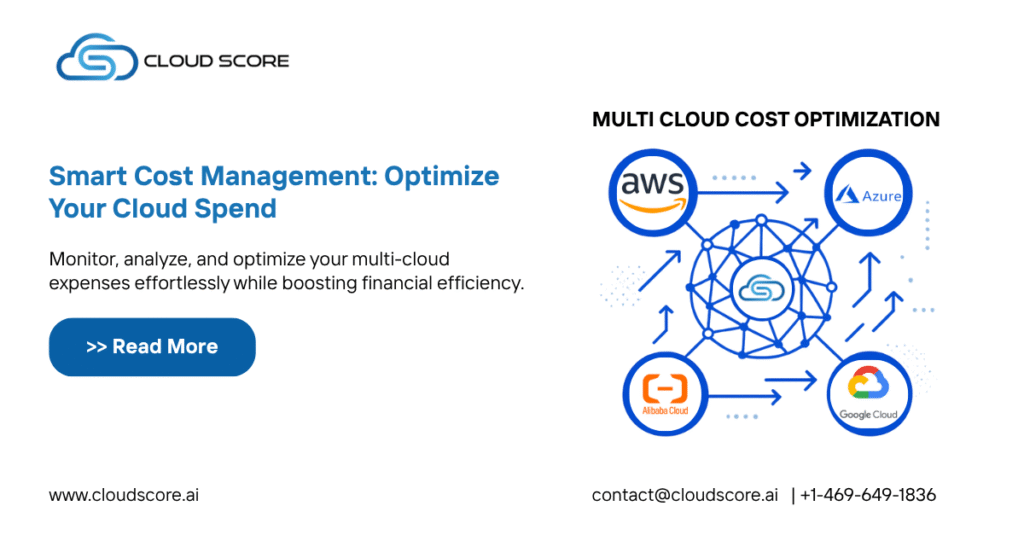
Smart Cost Management: Optimize and Control Your Cloud Spend
Uncategorized

Smart Cost Management: Optimize and Control Your Cloud Spend

Hari K. In the era of digital transformation, Smart Cost Management is the foundation of financially sustainable cloud operations. As cloud adoption accelerates, businesses are realizing that without intelligent cost governance, scalability can quickly turn into overspending. CloudScore, an advanced cloud optimization platform, empowers organizations to track, manage, and reduce cloud expenses while maintaining top-tier performance. This article explores how CloudScore helps enterprises achieve financial efficiency through Smart Cost Management ensuring every cloud dollar drives measurable value. What is Smart Cost Management? Smart Cost Management is the strategic use of analytics, automation, and optimization to control cloud expenses while aligning financial goals with operational performance. It goes beyond traditional cost tracking by using AI-driven insights to predict, optimize, and automate cost-saving decisions. With Smart Cost Management, organizations gain full visibility into spending, identify waste, and maintain compliance with financial and regulatory standards. Why Smart Cost Management is Critical for Cloud Operations Financial Responsibility Smart Cost Management ensures every resource delivers ROI by minimizing unnecessary expenditures and maximizing utilization efficiency. Compliance and Reporting It simplifies adherence to financial reporting and industry regulations by maintaining transparent cost metrics and audit-ready documentation. Sustainable Cost Savings Through automation and analytics, Smart Cost Management identifies cost-saving opportunities without compromising performance. Stronger Corporate Image Demonstrating fiscal discipline and sustainability enhances brand credibility and investor confidence. How CloudScore Enables Smart Cost Management CloudScore delivers a comprehensive framework for financial optimization through AI-driven insights, automation, and real-time reporting. 1. Intelligent Cost Tracking CloudScore continuously monitors your cloud environments, tracking costs across compute, storage, and network usage. AI-Powered Dashboards: Real-time visualization of cloud spend. Service-Level Metrics: Breakdowns for each provider, service, or department. 2. Resource Utilization Monitoring Get visibility into how efficiently cloud resources are being used. Performance-Based Utilization: Compare usage to performance KPIs. Cross-Region Analysis: Identify underused resources across regions. 3. Aligning Financial and Operational Goals CloudScore aligns cost reduction efforts with performance objectives. Cost-Performance Mapping: Direct correlation between expenditure and efficiency. Optimization Insights: Recommendations for right-sizing and scaling policies. 4. Reporting and Compliance Automation Simplify reporting and meet audit standards effortlessly. Automated Financial Reports: Built for compliance with regulatory frameworks. Custom Dashboards: Personalized KPIs for CFOs, FinOps, and DevOps teams. Case Study: Real-World Smart Cost Management in Action A global e-commerce company faced rising cloud expenses across multi-cloud environments. The goal: reduce costs without compromising uptime. Step 1: Comprehensive TrackingCloudScore integrated with the company’s infrastructure to provide unified visibility across all cloud accounts. Step 2: Inefficiency DetectionThe platform identified underutilized virtual machines, misconfigured storage, and overlapping services. Step 3: Optimization ExecutionUsing CloudScore’s Smart Cost Management tools, the company right-sized workloads, automated off-peak scheduling, and leveraged reserved instance discounts. Step 4: Compliance and ReportingCloudScore’s auto-generated compliance reports ensured transparency and audit readiness. Outcome: 30% reduction in cloud expenditure 25% boost in resource utilization Stronger stakeholder confidence and brand reputation Benefits of Smart Cost Management with CloudScore Predictive Analytics: Anticipate future cloud expenses and allocate budgets proactively. Multi-Cloud Integration: Unified visibility across AWS, Azure, GCP, and hybrid environments. Automation First: Reduce manual intervention with AI-driven cost alerts and recommendations. Compliance Confidence: Stay audit-ready with pre-built reporting templates. Sustainable Growth: Build a financially optimized cloud ecosystem for long-term success. Smart Cost Management is not just about cutting costs – it’s about optimizing value. CloudScore’s AI-powered capabilities make it easy to monitor spending, track utilization, and implement actionable optimization strategies. By adopting CloudScore, organizations can align financial strategy with operational excellence, ensuring every optimization decision contributes to performance, compliance, and profitability. Optimize your cloud operations with Smart Cost Management – track smarter, analyze deeper, and save intelligently with CloudScore.  Request a Demo | Start Your Free Trial | Contact Our Experts See more Blogs: Simplify Cloud Costs | Automated FinOps Platform | Multi-Cloud Spend | Cost Efficiency | Cloud Security | Dynamic Optimization | Seasonality Insights | Cloud Governance | Sustainability Reporting | Cloud Infrastructure | Predictive Analytics | Integrating FinOps | Forecasting  | Automated Cost Management | Cloud Cost Optimization

Scroll to Top