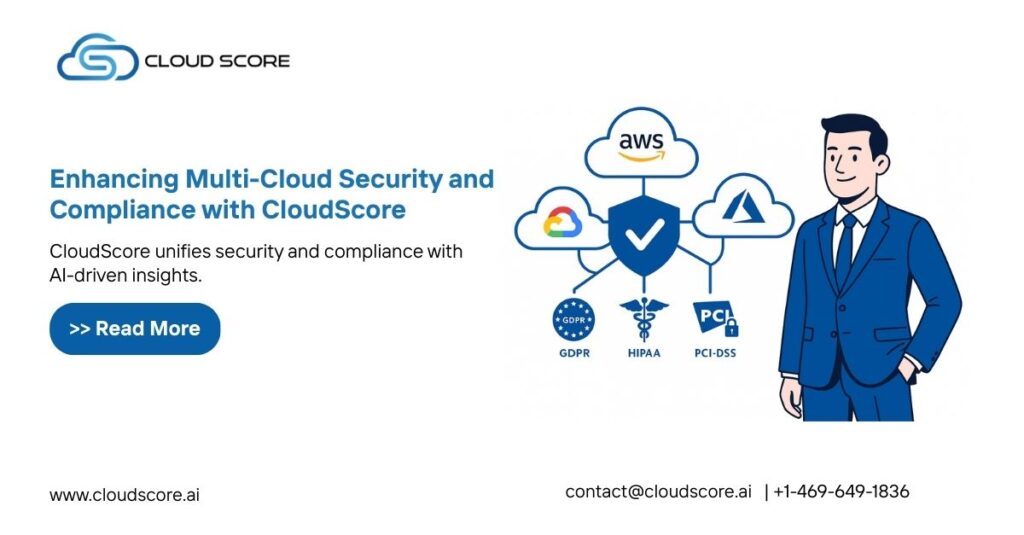
In the modern digital landscape, many organizations adopt a multi-cloud strategy to leverage the best features of different cloud service providers (CSPs). While this approach offers flexibility and resilience, it also introduces significant challenges in managing security and compliance across diverse platforms. CloudScore, a leading cloud cost optimization platform, provides robust tools to help organizations navigate these challenges, ensuring secure and compliant multi-cloud operations. In this article, we’ll explore how CloudScore can streamline multi-cloud security and compliance, providing peace of mind and operational efficiency. The Complexity of Multi-Cloud Security and Compliance Managing security and compliance in a multi-cloud environment involves several complexities: Diverse Security Protocols: Each cloud provider has its own set of security protocols and configurations, making it difficult to maintain consistent security standards. Compliance Requirements: Organizations must adhere to various regulatory requirements, which can vary depending on the region and industry. Data Silos: Security and compliance data from different providers often reside in silos, hindering a comprehensive view of the overall security posture. Dynamic Environments: The dynamic nature of cloud environments, with frequent changes and updates, requires continuous monitoring and adjustment of security measures. How CloudScore Enhances Multi-Cloud Security and Compliance CloudScore offers a comprehensive suite of tools designed to simplify and enhance security and compliance management across multiple cloud providers. Here’s how CloudScore facilitates this process: Unified Security Visibility CloudScore integrates with all major cloud providers, consolidating security data into a single, unified dashboard. This centralized view provides organizations with a comprehensive understanding of their security posture across all cloud environments. Centralized Monitoring: CloudScore continuously monitors security configurations and events across all connected cloud environments, providing real-time insights into potential vulnerabilities and threats. Security Dashboards: The platform offers intuitive dashboards that display security metrics and alerts, allowing organizations to quickly identify and address security issues. Automated Compliance Monitoring Maintaining compliance with regulatory requirements is critical for avoiding legal penalties and protecting organizational reputation. CloudScore automates compliance monitoring, ensuring that organizations meet regulatory standards consistently. Compliance Frameworks: CloudScore supports multiple compliance frameworks, including GDPR, HIPAA, and PCI-DSS. The platform continuously checks cloud environments against these standards, identifying any deviations. Automated Audits: The platform performs automated audits, generating compliance reports that detail the current state of compliance and highlight areas that require attention. Policy Enforcement and Automation CloudScore enables organizations to define and enforce security and compliance policies across their multi-cloud environments. Automated policy enforcement ensures that security standards are consistently applied. Policy Definition: Organizations can define custom security and compliance policies based on their specific requirements. These policies can include rules for access control, encryption, and data retention. Automated Enforcement: Once defined, CloudScore automatically enforces these policies, ensuring that any non-compliant configurations are corrected promptly. Incident Response and Remediation In the event of a security incident, rapid response and remediation are crucial for minimizing impact. CloudScore provides tools for effective incident management. Incident Detection: The platform detects security incidents in real-time, generating alerts and providing detailed information about the nature and severity of the threat. Automated Remediation: CloudScore can automatically execute remediation actions based on predefined policies, such as isolating compromised resources or revoking unauthorized access. Continuous Improvement Security and compliance are ongoing processes that require continuous improvement. CloudScore provides insights and recommendations to help organizations enhance their security posture over time. Security Assessments: CloudScore conducts regular security assessments, identifying potential vulnerabilities and providing recommendations for improvement. Compliance Optimization: The platform offers suggestions for optimizing compliance processes, ensuring that organizations stay ahead of regulatory changes and industry best practices. Real-World Example: A Case Study Consider a healthcare organization that uses multiple cloud providers to manage patient data, run clinical applications, and support research initiatives. The organization faced challenges in ensuring consistent security and compliance across its multi-cloud environment. By leveraging CloudScore’s capabilities, the organization aimed to enhance its security posture and maintain compliance with healthcare regulations. Step 1: Unified Security Visibility CloudScore integrated with the organization’s cloud environments, consolidating security data from AWS, Azure, and Google Cloud into a single dashboard. This provided the security team with a comprehensive view of the organization’s security posture. Step 2: Automated Compliance Monitoring The platform continuously monitored the organization’s cloud environments against healthcare-specific compliance frameworks, such as HIPAA. CloudScore identified any non-compliant configurations and provided detailed reports. Step 3: Policy Enforcement The organization defined custom security policies for data access, encryption, and logging. CloudScore automatically enforced these policies, ensuring consistent security standards across all cloud environments. Step 4: Incident Response and Remediation When a security incident occurred involving unauthorized access to patient data, CloudScore detected the threat in real-time and automatically revoked the unauthorized access. The platform provided detailed incident reports, enabling the organization to understand the root cause and prevent future occurrences. Step 5: Continuous Improvement CloudScore conducted regular security assessments, identifying areas for improvement and providing actionable recommendations. The organization implemented these suggestions, continuously enhancing its security posture. Outcome Within six months, the healthcare organization achieved significant improvements in security and compliance. The unified visibility and automated monitoring provided by CloudScore enabled the organization to proactively manage security risks and maintain compliance with healthcare regulations, protecting patient data and ensuring operational efficiency. Managing security and compliance in a multi-cloud environment is complex but essential for protecting sensitive data and maintaining regulatory adherence. CloudScore’s advanced tools and capabilities make it easier to achieve unified security visibility, automate compliance monitoring, enforce policies, and respond to incidents. By leveraging CloudScore, organizations can enhance their security posture, ensure compliance, and focus on their core business objectives with confidence. Secure your multi-cloud environment with real-time visibility and automated compliance. Start your free Cloudscore trial today and stay ahead of risks effortlessly. Request a Demo | Start Your Free Trial | Contact Our Experts See more Blogs: Dynamic Optimization | Seasonality Insights | Cloud Governance | Sustainability Reporting | Cloud Infrastructure | Predictive Analytics | Integrating FinOps | Forecasting | Automated Cost Management | Cloud Cost Optimization