Author name: Maneesha Kota

Power-Schedules-That-Control-Cloud-Spend-Automatically
Uncategorized

Power Schedules Explained: The Easiest Way to Cut Cloud Spend

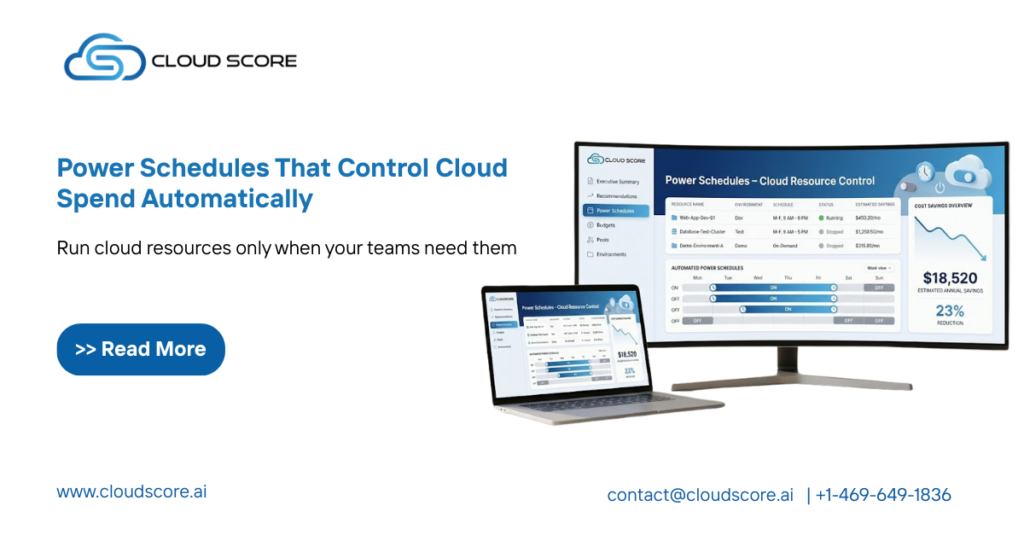
Cloud waste usually isn’t caused by bad architecture.It’s caused by cloud resources running when no one is using them. That’s exactly what Power Schedules fix. What Are Power Schedules? (Simple Definition) Power Schedules automatically start and stop cloud resources based on time or policy. In short:👉 Run cloud resources only when the business actually needs them. This makes Power Schedules one of the fastest and safest cloud cost optimization techniques. Why Power Schedules Matter in 2025 Today’s cloud environments are: Always-on Multi-team Multicloud Manual shutdowns don’t scale. Without Power Schedules: Dev & test servers run 24/7 Demo and sandbox environments are forgotten Costs increase silently Power Schedules turn cost control into automation, not human effort. How Power Schedules Work Define business hours (example: Mon–Fri, 9 AM–7 PM) Group resources by environment, team, or project Automatically stop resources outside that window Restart them when work resumes This works across platforms like Amazon Web Services and Microsoft Azure, where non-production sprawl is common. How CloudScore Handles Power Schedules CloudScore implements Power Schedules as a FinOps governance control, not just automation. Policy-based scheduling (by pool, team, or environment) Safe, read-only architecture (no risky cloud interference) Integrated with budgets and cost limits Designed for Dev, Test, Demo, CI/CD, and sandbox workloads This ensures savings without production risk. What Results Can You Expect? Teams using Power Schedules typically achieve: 20–40% reduction in non-production cloud costs Fewer cost anomalies Better cost forecasting Zero impact on customers Savings start within weeks, not months. Do This First (High-Impact Move) 👉 Apply Power Schedules to Dev and Demo environments first. Why? No customer risk Fast ROI Immediate proof of FinOps value Power Schedules answer one critical question: “Does this cloud resource really need to be running right now?” When the answer is automated, cloud costs stay controlled-without slowing teams down. That’s why Power Schedules remain one of the most effective cloud cost optimization strategies for modern FinOps teams.  Request a Demo | Start Your Free Trial | Contact Our Experts  See More Blogs:  Multi Cloud cost optimization | Untagged Cloud Resources | Best Cloud Governance Solutions | SecOps & FinOps Cloud Governance | AI-Driven FinOps| AI Cloud Cost Optimization | Smart Cost Management | Simplify Cloud Costs | Automated FinOps Platform | Multi-Cloud Spend | Cost Efficiency | Cloud Security | Dynamic Optimization | Seasonality Insights | Cloud Governance | Sustainability Reporting | Cloud Infrastructure | Predictive Analytics | Integrating FinOps | Forecasting  | Automated Cost Management | Cloud Cost Optimization

Which Are the Best Cloud Governance Solutions for Enterprises in 2026?
Uncategorized

Which Are the Best Cloud Governance Solutions for Enterprises in 2026?

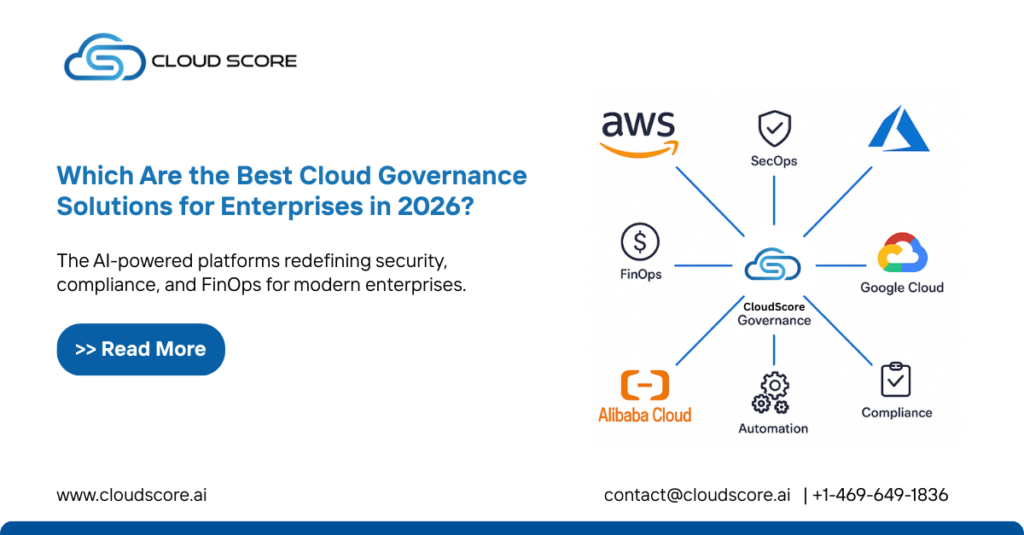
Best Cloud governance solutions are no longer optional for enterprises in 2026 they are foundational. As organizations scale across AWS, Azure, Google Cloud, and hybrid environments, cloud operations have become harder to control, more expensive to manage, and riskier to secure. What once worked with basic policies and manual reviews now breaks under the pressure of multi-cloud complexity, AI workloads, and regulatory expectations. Enterprise leaders today aren’t just asking “Are we compliant?” they’re asking “Are we continuously in control?” That shift defines modern cloud governance. Cloud Governance in 2026: What’s Changed? Cloud governance used to be about setting rules and reviewing reports. In 2026, governance is continuous, automated, and intelligence-driven. According to AWS, cloud governance is a framework of rules, processes, and controls that guide organizations to operate securely and efficiently in the cloud. But in practice, enterprises now need far more than guidelines, they need systems that enforce governance in real time, not after problems occur. Modern cloud governance focuses on: Preventing misconfigurations before deployment Controlling cloud costs continuously, not monthly Enforcing compliance automatically Unifying security, finance, and operations This evolution is widely reflected across industry research and cloud provider frameworks. Why Enterprises Are Replacing Traditional Governance Tools Enterprises are moving away from static governance models because cloud environments are no longer static. Key drivers include: Multi-cloud adoption as a default enterprise strategy AI and data workloads that scale unpredictably Increased regulatory scrutiny across industries Cloud spend accountability at the CFO and board level As Cloudscore highlights, poor cloud governance often leads to the same root problems repeatedly – untagged resources, open permissions, security gaps, and unnecessary cloud waste. Traditional monitoring tools only surface these issues; they don’t resolve them. What Defines the Best Cloud Governance Solutions in 2026? Based on industry best practices and enterprise adoption patterns, the best cloud governance solutions in 2026 share a few essential characteristics. Unified Multi-Cloud Visibility Governance must work across AWS, Azure, and GCP from a single control plane without fragmented dashboards or provider lock-in. Automated Policy Enforcement Policies should act as guardrails, not guidelines. Leading platforms enforce rules automatically at deployment and runtime. FinOps, SecOps, and Compliance Together Cost, security, and compliance are deeply connected. The best platforms manage them as one system — not separate tools. AI-Driven Intelligence Static alerts are no longer enough. Enterprises expect anomaly detection, predictive insights, and intelligent recommendations. Continuous Compliance Compliance must be always-on, audit-ready, and automated – not dependent on manual checks. Best Cloud Governance Solutions for Enterprises in 2026 CloudScore CloudScore represents the next generation of cloud governance platforms. It brings FinOps, SecOps, and CloudOps together into a unified, intelligent governance layer designed specifically for enterprise-scale environments. What makes CloudScore stand out: Unified governance across AWS, Azure and Google Cloud AI-driven cost optimization and anomaly detection Automated policy enforcement and guardrails Continuous compliance monitoring Predictive insights that enable proactive decisions CloudScore aligns closely with where cloud governance is heading – autonomous, data-driven, and action-oriented. CloudHealth by VMware CloudHealth is a well-established platform known primarily for cloud cost visibility and reporting. Best suited for: Cost allocation and chargeback models Financial reporting and budgeting Limitations: Limited automation Less real-time enforcement compared to newer platforms AWS Control Tower AWS Control Tower provides governance for organizations operating exclusively on AWS. Strengths: Account setup and baseline controls Native AWS integration Limitations: AWS-only Minimal FinOps and AI-driven governance capabilities (Source: AWS documentation) Azure Policy & Microsoft Defender for Cloud Microsoft’s governance tools offer strong security and compliance controls for Azure-centric enterprises. Strengths: Azure-native policy enforcement Security posture management Limitations: Fragmented experience in multi-cloud environments Less focus on cost intelligence Google Cloud Assured Workloads Designed for compliance-heavy workloads running on Google Cloud. Strengths: Strong regulatory controls Limitations: GCP-only scope Not designed for holistic enterprise governance How Enterprises Should Choose the Right Governance Platform Before selecting a solution, enterprise teams should ask: Does it support true multi-cloud governance? Can it enforce policies automatically, not just report issues? Does it unify cost, security, and compliance? Is it built for AI-scale workloads? Does it reduce cloud waste continuously? As Flexera notes, cloud governance is no longer a visibility problem – it’s an execution problem. Platforms that can’t act in real time will fall behind. The Future of Cloud Governance By 2026, cloud governance has become a strategic advantage rather than a compliance function. Enterprises adopting intelligent governance platforms consistently report: Lower cloud spend Fewer security incidents Faster audits Greater operational agility The shift is clear: governance is moving from manual oversight to autonomous control. Choosing from the best cloud governance solutions for enterprises in 2026 means looking beyond dashboards and reports. The real differentiator is automation, intelligence, and the ability to act before problems impact cost, security, or compliance. Platforms like CloudScore reflect this new reality – where governance isn’t reactive, but built into every cloud decision. Take control of your multi-cloud environment in 2026 – discover how intelligent, automated cloud governance can reduce risk, optimize costs and scale with confidence. Sources & References You can safely cite the following authoritative sources for this article: AWS – Cloud Governance Overviewhttps://aws.amazon.com/cloudops/cloud-governance/ CloudQuery – Cloud Governance Tools Explainedhttps://www.cloudquery.io/learning-center/cloud-governance-tools Flexera – Cloud Governance & Cost Managementhttps://www.flexera.com/solutions/cloud-cost/cloud-governance CloudNuro – Cloud Governance Tools Comparisonhttps://www.cloudnuro.ai/blog/top-10-cloud-governance-tools-for-aws-azure-and-gcp-in-2025 Bacancy Technology – What Is Cloud Governance?https://www.bacancytechnology.com/blog/cloud-governance  Request a Demo | Start Your Free Trial | Contact Our Experts See More Blogs: SecOps & FinOps Cloud Governance | AI-Driven FinOps | AI Cloud Cost Optimization | Smart Cost Management | Simplify Cloud Costs | Automated FinOps Platform | Multi-Cloud Spend | Cost Efficiency | Cloud Security | Dynamic Optimization | Seasonality Insights | Cloud Governance | Sustainability Reporting | Cloud Infrastructure | Predictive Analytics | Integrating FinOps | Forecasting  | Automated Cost Management | Cloud Cost Optimization

Achieving Cost Efficiency through Serverless Architectures with CloudScore
Uncategorized

Achieving Cost Efficiency through Serverless Architectures with CloudScore

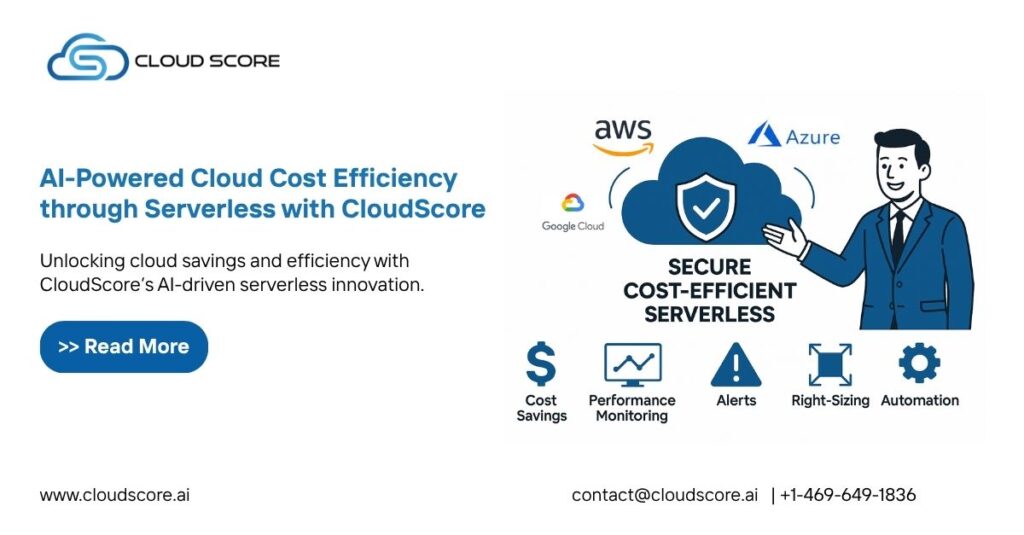
In the evolving landscape of cloud computing, serverless architectures are gaining popularity for their potential to enhance cost efficiency and simplify operations. By abstracting server management and automatically scaling resources, serverless computing allows organizations to focus on writing and deploying code without worrying about infrastructure. However, managing and optimizing costs in a serverless environment can still be challenging. CloudScore, a leading cloud cost optimization platform, provides the tools necessary to maximize cost savings in serverless architectures. In this article, we’ll explore how CloudScore can help you achieve cost efficiency and operational excellence with serverless computing.  The Benefits and Challenges of Serverless Architectures  Serverless computing offers several benefits:  Cost Savings: You pay only for the compute time you use, which can significantly reduce costs compared to traditional server-based architectures. Scalability: Serverless architectures automatically scale to handle varying loads, ensuring optimal performance during peak times without manual intervention. Reduced Operational Overhead: Serverless abstracts server management, allowing developers to focus on application logic and business value.  However, serverless architectures also present challenges:  Cost Management: Despite the pay-as-you-go model, costs can escalate if not monitored and managed effectively. Performance Optimization: Ensuring that serverless functions perform efficiently without over-provisioning can be complex. Complexity in Monitoring: Tracking and analyzing the performance and cost of numerous small functions across various services requires robust monitoring tools.  How CloudScore Enhances Serverless Cost Efficiency  CloudScore offers a comprehensive suite of tools designed to optimize costs and improve performance in serverless environments. Here’s how CloudScore facilitates cost efficiency in serverless architectures:  Detailed Cost Analysis CloudScore provides detailed insights into the cost of each serverless function, helping you understand where your spending is concentrated and identify opportunities for optimization.  Granular Cost Breakdown: CloudScore breaks down costs by individual serverless functions, showing exactly how much each function is costing you.  Cost Trends: The platform tracks cost trends over time, allowing you to identify spikes in usage and understand their causes.  Performance Monitoring and Optimization CloudScore continuously monitors the performance of your serverless functions, providing actionable insights to ensure they run efficiently.  Real-Time Monitoring: CloudScore provides real-time monitoring of function execution times, memory usage, and invocation counts.  Performance Alerts: The platform generates alerts for functions that exceed predefined thresholds, enabling proactive management.  Optimization Recommendations: CloudScore offers recommendations for optimizing function performance, such as adjusting memory allocation or reconfiguring code to reduce execution time.  Cost Management Tools CloudScore helps you manage and control costs effectively, ensuring that your serverless architecture remains cost-efficient.  Budget Tracking: Set budgets for your serverless projects and track spending in real-time to ensure you stay within financial limits.  Automated Cost Alerts: Receive automated alerts when spending approaches or exceeds budget thresholds, allowing for timely interventions.  Resource Utilization Reports: Detailed reports on resource utilization help you identify underutilized functions and opportunities for cost savings.  Strategic Use of Serverless Resources CloudScore provides insights and strategies for leveraging serverless resources in the most cost-effective manner.  Right-Sizing Functions: Recommendations for right-sizing serverless functions based on usage patterns, ensuring you only pay for the resources you need.  Optimizing Invocation Patterns: Analyze invocation patterns to identify opportunities for batching or scheduling functions to reduce costs.  Leveraging Spot Instances: For non-critical workloads, CloudScore suggests using spot instances to further reduce costs.  Real-World Example: A Case Study  Consider a financial technology company that uses serverless computing to run its transaction processing and analytics workloads. The company faced challenges in managing and optimizing the costs associated with its serverless architecture. By leveraging CloudScore’s capabilities, the company aimed to enhance cost efficiency and maintain optimal performance.  Step 1: Detailed Cost Analysis  CloudScore analyzed the company’s serverless environment, providing a granular breakdown of costs associated with each function. This analysis revealed that a few high-traffic functions were responsible for the majority of the costs.  Step 2: Performance Monitoring and Optimization  Using CloudScore’s real-time monitoring tools, the company tracked the performance of its serverless functions. CloudScore identified several functions that were over-allocated in terms of memory, leading to unnecessary costs. The platform provided recommendations to right-size these functions.  Step 3: Cost Management and Budget Tracking  The company set budgets for its serverless projects within CloudScore and received automated alerts when spending approached the set thresholds. This proactive approach allowed the company to take timely actions to control costs.  Step 4: Strategic Resource Utilization  CloudScore provided insights into invocation patterns, suggesting that the company batch certain functions to reduce the frequency of invocations. The platform also recommended leveraging spot instances for non-critical workloads, further enhancing cost efficiency.  Outcome  Within three months, the company achieved a 30% reduction in serverless computing costs while maintaining optimal performance. CloudScore’s detailed insights and recommendations enabled the company to manage its serverless environment effectively, ensuring cost efficiency and operational excellence.  Serverless architectures offer significant advantages in terms of cost savings and operational efficiency, but managing and optimizing these environments can be challenging. CloudScore’s advanced tools and capabilities make it easier to achieve cost efficiency and performance optimization in serverless architectures. By leveraging CloudScore, organizations can maximize the benefits of serverless computing, ensuring that their cloud infrastructure supports their strategic goals while remaining cost-effective.  Optimize your serverless costs today and explore smarter savings with CloudScore. Start your free trial now.  Request a Demo | Start Your Free Trial | Contact Our Experts See More Blogs: Cloud Security | Dynamic Optimization | Seasonality Insights | Cloud Governance | Sustainability Reporting | Cloud Infrastructure | Predictive Analytics | Integrating FinOps | Forecasting  | Automated Cost Management | Cloud Cost Optimization
Scroll to Top