
May 2026

Multi Cloud Management Platform
Uncategorized

What Makes a Modern Multi Cloud Management Platform Different?

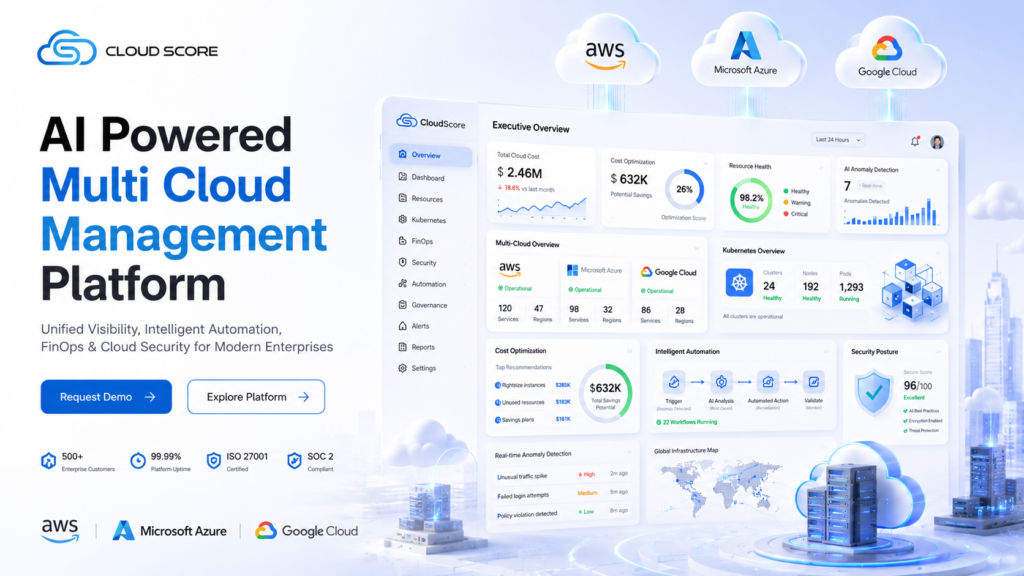
Modern enterprises are rapidly adopting multiple cloud providers to improve scalability, flexibility, and business continuity. However, managing workloads across AWS, Azure, Google Cloud, and hybrid infrastructures creates operational complexity, rising costs, security gaps, and visibility challenges. An AI Powered Multi Cloud Management Platform helps enterprises simplify cloud operations through centralized monitoring, intelligent automation, cost optimization, compliance management, and real-time analytics. Organizations today require more than basic cloud visibility. They need predictive intelligence, automated governance, security-driven operations, and financial accountability across every cloud environment. AI-driven cloud platforms are becoming the foundation for modern cloud operations teams that want to scale efficiently while maintaining control. Why Enterprises Are Moving Toward Multi-Cloud Environments Most enterprises no longer rely on a single cloud provider. Different departments choose different platforms based on workload requirements, pricing models, geographic availability, or specialized services. This creates a multi-cloud ecosystem that often includes: AWS for scalable infrastructure Microsoft Azure for enterprise integrations Google Cloud for AI and analytics Kubernetes environments for containerized applications Hybrid and private cloud systems for sensitive workloads While multi-cloud offers flexibility, it also introduces major operational challenges. Common Multi-Cloud Challenges Lack of centralized visibility Uncontrolled cloud spending Complex compliance management Resource misconfigurations Security vulnerabilities Manual infrastructure monitoring Limited cost forecasting Fragmented operational data Without intelligent cloud management, enterprises struggle to maintain efficiency and governance across distributed environments. What Is an AI Powered Multi Cloud Management Platform? An AI Powered Multi Cloud Management Platform is a centralized cloud operations solution that uses artificial intelligence and automation to manage infrastructure, security, governance, performance, and cloud costs across multiple cloud providers. Instead of manually monitoring separate cloud dashboards, enterprises can manage everything from a unified platform. The platform continuously analyzes cloud usage patterns, detects anomalies, identifies optimization opportunities, automates governance policies, and improves operational decision-making using AI models. Key Features of an AI Powered Multi Cloud Management Platform 1. Unified Multi-Cloud Visibility A centralized dashboard provides complete visibility into: Cloud assets Running workloads Resource utilization Network activity Security posture Cost allocation Kubernetes clusters Teams can monitor all cloud environments from a single interface without switching between providers. 2. AI-Driven Cloud Cost Optimization Cloud spending is one of the biggest concerns for enterprises operating across multiple clouds. AI-powered platforms help reduce waste by: Detecting idle resources Recommending right-sizing opportunities Identifying underutilized workloads Forecasting future cloud spend Automating budget alerts Optimizing reserved instances This enables FinOps teams to gain financial control and improve cloud ROI. 3. Intelligent Security & Compliance Monitoring Modern enterprises require continuous cloud security monitoring. AI-powered platforms help organizations: Detect misconfigurations Monitor IAM risks Identify vulnerabilities Track compliance violations Enforce governance policies Automate audit reporting Continuous monitoring reduces security risks while maintaining compliance across cloud environments. 4. Predictive Analytics & Anomaly Detection Artificial intelligence helps operations teams identify issues before they impact production environments. AI models can: Detect abnormal cloud activity Predict workload spikes Identify unusual spending patterns Forecast infrastructure capacity Reduce downtime risks This proactive approach improves operational reliability and cloud performance. 5. Kubernetes & Container Management Modern applications increasingly rely on Kubernetes and containerized environments. An advanced Multi Cloud Management Platform helps teams: Monitor Kubernetes clusters Track container costs Optimize cluster performance Improve resource allocation Enhance workload stability AI-powered insights simplify container operations at scale. 6. Automation & Workflow Intelligence Manual cloud operations consume engineering time and slow business agility. AI automation helps enterprises: Automate policy enforcement Trigger incident alerts Streamline workflows Reduce repetitive tasks Improve operational efficiency Automation enables teams to focus on innovation instead of manual cloud management. Benefits of AI Powered Multi Cloud Management Improved Operational Efficiency Unified cloud operations reduce complexity and improve infrastructure management across environments. Better Financial Governance AI-powered cost intelligence improves budgeting, forecasting, and cloud spend optimization. Enhanced Security Posture Continuous monitoring and automated compliance help reduce enterprise security risks. Faster Decision-Making Real-time analytics and predictive insights help leadership teams make data-driven cloud decisions. Scalability for Modern Enterprises AI-powered cloud platforms support enterprise growth without increasing operational overhead. Why AI Is Becoming Essential for Cloud Operations Cloud environments generate massive amounts of operational data every second. Manual analysis is no longer practical for modern enterprises. Artificial intelligence helps organizations: Process cloud telemetry at scale Detect operational inefficiencies Automate infrastructure analysis Improve cloud governance Accelerate incident response Reduce human error AI transforms cloud operations from reactive management into proactive intelligence. Choosing the Right Multi Cloud Management Platform When evaluating a platform, enterprises should look for: Multi-cloud compatibility AI-powered analytics Real-time monitoring FinOps capabilities Security & compliance automation Kubernetes visibility Workflow integrations Scalability Read-only architecture Enterprise-grade reporting The right platform should simplify cloud complexity while improving governance, visibility, and cost control. The Future of Multi-Cloud Operations As enterprises continue expanding across cloud providers, AI-driven cloud management will become a business necessity rather than an optional tool. Future-ready organizations will rely on intelligent cloud platforms to: Automate cloud operations Improve infrastructure efficiency Strengthen security governance Reduce operational costs Accelerate innovation AI-powered cloud management platforms are shaping the future of enterprise cloud operations. Managing modern cloud infrastructure requires more than traditional monitoring tools. Enterprises need intelligent systems capable of optimizing costs, improving visibility, automating operations, and strengthening security across distributed cloud environments. An AI Powered Multi Cloud Management Platform enables organizations to simplify complexity, improve governance, and scale cloud operations efficiently. By combining artificial intelligence, automation, FinOps, and security intelligence, enterprises can achieve greater control over their multi-cloud ecosystem while accelerating digital transformation. Why Modern Enterprises Choose CloudScore Enterprises require cloud platforms that combine visibility, governance, automation, and intelligence. CloudScore helps organizations: Simplify multi-cloud complexity Improve cloud cost governance Strengthen cloud security posture Enhance operational efficiency Accelerate cloud decision-making Scale cloud infrastructure confidently Its engineering-first architecture enables enterprises to modernize cloud operations without sacrificing governance or visibility. Simplify multi-cloud operations with AI-powered automation by CloudScore  Request a Demo | Start Your Free Trial | Contact Our Experts  See More Blogs: Multi Cloud Financial Management | AI-Powered FinOps Platform | Cloud Cost Anomaly Detection Platform | Cloud Cost Reduction | Multi Cloud Cost Intelligence | Multi Cloud Cost Visibility | Cloud Cost Optimization Platform | CloudOps Cost Optimization | Cloud Security
AI-Driven-Multi-Cloud-Financial-Management
Uncategorized

Multi Cloud Financial Management: The Complete Guide for Modern Enterprises

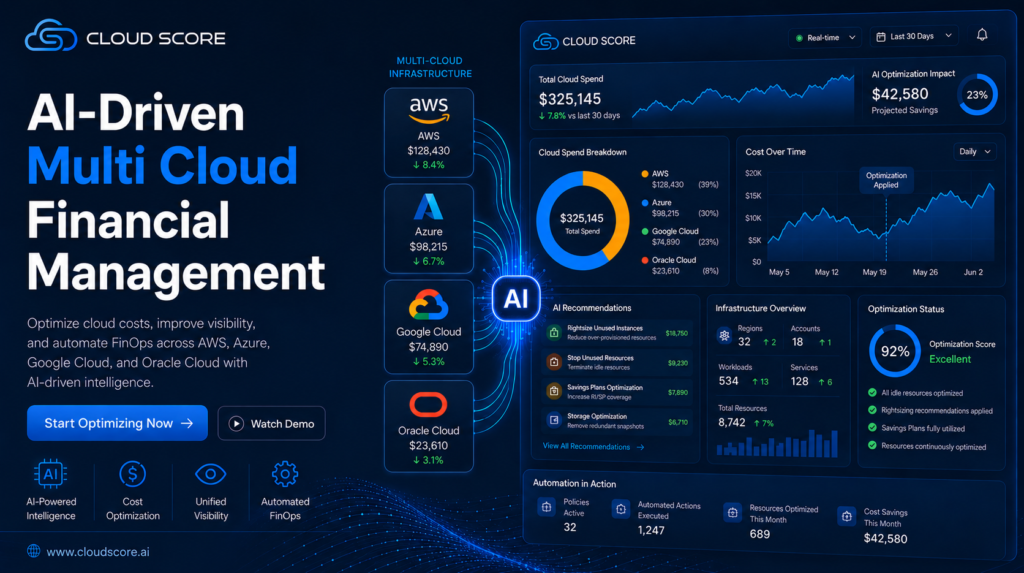
Modern enterprises are rapidly adopting multi-cloud environments to improve scalability, flexibility, and resilience. However, managing cloud spending across multiple providers has become increasingly complex. This is where Multi Cloud Financial Management plays a critical role. By combining AI-powered analytics, automation, and centralized visibility, organizations can optimize cloud costs, improve operational efficiency, and gain better control over their cloud infrastructure. As businesses expand across AWS, Azure, Google Cloud, and Oracle Cloud environments, traditional cost management methods are no longer enough. Companies now require intelligent financial operations that provide real-time insights, forecasting, governance, and optimization across all cloud platforms. What Is Multi Cloud Financial Management? Multi Cloud Financial Management is the process of monitoring, analyzing, optimizing, and governing cloud spending across multiple cloud providers through a centralized platform. It helps organizations: Track cloud usage across environments Identify unnecessary spending Allocate costs accurately Improve budgeting and forecasting Automate optimization decisions Enhance governance and compliance Instead of managing each cloud separately, enterprises gain a unified financial view of their entire cloud ecosystem. Why Traditional Cloud Cost Management Fails Many organizations still rely on manual reporting, disconnected dashboards, and reactive optimization strategies. This creates several major challenges: Limited Visibility Different cloud providers generate separate billing structures and usage metrics, making it difficult to gain a unified cost overview. Cloud Waste Unused resources, idle workloads, overprovisioned instances, and abandoned storage can significantly increase monthly cloud expenses. Poor Forecasting Without AI-driven analysis, predicting future cloud spending becomes inaccurate and inconsistent. Slow Decision-Making Finance, DevOps, and engineering teams often work in silos, delaying optimization efforts and reducing operational efficiency. The Role of AI in Multi Cloud Financial Management AI transforms cloud financial management from reactive monitoring into proactive optimization. Modern AI-powered platforms can: Detect cost anomalies instantly Predict future cloud spending trends Recommend optimization opportunities Identify inefficient workloads Automate resource rightsizing Improve cloud budgeting accuracy AI helps organizations make faster and smarter cloud optimization decisions without relying entirely on manual analysis. Key Benefits of AI-Driven Multi Cloud Financial Management 1. Unified Multi-Cloud Visibility Organizations can monitor AWS, Azure, Google Cloud, Oracle Cloud, and hybrid environments from a single dashboard. This improves: Cost transparency Operational visibility Financial accountability Resource tracking 2. Intelligent Cost Optimization AI continuously analyzes usage patterns and identifies opportunities to reduce unnecessary spending. Examples include: Rightsizing underutilized instances Eliminating idle resources Optimizing storage usage Improving reserved instance planning 3. Real-Time Cost Monitoring Instead of waiting for monthly billing reports, enterprises receive real-time cloud spending insights and anomaly alerts. This allows teams to respond quickly before costs escalate. 4. Advanced Forecasting and Budgeting Machine learning models analyze historical cloud usage trends to improve financial forecasting and budget planning. Organizations can: Predict future cloud expenses Create smarter budgets Reduce financial uncertainty Improve FinOps planning 5. Better Governance and Compliance AI-driven governance policies help organizations maintain operational control while supporting compliance initiatives. This includes: Cost allocation policies Access governance Budget enforcement Usage monitoring Why FinOps Teams Need Multi Cloud Financial Management FinOps teams are responsible for balancing cloud innovation with financial efficiency. As cloud environments grow, manual cost tracking becomes unsustainable. Multi Cloud Financial Management helps FinOps teams: Align engineering and finance teams Improve accountability Optimize cloud ROI Reduce waste Increase operational efficiency By integrating AI-driven insights, organizations can move toward continuous cloud optimization rather than periodic cost reviews. How CloudScore Simplifies Multi Cloud Financial Management CloudScore provides an engineering-first approach to AI-powered FinOps and cloud intelligence. The platform helps enterprises: Gain unified multi-cloud visibility Detect cloud cost anomalies Optimize Kubernetes and cloud workloads Improve forecasting accuracy Automate cloud financial operations Strengthen governance and compliance CloudScore combines FinOps and SecOps intelligence into a centralized platform designed for modern cloud operations. Best Practices for Smarter Cloud Optimization Centralize Cloud Visibility Use a unified platform to monitor all cloud providers in one place. Implement AI-Driven Automation Automate repetitive optimization tasks to improve operational efficiency. Track Cost Allocation Assign cloud spending accurately across teams, projects, and business units. Monitor Anomalies Continuously Detect unexpected cloud cost spikes before they impact budgets. Align Engineering and Finance Teams Encourage collaboration between technical and financial stakeholders to improve decision-making. The Future of Multi Cloud Financial Management Cloud infrastructure complexity will continue increasing as organizations adopt hybrid cloud, Kubernetes, AI workloads, and distributed systems. Future-ready enterprises will rely on: AI-driven optimization Predictive financial intelligence Automated governance Real-time cloud analytics Integrated FinOps and SecOps strategies Organizations that adopt intelligent Multi Cloud Financial Management platforms early will gain stronger financial control, better scalability, and improved cloud efficiency. Transforming Cloud Operations With AI-Driven FinOps Managing cloud costs across multiple providers is no longer a simple operational task. It has become a strategic business priority. AI-driven Multi Cloud Financial Management enables enterprises to optimize spending, improve visibility, automate operations, and strengthen governance across complex cloud environments. As cloud adoption continues to grow, businesses that invest in smarter cloud financial management solutions will be better positioned to scale efficiently, reduce waste, and maximize cloud ROI. Optimize multi-cloud costs, automate FinOps, and gain real-time cloud intelligence with CloudScore  Request a Demo | Start Your Free Trial | Contact Our Experts  See More Blogs: AI-Powered FinOps Platform | Cloud Cost Anomaly Detection Platform | Cloud Cost Reduction | Multi Cloud Cost Intelligence | Multi Cloud Cost Visibility | Cloud Cost Optimization Platform | CloudOps Cost Optimization | Cloud Security Posture Management | Cloud Intelligence Platform | DevOps Environment Sprawl | FinOps Cloud Cost Ownership | FinOps and SecOps Convergence | DevOps Cloud Cost Visibility | Code Scan | Power Schedules | Multi Cloud Cost Optimization | Untagged Cloud Resources | Best Cloud Governance Solutions | SecOps & FinOps Cloud Governance | AI-Driven FinOps | AI Cloud Cost Optimization | Smart Cost Management | Simplify Cloud Costs | Automated FinOps Platform | Multi-Cloud Spend | Cost Efficiency | Cloud Security | Dynamic Optimization | Seasonality Insights | Cloud Governance | Sustainability Reporting | Cloud Infrastructure | Predictive Analytics | Integrating FinOps | Forecasting | Automated Cost Management | Cloud Cost Optimization  
FinOps Platform for Cloud Cost Optimization
Uncategorized

AI Powered FinOps Platform: The Future of Cloud Cost Optimization

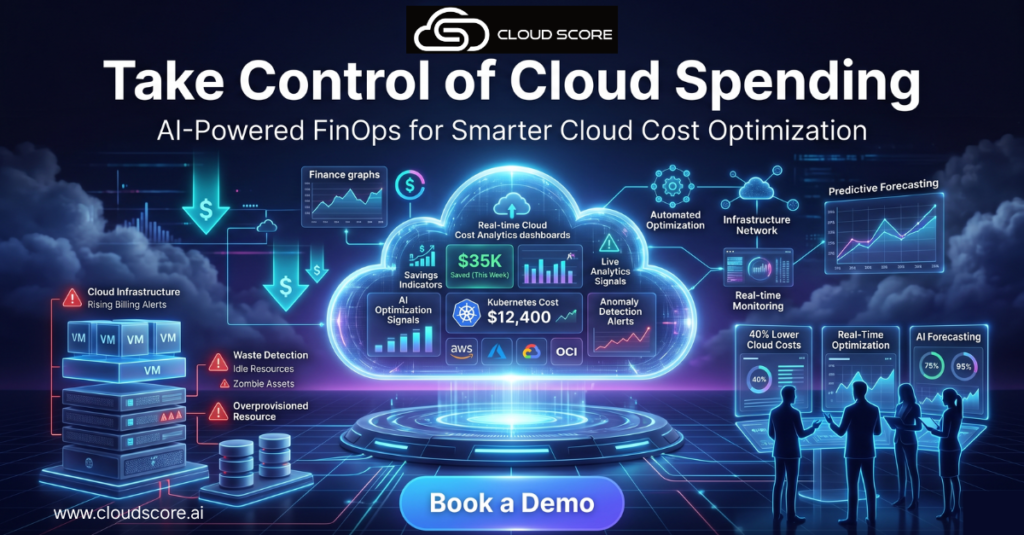
Cloud spending is growing faster than most businesses can control. As organizations scale across AWS, Azure, Google Cloud, Kubernetes, and SaaS ecosystems, managing cloud costs manually becomes inefficient and risky. An AI Powered FinOps Platform is transforming how enterprises monitor, optimize, forecast, and govern cloud infrastructure expenses in real time. Traditional cloud cost management tools only provide visibility. Modern AI-driven FinOps platforms go beyond dashboards – they deliver intelligent recommendations, predictive analytics, anomaly detection, automation, and engineering-level optimization. Businesses are no longer looking for static reports. They need proactive systems that continuously reduce waste and maximize cloud efficiency. Why Traditional Cloud Cost Management Fails Most organizations face common cloud cost challenges: Unused or idle resources Overprovisioned compute instances Kubernetes cost sprawl Lack of visibility across teams Sudden billing spikes Manual optimization processes Poor forecasting accuracy No accountability across departments As cloud environments become more complex, spreadsheets and basic monitoring tools cannot keep up with dynamic infrastructure demands. This is where AI-powered FinOps changes the game. What is an AI Powered FinOps Platform? An AI Powered FinOps Platform combines cloud financial management with artificial intelligence and automation to optimize infrastructure spending continuously. It helps organizations: Monitor multi-cloud environments Detect anomalies instantly Predict future cloud expenses Optimize workloads automatically Improve resource utilization Enable cost accountability Align engineering with finance teams Instead of reactive cost management, businesses gain a predictive and automated optimization system. Core Features of an AI Powered FinOps Platform 1. Real-Time Cloud Cost Visibility AI-powered platforms provide centralized visibility across: AWS Microsoft Azure Google Cloud Kubernetes SaaS platforms Teams can track spending by: Departments Projects Teams Applications Business units Environments This eliminates cost blind spots and improves financial transparency. 2. AI-Based Cost Optimization Artificial intelligence continuously analyzes usage patterns and identifies: Idle resources Unused storage Overprovisioned instances Underutilized workloads Rightsizing opportunities The platform then recommends or automates optimization actions to reduce unnecessary spending. 3. Intelligent Anomaly Detection Unexpected cloud spikes can destroy budgets quickly. AI models monitor cloud behavior 24/7 and instantly detect: Abnormal usage increases Security-related cost spikes Misconfigured services Runaway workloads Resource abuse This allows teams to respond before costs escalate. 4. Predictive Forecasting Forecasting cloud costs manually is nearly impossible in dynamic environments. AI-driven forecasting uses: Historical spending Seasonal trends Resource scaling patterns Engineering deployments to predict future cloud expenses accurately. Organizations can: Improve budgeting Prevent overspending Plan infrastructure growth Allocate resources efficiently 5. Kubernetes Cost Intelligence Kubernetes environments often become major cost leak zones. An AI-powered FinOps platform provides: Pod-level visibility Namespace cost tracking Cluster optimization Idle workload detection Container resource recommendations This helps engineering teams balance performance and cost efficiency. 6. Automated Governance & Compliance Modern FinOps platforms enforce governance automatically through: Budget alerts Policy automation Resource tagging validation Access governance Compliance monitoring This reduces operational risk while maintaining cloud efficiency. Benefits of Using an AI Powered FinOps Platform Reduce Cloud Waste AI continuously identifies waste across infrastructure and recommends immediate actions. Improve Engineering Efficiency Developers gain visibility into infrastructure costs without slowing innovation. Strengthen Financial Control Finance teams can track and forecast spending more accurately. Enable Multi-Cloud Optimization Organizations operating across multiple cloud providers gain unified visibility and control. Accelerate Decision-Making AI-driven insights eliminate manual analysis and provide actionable recommendations instantly. Why AI is the Future of FinOps Cloud environments generate massive amounts of operational and billing data every second. Humans cannot manually process: Millions of usage metrics Dynamic workloads Real-time scaling events Complex pricing structures Artificial intelligence solves this challenge by automating analysis and optimization continuously. The future of FinOps is: Predictive Automated Intelligent Real-time Engineering-focused Organizations adopting AI-powered cloud operations today gain a significant competitive advantage tomorrow. How CloudScore Helps Businesses Optimize Cloud Costs CloudScore delivers an engineering-first approach to cloud cost optimization and governance. CloudScore combines: AI-driven FinOps Cloud intelligence Kubernetes cost optimization Cost anomaly detection Multi-cloud visibility Automated governance Forecasting and budgeting Security and compliance insights into a unified platform designed for modern cloud-native organizations. The platform helps businesses reduce cloud waste, improve operational efficiency, and gain complete visibility across complex infrastructures. Outcome Cloud costs will continue increasing as businesses scale digitally. Organizations that rely on manual monitoring and reactive optimization strategies will struggle to maintain efficiency and profitability. An AI Powered FinOps Platform enables businesses to move from reactive cost tracking to intelligent cloud optimization powered by automation and AI. The future of cloud financial management belongs to organizations that combine engineering, finance, automation, and artificial intelligence into one unified strategy. Businesses that adopt AI-driven FinOps today will gain better visibility, stronger governance, faster optimization, and long-term cloud efficiency. Turn cloud cost data into AI-driven optimization and savings.  Request a Demo | Start Your Free Trial | Contact Our Experts  See More Blogs: Cloud Cost Anomaly Detection Platform | Cloud Cost Reduction | Multi Cloud Cost Intelligence | Multi Cloud Cost Visibility | Cloud Cost Optimization Platform | CloudOps Cost Optimization | Cloud Security Posture Management | Cloud Intelligence Platform | DevOps Environment Sprawl | FinOps Cloud Cost Ownership | FinOps and SecOps Convergence | DevOps Cloud Cost Visibility | Code Scan | Power Schedules | Multi Cloud Cost Optimization | Untagged Cloud Resources | Best Cloud Governance Solutions | SecOps & FinOps Cloud Governance | AI-Driven FinOps | AI Cloud Cost Optimization | Smart Cost Management | Simplify Cloud Costs | Automated FinOps Platform | Multi-Cloud Spend | Cost Efficiency | Cloud Security | Dynamic Optimization | Seasonality Insights | Cloud Governance | Sustainability Reporting | Cloud Infrastructure | Predictive Analytics | Integrating FinOps | Forecasting | Automated Cost Management | Cloud Cost Optimization

Scroll to Top