
Uncategorized

Cost Optimization for Reserved Instances with CloudScore
Uncategorized

Cost Optimization for Reserved Instances with CloudScore

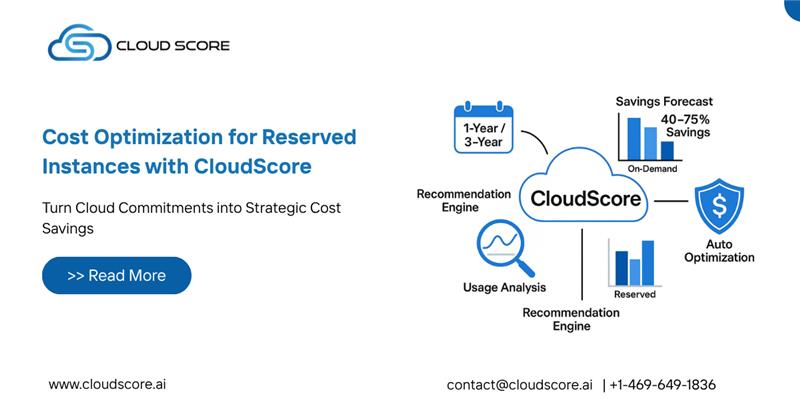
In the ever-evolving landscape of cloud computing, managing costs effectively is paramount for organizations striving to maximize their return on investment. One of the most potent strategies for achieving substantial cost savings is through the utilization of reserved instances. Reserved instances allow organizations to commit to a specific amount of compute capacity for a term of one or three years, often at a significantly discounted rate compared to on-demand pricing. CloudScore, a leading cloud cost optimization platform, provides the tools and insights necessary to leverage reserved instances effectively and achieve remarkable cost reductions. Understanding Reserved Instances Reserved instances are a pricing model offered by major cloud service providers such as AWS, Azure, and Google Cloud. By committing to use a specific instance type in a particular region for a set period, organizations can receive a significant discount, often ranging from 30% to 75% compared to on-demand pricing. This model is particularly beneficial for workloads with predictable usage patterns and long-term stability. However, the challenge lies in identifying which instances to reserve and how to balance the commitment with the dynamic nature of cloud workloads. This is where CloudScore comes into play. How CloudScore Facilitates Cost Optimization CloudScore provides a comprehensive suite of tools designed to analyze historical usage patterns, forecast future needs, and recommend the optimal reserved instances for your organization. Here’s how CloudScore can help: Analyzing Past Usage Data CloudScore starts by collecting and analyzing historical usage data across your cloud environments. This data includes metrics such as CPU and memory utilization, instance uptime, and usage patterns over time. By examining this data, CloudScore can identify instances that are consistently used and those that are underutilized. Identifying Suitable Instances for Reservation Once the analysis is complete, CloudScore uses advanced algorithms to identify which instances are suitable candidates for reservation. The platform considers factors such as instance type, region, and usage consistency. This ensures that the recommended instances align with your organization’s workload requirements and can deliver maximum cost savings. Providing Detailed Cost-Benefit Analysis CloudScore generates a detailed cost-benefit analysis for each recommended reserved instance. This analysis includes potential savings compared to on-demand pricing, the break-even point for the reservation, and the financial impact over the reservation term. By presenting this information in an easy-to-understand format, CloudScore empowers decision-makers to make informed choices about their cloud investments. Implementing Reserved Instances With the recommendations and analysis in hand, organizations can confidently proceed with reserving the identified instances. CloudScore provides step-by-step guidance on how to reserve instances with major cloud providers, ensuring a smooth and efficient implementation process. Monitoring and Adjusting Reservations CloudScore doesn’t stop at implementation. The platform continuously monitors the usage of reserved instances to ensure they are utilized effectively. If there are changes in workload patterns or new optimization opportunities, CloudScore provides timely alerts and recommendations to adjust reservations accordingly. Real-World Example: A Case Study Consider a mid-sized e-commerce company that relies heavily on cloud infrastructure to support its online store, customer database, and analytics platform. The company has experienced fluctuating cloud costs due to varying traffic patterns and the use of on-demand instances. By leveraging CloudScore’s cost optimization capabilities, the company embarked on a journey to reduce its cloud expenses through reserved instances. Step 1: Data Analysis CloudScore analyzed the company’s cloud usage data over the past year, identifying several instance types that were consistently utilized, particularly during peak shopping seasons. Step 2: Recommendation Based on the analysis, CloudScore recommended reserving a mix of general-purpose and compute-optimized instances in the regions where the company had the highest traffic. The platform projected potential savings of 45% compared to the current on-demand pricing. Step 3: Implementation With CloudScore’s guidance, the company reserved the recommended instances for a term of three years. The reservation process was straightforward, thanks to the platform’s clear instructions. Step 4: Continuous Monitoring CloudScore continued to monitor the usage of the reserved instances, providing monthly reports on cost savings and utilization. The company was able to adjust its reservations based on real-time data, ensuring optimal resource allocation and cost efficiency. Outcome Within the first year, the company achieved significant cost savings, reducing its cloud expenditure by over 40%. The financial predictability provided by reserved instances also allowed the company to allocate resources more effectively and plan for future growth. Cost optimization through reserved instances is a powerful strategy for organizations looking to manage their cloud expenses effectively. CloudScore simplifies this process by providing the tools and insights needed to make informed decisions, implement reservations, and continuously monitor and adjust resources. By leveraging CloudScore’s capabilities, organizations can achieve substantial cost savings, enhance financial predictability, and focus on driving their core business objectives. Ready to maximize your cloud savings with reserved instances? Discover how CloudScore can help you optimize your cloud costs effortlessly. Get started with CloudScore today and unlock powerful insights for smarter cloud spending! Request a Demo | Start Your Free Trial | Contact Our Experts See more Blogs  Automated Cost Management
Automated Cost Management Policies with CloudScore: Streamlining Cloud Efficiency
Uncategorized

Automated Cost Management Policies with CloudScore: Streamlining Cloud Efficiency

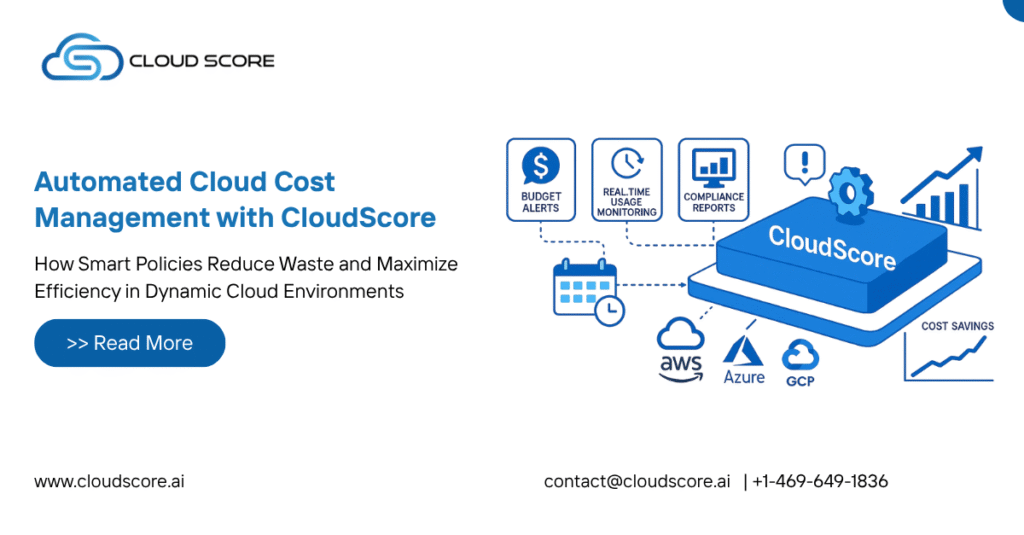
As organizations increasingly rely on cloud infrastructure, managing cloud costs effectively becomes a critical priority. Manual cost management can be time-consuming and prone to errors, leading to unnecessary expenses and resource waste. Automated cost management policies offer a solution by enforcing predefined rules to control cloud costs automatically. CloudScore, a leading cloud cost optimization platform, provides the tools and capabilities necessary to implement these policies, ensuring efficient and cost-effective cloud operations.  The Need for Automated Cost Management  Cloud environments are dynamic, with resource usage fluctuating based on workload demands, project requirements, and business needs. This complexity makes manual cost management challenging and inefficient. Automated cost management policies address these challenges by:  Reducing Human Error: Automated policies ensure consistent application of cost-saving measures, minimizing the risk of human error. Saving Time: Automation frees up IT and finance teams to focus on strategic initiatives rather than routine cost management tasks. Enhancing Efficiency: Automated policies can quickly respond to changes in resource usage, optimizing costs in real-time.  How CloudScore Implements Automated Cost Management Policies  CloudScore offers a comprehensive suite of tools designed to define, enforce, and monitor automated cost management policies. Here’s how CloudScore facilitates this process:  Defining Cost Management Policies CloudScore allows organizations to define a wide range of cost management policies tailored to their specific needs. These policies can include:  Budget Alerts: Automated notifications when cloud costs approach or exceed predefined budget thresholds.  Resource Suspension: Automatic suspension of underutilized or idle resources to prevent unnecessary costs.  Termination Rules: Termination of unauthorized or non-compliant resources to maintain security and cost efficiency.  Scheduling: Automated scheduling of start and stop times for non-production resources, ensuring they are only active when needed.  Implementing Automated Policies Once defined, CloudScore makes it easy to implement these policies across your cloud environments. The platform integrates seamlessly with major cloud providers, ensuring that policies are applied consistently and effectively. CloudScore’s intuitive interface allows for quick setup and deployment of automated policies, reducing the time and effort required for manual intervention.  Real-Time Monitoring and Alerts CloudScore continuously monitors cloud resource usage and cost data, providing real-time insights into policy compliance and effectiveness. The platform generates alerts for any deviations from predefined policies, enabling timely corrective actions. This proactive approach ensures that cost-saving measures are always in effect, maximizing efficiency and minimizing waste.  Reporting and Analysis To support ongoing optimization, CloudScore provides detailed reports on the performance of automated cost management policies. These reports include metrics such as cost savings, resource utilization, and policy compliance rates. By analyzing these reports, organizations can identify areas for further improvement and refine their policies to achieve even greater cost efficiency.  Real-World Example: A Case Study  Consider a software development firm that manages multiple projects with varying cloud resource requirements. The firm faced challenges with manual cost management, leading to budget overruns and inefficient resource utilization. By adopting CloudScore’s automated cost management policies, the firm aimed to streamline its cloud operations and reduce costs.  Step 1: Policy Definition  The firm defined several automated cost management policies using CloudScore:  Budget Alerts: Notifications for project managers when cloud costs reached 80% of the allocated budget.  Resource Suspension: Automatic suspension of development and testing environments during non-working hours.  Termination Rules: Termination of any instances with open ports not authorized by the security team.   Step 2: Policy Implementation  CloudScore was integrated with the firm’s cloud infrastructure, and the defined policies were implemented across all projects. The setup process was straightforward, allowing the firm to quickly deploy the automated policies.  Step 3: Real-Time Monitoring and Alerts  CloudScore continuously monitored the firm’s cloud environments, generating real-time alerts for any policy violations. Project managers received notifications when costs approached budget limits, enabling them to take immediate action to prevent overruns.  Step 4: Reporting and Analysis  CloudScore provided detailed reports on the performance of the automated policies, highlighting cost savings and policy compliance. The firm used these reports to refine their policies further and identify additional optimization opportunities.  Outcome  Within three months, the firm achieved a 30% reduction in cloud costs while improving resource utilization. The automated policies ensured consistent application of cost-saving measures, reducing the administrative burden on IT and finance teams. The firm was able to reinvest the savings into strategic initiatives, driving further growth and innovation.  Automated cost management policies are essential for achieving efficient and cost-effective cloud operations. CloudScore’s advanced tools and capabilities make it easy to define, implement, and monitor these policies, ensuring that organizations can optimize their cloud spend and maximize their return on investment. By leveraging CloudScore, organizations can streamline their cloud operations, reduce costs, and focus on driving their core business objectives.  👉 Start Automating Your Cloud Savings — Book a Free Demo Today  

Scroll to Top